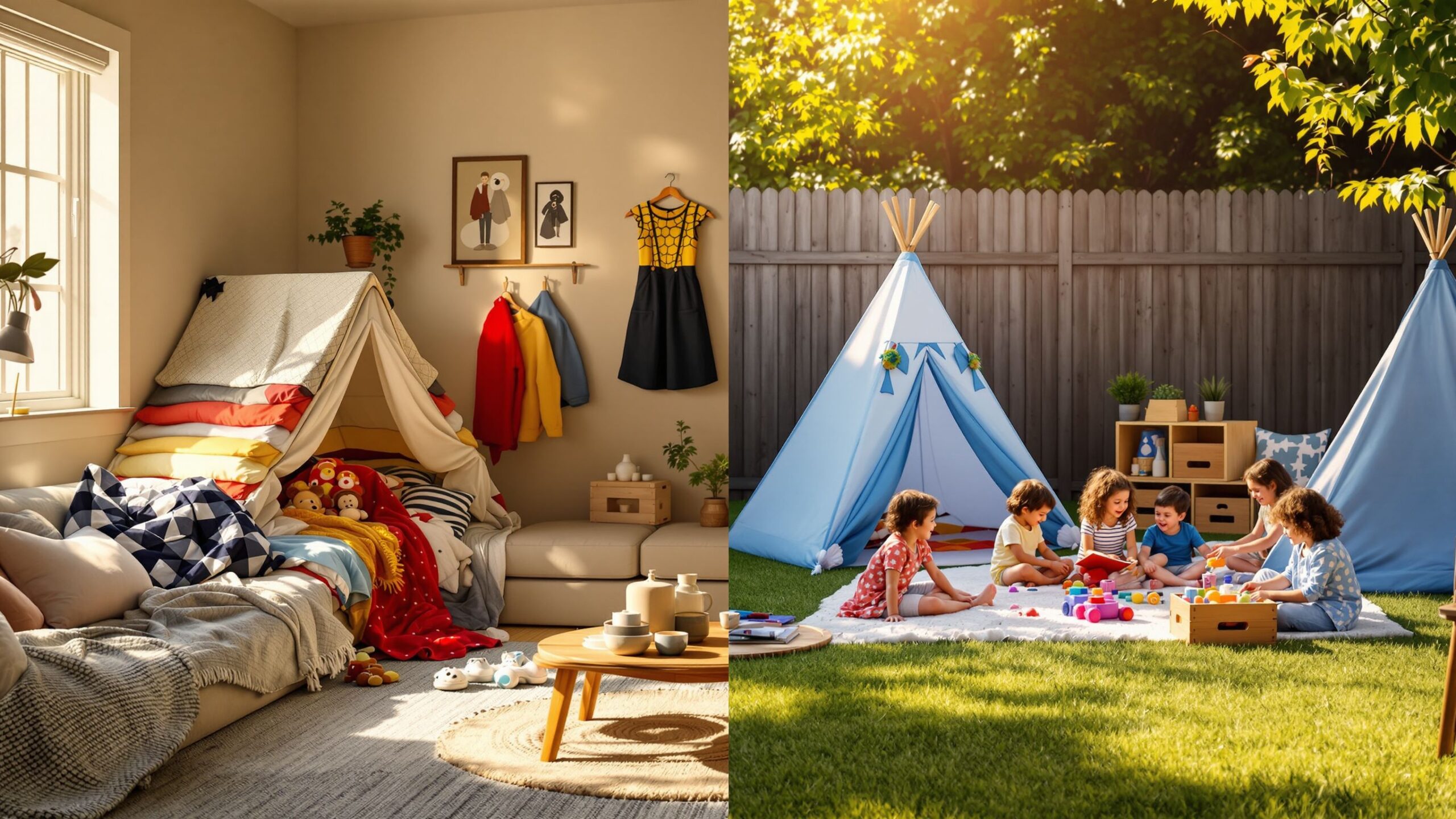

Roleplay is where imagination becomes action. It invites children to step into new identities, explore creative worlds, and transform everyday environments into stages for adventure. Whether inside a cozy living room or outside in a sunlit backyard, roleplay scenarios give kids the freedom to experiment with ideas, emotions, and storytelling. These experiences are not just entertaining—they are powerful tools for growth, helping children develop communication skills, empathy, and confidence. This guide dives into exciting roleplay scenarios kids will love, offering inspiration for both indoor and outdoor play while keeping creativity at the center of every moment.
A: Try café, doctor office, school, pet clinic, grocery store, spaceship, camping, or superhero rescue.
A: Try nature ranger, pirate hunt, explorer camp, construction crew, garden kingdom, safari, or obstacle rescue.
A: No, simple hats, scarves, blankets, boxes, and homemade badges are usually enough.
A: Ask open questions, accept the child’s ideas, and let them decide what happens next.
A: Help them rotate roles, add more characters, or create a shared mission where everyone matters.
A: Yes, it can give shy children a safer way to speak, lead, and express ideas through a character.
A: Let it last as long as kids stay engaged, safe, and interested.
A: Yes, older kids may prefer mysteries, survival missions, theater, filmmaking, fantasy worlds, or detective games.
A: Set clear boundaries, check the play area, avoid unsafe props, and keep rules simple.
A: Offer one idea, one prop, and one question, like “What should our mission be today?”
Why Roleplay Matters for Child Development
Roleplay is more than pretend—it is practice for real life. When children act out scenarios, they learn how to express thoughts, navigate emotions, and understand the perspectives of others. Playing “teacher” or “doctor” allows them to mimic real-world roles, helping them process what they see and experience daily. At the same time, fantasy-based scenarios like pirates or superheroes encourage abstract thinking and creativity.
This type of play strengthens language development as children create dialogue and describe their actions. It also supports problem-solving, as they must adapt their stories and overcome imaginary challenges. Perhaps most importantly, roleplay builds emotional intelligence. Children explore feelings safely, learning how to respond to different situations and interactions.
Indoor Roleplay Adventures That Spark Imagination
Home is one of the most versatile places for roleplay. With just a little creativity, any room can become an entirely new world. One of the most popular indoor scenarios is the “home café.” Children can set up a pretend restaurant using toy food or household items, taking orders, preparing meals, and serving guests. This scenario encourages communication and introduces basic concepts like counting and organization.
Another favorite is the “doctor’s office.” Kids can use stuffed animals as patients, diagnosing imaginary illnesses and offering treatments. This not only fosters empathy but can also help ease fears about real-life medical visits. Similarly, a “grocery store” setup allows children to practice decision-making and role-playing everyday routines.
For more adventurous storytelling, a “space mission” scenario can transform a couch into a rocket ship. Children can pretend to travel to distant planets, encountering aliens and solving cosmic challenges. The beauty of indoor roleplay lies in its flexibility—simple props and imagination can create endless possibilities.
Outdoor Roleplay Scenarios for Active Exploration
Outdoor environments naturally expand the possibilities of roleplay. Open spaces, fresh air, and natural elements provide the perfect backdrop for larger, more dynamic adventures. A backyard can easily become a jungle, a pirate island, or a hidden treasure zone.
One exciting outdoor scenario is the “treasure hunt adventure.” Children can create maps, hide objects, and embark on quests filled with clues and challenges. This encourages teamwork, critical thinking, and physical activity. Another engaging idea is the “explorer expedition,” where kids pretend to discover new lands, study plants, or track imaginary animals.
A “superhero rescue mission” is another favorite, allowing children to create characters with unique powers and save the day. This type of play promotes confidence and problem-solving as kids imagine ways to overcome obstacles. Outdoor roleplay often involves more movement, making it ideal for burning energy while still engaging the mind.
Classic Roleplay Themes Kids Always Love
Certain roleplay themes never go out of style. These timeless scenarios continue to captivate children because they combine familiarity with imagination. Playing “house” remains a staple, allowing kids to explore family roles and daily routines. Similarly, “school” roleplay lets children take on the roles of teacher and student, often mirroring their own experiences.
Fantasy themes such as knights, princesses, dragons, and wizards offer a sense of magic and adventure. Children can create entire kingdoms, complete with quests and challenges. Pirate adventures are equally popular, with ships, treasure maps, and daring escapades.
Emergency roles like firefighters, police officers, and paramedics also hold strong appeal. These scenarios allow children to feel heroic while learning about responsibility and helping others. The familiarity of these roles makes it easy for kids to dive into the story and expand it in their own unique ways.
Creative Roleplay Ideas for Different Age Groups
Roleplay evolves as children grow, becoming more complex and detailed over time. Younger children often enjoy simple scenarios with clear roles, such as pretending to cook or care for a doll. These activities focus on imitation and basic storytelling.
Preschoolers begin to develop more elaborate narratives. They might combine multiple roles, such as running a restaurant while also pretending to be customers. At this stage, imagination becomes more fluid, and stories can shift quickly based on new ideas.
Older children tend to create structured and immersive experiences. They might design entire worlds with rules, characters, and ongoing storylines. Roleplaying games, detective mysteries, or survival adventures become more appealing as they seek deeper engagement and challenge.
Understanding these developmental stages can help caregivers provide appropriate support and inspiration, ensuring that roleplay remains engaging and rewarding at every age.
How to Set Up the Perfect Roleplay Environment
Creating a space that encourages roleplay does not require expensive toys or elaborate setups. The key is to provide an environment that invites creativity. Open-ended materials such as blankets, boxes, and costumes can be transformed into anything a child imagines.
Designating a specific area for play can also make a difference. This could be a corner of a room, a play tent, or a section of the backyard. Having a consistent space allows children to return to their imaginative worlds and build on previous stories.
Rotating props and introducing new elements occasionally can keep play fresh and exciting. For example, adding a simple item like a flashlight or a hat can inspire entirely new scenarios. The goal is to provide just enough structure to spark ideas while leaving plenty of room for imagination.
Encouraging Kids to Lead the Story
One of the most important aspects of roleplay is allowing children to take the lead. While adults can offer suggestions or join in, the direction of the play should come from the child. This fosters independence and confidence, as children learn to trust their ideas and creativity.
Asking open-ended questions can help expand the story. Questions like “What happens next?” or “Who else is part of your adventure?” encourage children to think more deeply about their narratives. At the same time, it is important to avoid taking control or imposing rules that limit creativity.
Participating as a supportive character rather than a director can enhance the experience. For example, playing the role of a customer in a pretend store or a sidekick in a superhero mission allows children to remain in charge while still benefiting from interaction.
The Social Benefits of Group Roleplay
When children engage in roleplay with others, the experience becomes even more enriching. Group roleplay requires collaboration, communication, and compromise. Children must agree on roles, develop shared storylines, and navigate differences in ideas.
These interactions help build essential social skills. Children learn how to listen, negotiate, and resolve conflicts. They also develop empathy by considering the perspectives of other players. Group roleplay often leads to more complex and dynamic stories, as each participant contributes their own ideas.
While conflicts may arise, they are valuable learning opportunities. With gentle guidance, children can learn how to work through disagreements and create solutions together.
Blending Learning with Fun Through Roleplay
Roleplay naturally integrates learning into play. A pretend store introduces math concepts like counting and pricing. A space mission can spark interest in science and exploration. Even simple scenarios like cooking or building can teach practical skills and problem-solving.
Language development is another key benefit. As children create dialogue and narrate their actions, they expand their vocabulary and improve communication skills. Storytelling through roleplay also supports literacy, helping children understand narrative structure and sequencing.
The beauty of roleplay is that learning happens organically. Children are motivated by curiosity and enjoyment, making the experience both effective and memorable.
Overcoming Challenges in Roleplay
While roleplay is highly beneficial, it can sometimes present challenges. Some children may feel unsure about how to start or may prefer more structured activities. In these cases, gentle encouragement and simple prompts can help spark ideas.
Providing a starting point, such as a theme or a prop, can make roleplay more accessible. For example, introducing a treasure map or a costume can inspire a story without overwhelming the child. Over time, confidence will grow, and children will begin to create their own scenarios.
Another challenge is balancing roleplay with other activities. While imaginative play is important, it should be part of a well-rounded routine that includes physical activity, learning, and rest. Finding this balance ensures that children benefit from all aspects of development.
Keeping Roleplay Fresh and Exciting
To maintain interest, it is helpful to introduce variety into roleplay scenarios. Changing settings, themes, or roles can keep the experience engaging. For example, a child who enjoys playing “store” might enjoy turning it into a “bakery” or a “toy shop.”
Seasonal themes can also add excitement. A winter adventure might involve building a pretend snow village, while a summer scenario could focus on a beach rescue mission. Incorporating elements from books, movies, or real-life experiences can provide additional inspiration.
Encouraging children to create their own props and costumes can further enhance creativity. This not only adds a personal touch to the play but also provides an opportunity for hands-on learning and problem-solving.
The Lasting Impact of Roleplay on Creativity
Roleplay is a gateway to creativity that extends far beyond childhood. The skills developed through imaginative play—storytelling, problem-solving, and emotional understanding—are essential throughout life. Children who engage in roleplay often grow into individuals who can think creatively, adapt to new situations, and communicate effectively.
In a world that increasingly values innovation and collaboration, these skills are more important than ever. By encouraging roleplay, caregivers are not just providing entertainment—they are investing in a child’s future.
Conclusion: Turning Everyday Moments into Adventures
Roleplay transforms ordinary moments into extraordinary experiences. Whether indoors or outdoors, simple scenarios can become powerful tools for learning and growth. By providing time, space, and encouragement, parents and caregivers can help children unlock the full potential of their imagination.
From running a pretend café to embarking on a backyard treasure hunt, the possibilities are endless. Each scenario offers a chance to explore, create, and connect. In the end, the magic of roleplay lies in its simplicity—the ability to turn imagination into reality and make every day an adventure.