Choose a Movement Game Through the Space Available
For a clear route, try an Imaginary Mail delivery; for personal space, use Shape Contrast or Invisible Paintbrush. The fifty-idea collections below offer more traveling, stationary, animal-inspired, and partner invitations. Each worked example explains the setup, first round, and ending. Begin by checking the surface and boundaries, then choose a comfortable action or directing role for each participant. A familiar game can keep its story while its route, number of travelers, or cue changes to fit the actual room or yard.
A: They are invitations to select and adapt according to the participants, space, and current comfort.
A: Review the route, surface, boundaries, supervision, and room between participants.
A: Choose stationary gestures, short paths, and fewer people traveling at once.
A: No; use an upright, seated, or otherwise comfortable interpretation of the same animal idea.
A: Mirroring, shared timing, and imaginary-object exchanges work at a comfortable distance.
A: Decline that action and offer a safer way to preserve the imaginative event.
A: Respond to comfort, control, fatigue, and requests to stop rather than forcing a fixed repetition count.
A: They can choose an optional directing role, contribute an idea, or simply watch.
A: Change one feature such as the route, setting, or leadership while preserving the familiar rule.
A: Keep a few activities organized by real settings, with reminders of adaptations that worked.
Read the Space Before Selecting the Activity
Look at the actual area rather than the activity’s name. Traveling games need a clear route, while broad arm actions need room between bodies even when everyone stays in place. Remove tripping hazards and check the surface for slipping, sharp objects, and uneven sections. Outdoors, consider weather, visibility, boundaries, and supervision. An activity that works on level grass may need a different version on a hard indoor floor.
Choose a boundary children can recognize and a place to pause outside the main movement area. Explain where the game starts, where it ends, and what to do if someone enters the path unexpectedly. Keep the first rule simple enough to demonstrate. If the room cannot accommodate the planned travel, reduce the number moving at once or choose a stationary action. Changing the plan is part of selecting a suitable activity.
For a brief first session, select one traveling invitation and one stationary choice from the collections. Use the worked examples below to picture a complete round, then decide which setup the space can support. A small room may suit Invisible Paintbrush and Shape Contrast, while a clear yard can add an Imaginary Mail Route. The choice of activity should follow that inspection.
Change the Activity When the Setting Changes
Move the mail-route story indoors by changing the physical route. Instead of walking across the yard, a child can select a destination while a partner delivers an imaginary letter between two nearby clear points. In a smaller space, keep both players in place and use a gesture to indicate where the delivery arrives. Demonstrate the revised round so the outdoor route is not carried into the room by assumption.
Recheck an outdoor area when rain, heat, visibility, or other users change the conditions. A suitable stationary game may replace travel, or the activity may need to stop. Name the choice briefly and save the intended destination or story idea for another opportunity. When the group returns, inspect the route again rather than relying on the earlier check. Keep the familiar stop cue in the changed version so participants can still recognize how a round ends.
Match the Action to Individual Readiness
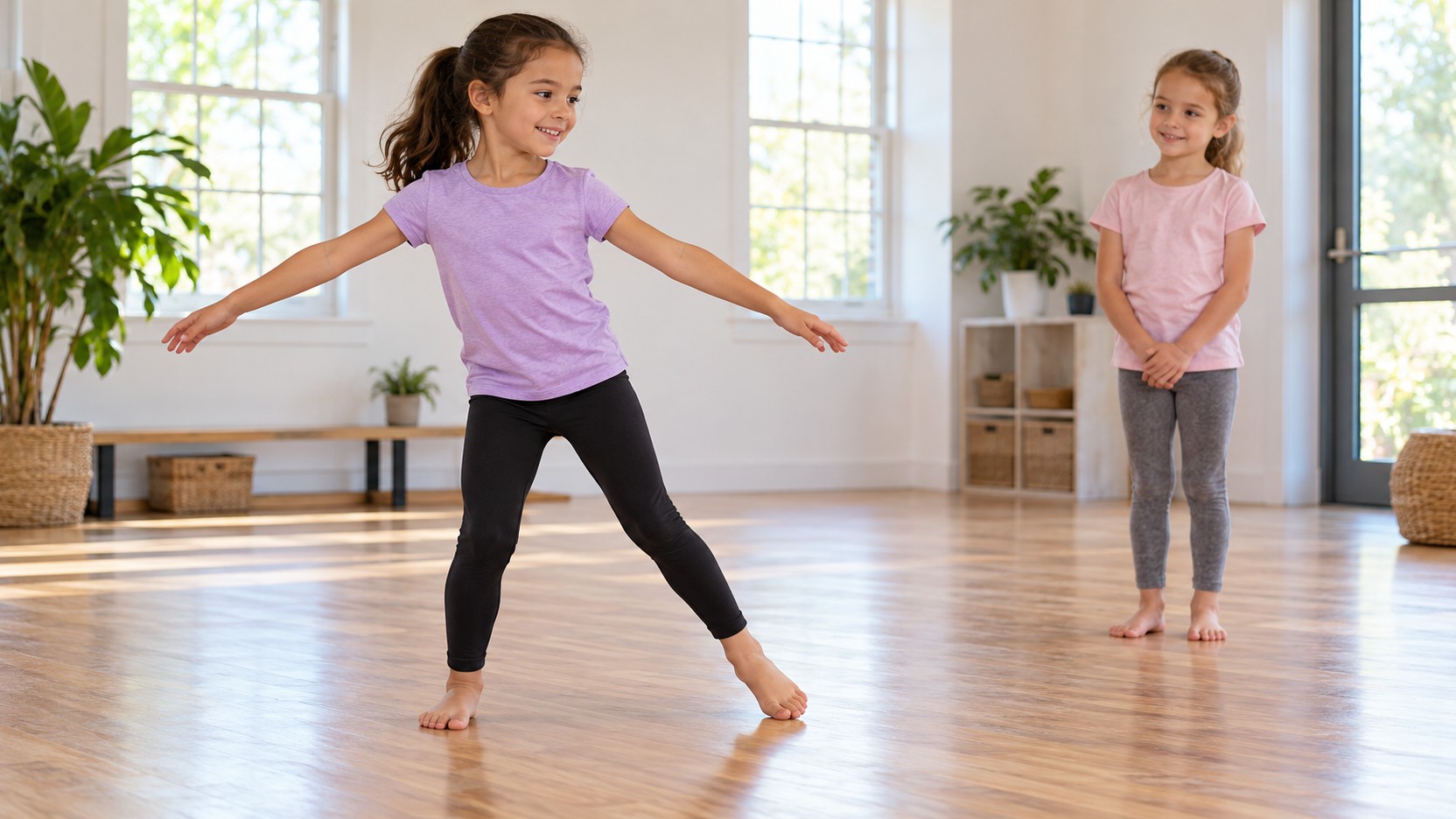
Children of the same age may differ in balance, coordination, stamina, sensory preferences, and movement experience. Offer a comfortable version rather than relying on age alone. A pretend flight can involve walking with open arms, moving arms while seated, or directing another person’s route. Identify the playful idea you want to preserve, then allow the physical action to vary. Ask participants what works for them and stop any movement that causes pain or feels unsafe.
Begin With Familiar Movements
Start with ordinary actions such as walking, reaching within a comfortable range, shifting weight, or moving hands through a chosen pathway. Let the group discover the pace and space before introducing faster changes. A familiar action gives children a clear way to understand the invitation. It also helps adults notice whether the setup needs adjusting before the game becomes more complex.
Demonstrate the intended movement briefly and show an accessible alternative at the same time. If the activity asks for traveling, demonstrate how to stay in one place while expressing the same idea. Avoid presenting the alternative as a lesser version. The important feature may be direction, rhythm, or imagination, and each of those can appear through different actions.
Run an Imaginary Mail Route From Start to Finish
Choose two clearly visible safe delivery points and a nearby starting base. An adult checks the walking routes and keeps them away from doorways and other traffic. Give the child one broad lightweight pretend letter or let them carry an imaginary parcel. Explain the first round: leave base, deliver to one chosen point, and return. Demonstrate the whole route before handing over the courier role.
The child selects the first destination and travels at a comfortable pace. A partner can receive with a chosen greeting, or the destination can be an empty low basket. After the return, offer another delivery or a role change. Someone who does not travel can choose the address and signal when the courier has reached it. That decision remains central to the shared route.
For another round, add the second delivery point in a clearly stated order. An interested older participant might plan both stops, while another follows a visible reminder of the next destination. Keep the challenge in selecting and remembering the route rather than speed. End when the agreed parcels have arrived, then ask which destination should return another day. A changed room requires checking the route again, even when the story is familiar.
Try Shape Contrast and Invisible Paintbrush
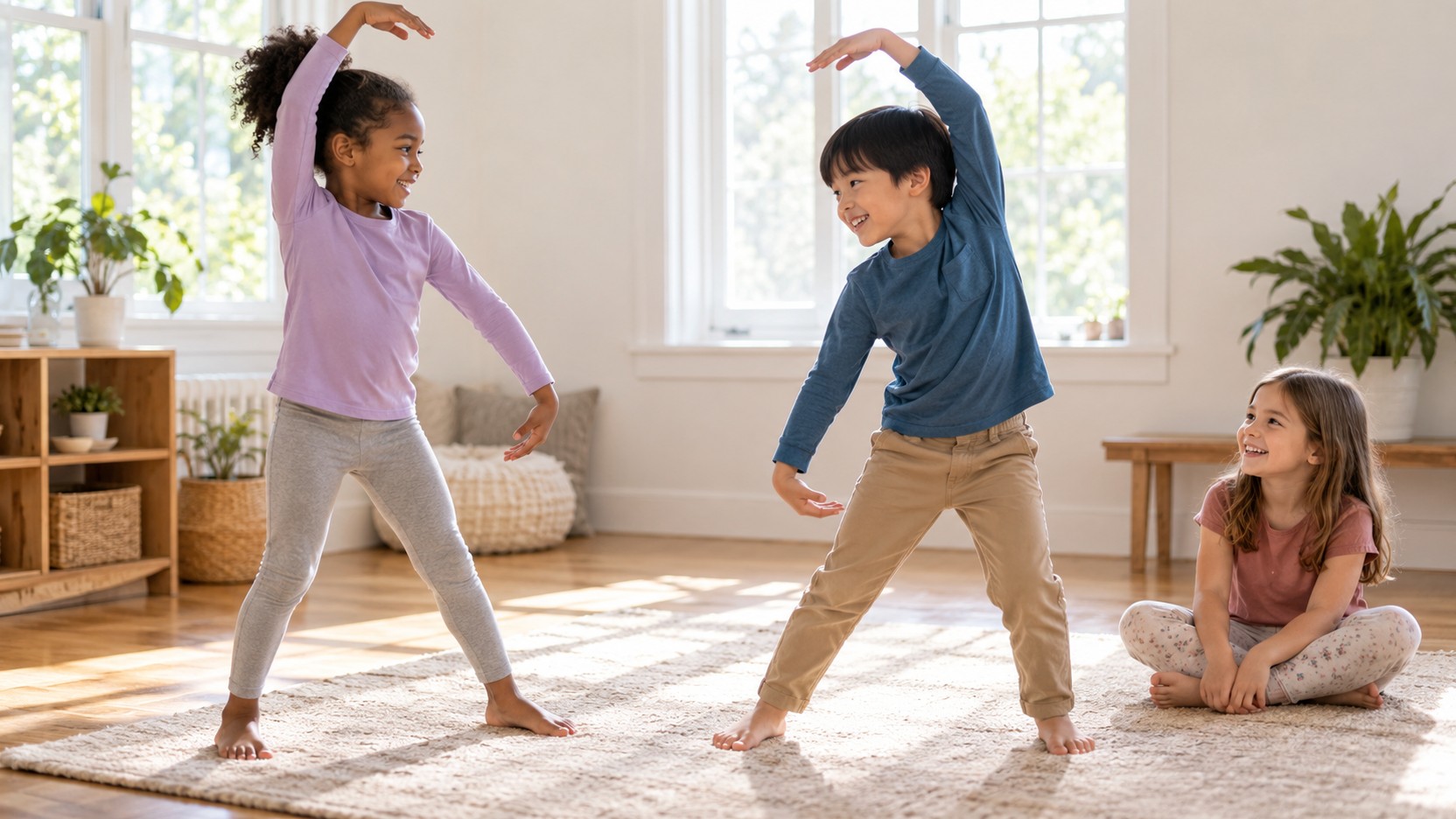
For Shape Contrast, demonstrate a compact arm shape near the body, then a broader comfortable one that stays inside personal space. Let the child choose which comes first and answer with their own version. Trade the choosing role for a few exchanges, then finish with resting arms. The contrast supplies the rule; nobody needs to reach farther or copy another body’s exact outline.
For Invisible Paintbrush, imagine a broad wall within comfortable reach. Choose one easy pathway for a hand or arm, such as a curve, and let a partner guess the shape being painted. Switch roles after the answer or add a helpful clue. The child can direct an adult’s movement when that role fits better. End by choosing one favorite mark for a final shared gesture.
Make Animal-Inspired Play About Possibilities
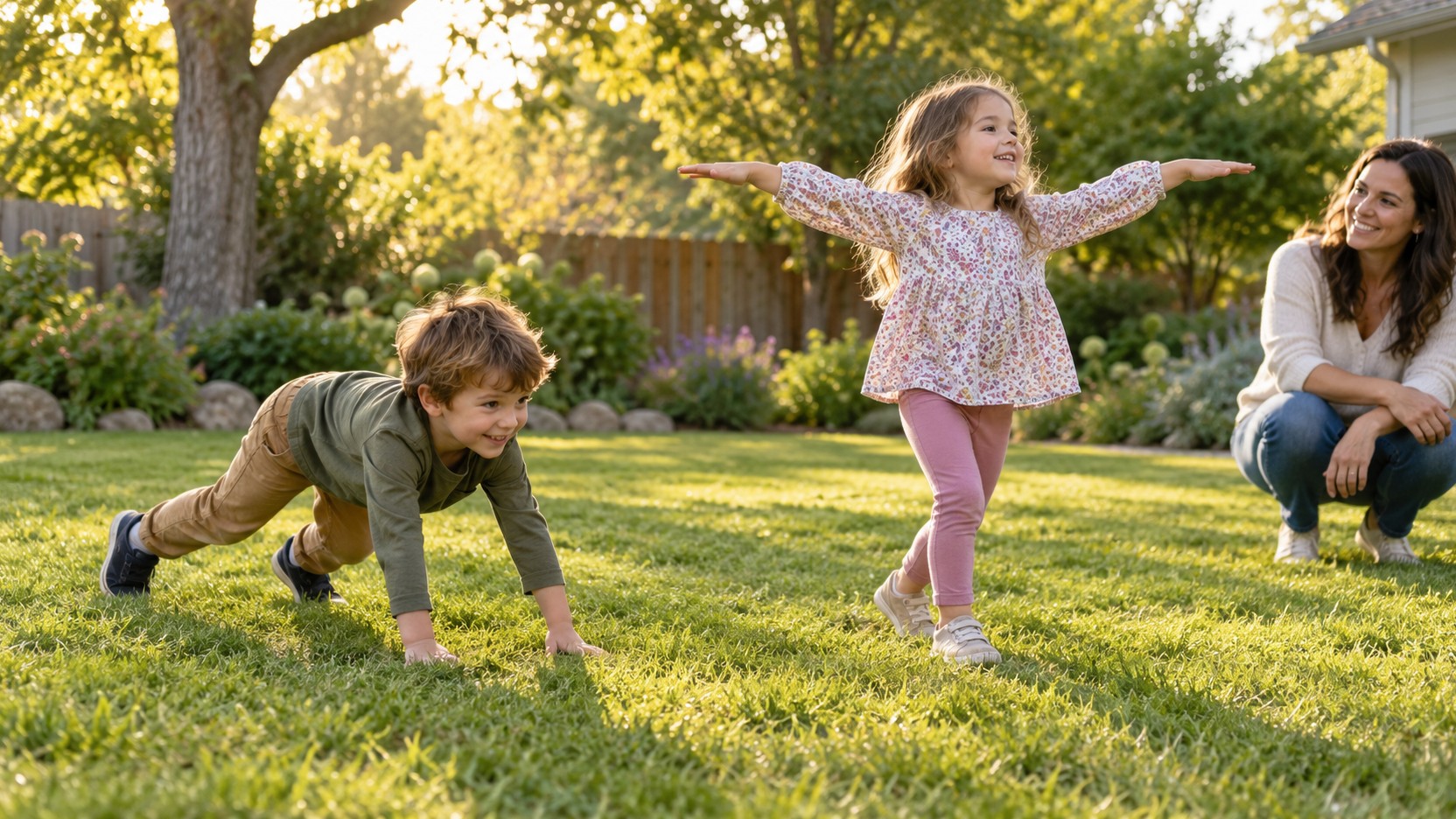
An animal image can suggest a quality without requiring a literal imitation. A bird may inspire broad arm paths, a cat may suggest a slow careful step, and a turtle may suggest a steady deliberate journey. Keep actions comfortable and adapt floor-level movement when wrists, knees, or the surface make it unsuitable. Children can invent a creature with its own safe movement rules. The imagined animal supplies a playful reason for the action rather than a standard everyone must physically match.
Set Partner Activities Up Around Consent and Distance
Choose partner exchanges that do not require lifting, pulling, catching bodies, or unexpected touch. Mirroring, showing a pathway, or passing an imaginary object can create a shared task at a comfortable distance. Agree on who leads and how the role changes. A child should be able to choose a different partner, an observing role, or an individual version without being singled out.
For a mirroring round, let the leader show a slow curve with one arm while the follower responds to its direction at a comfortable scale. Pause after the curve, return to the ordinary starting position, and exchange roles at the agreed cue. A seated arm movement can share timing and direction with a standing version. Ask both players whether the pace leaves time to respond. Keep that workable pace before adding a second action or a change of direction.
Pass an Imaginary Object Around a Small Circle
Arrange a small group where everyone can see the next person without crowding. Explain that an imaginary parcel travels in one agreed direction, with each player showing its arrival and passing it onward through a comfortable gesture or their usual communication. Demonstrate the first two handovers. Keep the parcel’s imagined size familiar for the whole opening round. A receiver can acknowledge arrival with a small gesture or a clear chosen signal before beginning the pass, making the turn boundary visible to the next player.
After the parcel returns, choose one change together. It might become very light, need careful handling, or arrive with a short pause before each pass. Preserve the direction and handover rule so the group can notice the changed movement quality. A participant can select the parcel’s new character, show the start cue, or watch before joining. Explain these roles without assigning them automatically.
If handovers overlap, model the receive-then-pass sequence again with two people. If the group becomes crowded, reduce the circle or play parallel partner exchanges. Finish when the parcel completes the agreed journey and comes to rest. The shared goal is visible through the order of contributions, with different physical actions serving the same handover.
Use Imagination Instead of More Equipment
A simple story can connect several familiar actions. Children might walk through an imagined forest, reach toward a low branch, pause to listen, and return to a meeting place. Let them contribute what happens next while the adult checks that the proposed action suits the space. Reject unsafe actions plainly and offer a workable alternative that keeps the story moving. The interesting part can be the choice of event rather than the size of the physical challenge.
Notice Fatigue and End Before Control Deteriorates
Watch for slowing responses, repeated stumbling, discomfort, or a child asking to stop. Offer rest and practical needs such as water according to the setting. Do not use a fixed number of repetitions as a reason to continue when the activity no longer fits. A short enjoyable round can be complete. If a child wants more, check whether a quieter or simpler version would suit the available energy.
Transitions work better when children can see an ending approaching. Announce the final route, one last shared shape, or a closing story event. Then let everyone return to an ordinary comfortable position. Avoid requiring a difficult hold as a reward for finishing. A clear finish helps participants understand that choosing to stop and recover is part of active play rather than evidence of failing it.
Build a Personal Menu From the Fifty Options
After trying an activity, ask what made it enjoyable or awkward. The child might prefer leading, moving beside a friend, using a story, or keeping the game quiet. Save a few favorites with a brief reminder of the adaptation that worked. A family can keep separate menus for a small room, an outdoor area, and a short break. This makes future selection easier without requiring a new elaborate plan each time.
Revisit an activity with one deliberate variation. Change the imagined setting, the route’s shape, the turn order, or the way a leader signals the ending. Keep the familiar rule that helped everyone participate. Variation is useful when it serves curiosity, and repetition is useful when it preserves pleasure. Children do not need a constant stream of novelty to enjoy movement.
Keep the game’s name with the detail that made it usable: two clear delivery points, enough room for an arm curve, or a visible handover cue. Choose through that practical reminder next time. A familiar invitation can then begin quickly, while a changed setting or story supplies a fresh movement decision.