Begin a Dance With a Side Step, an Arm Curve, and a Pause
A first creative-dance sequence can use three comfortable actions: step out and back, draw a curve through the air, and pause in an ordinary stable position. The guide below explains each action, then shows how to connect them, change their timing, and choose a musical relationship. It also covers room preparation and what to ask a beginner class. Demonstrate on your own body, keep movement within a comfortable range, and adapt the action or directing role to the child taking part.
A: Comfortable clothing suited to the activity is enough; formal classes may have specific requirements.
A: A useful start emphasizes comfortable control, space, timing, and intentional choices.
A: Demonstrate alongside the child and begin with a small clear movement.
A: Yes; silence, a gentle live sound, or an internally chosen timing can support movement.
A: Stop and reassess the activity rather than encouraging the child to push through pain.
A: Use a few familiar actions so the child has attention available for making choices.
A: Sharing is optional; a private movement experiment can be a complete experience.
A: Offer clear demonstration, brief cues, accessible options, and consent-based support.
A: They can sample thoughtfully while learning that styles have distinct contexts and techniques.
A: Look for a clearer intention, an understood transition, or a choice the child can repeat and revise.
Choose a First Movement Idea Through the Child’s Interest
Ask which part interests the child: moving to a song, inventing a character’s journey, or learning a short repeatable pattern. For a song, begin with a familiar action at its comfortable pulse. For a journey, choose a start, a change of direction, and a return. For repetition, use the side-step action explained below before adding another movement.
Choose one artistic feature to investigate. A hand curve can change its route, a step can return after a pause, and the same phrase can repeat with a smaller shape. The National Dance Education Organization describes dance education as including creating and observing as well as performing. These small choices let the child begin making movement, rather than only memorizing a sequence.
Show the entire short invitation once, including its ending. For a return journey, indicate the start with an ordinary visible landmark so the child can see where the final action arrives. The child can try it, direct your version, or watch another demonstration. Ask which action should remain in the next attempt. A familiar movement then supplies a practical starting point while a new choice gives the second round a purpose.
Prepare a Clear Space and Comfortable Clothing
Check the floor for slipping hazards, loose objects, sharp corners, and anything likely to be knocked over by an arm movement. Choose a space large enough for the planned actions and reduce travel if the room is small. Keep footwear or bare-foot choices appropriate to the surface and activity; avoid treating socks on a slippery floor as a harmless default. Explain the boundaries and identify a place where a child can watch or rest without being in another person’s path.
Clothing should allow comfortable movement without catching, dragging, or requiring constant adjustment. A first home session does not need special dancewear. Keep accessories and props out of the way unless they serve a clear purpose and are suitable for the participant. If attending a class, ask about the actual clothing and footwear requirements before buying equipment. A teacher’s clear explanation can prevent unnecessary purchases and help the child arrive knowing what the session involves.
Start Gently and Notice How Movement Feels
Begin with easy ordinary actions such as walking in place, shifting weight, or moving arms through a comfortable range. Introduce larger movements gradually rather than starting with forceful stretches or difficult balances. The child should be able to stop, choose a smaller action, or take a rest. Pain is a reason to stop and reassess, not an instruction to push farther. Home beginners do not need jumps, acrobatics, forced turnout, or extreme flexibility to explore dance. Keep attention on control, comfort, and an awareness of the space around the body.
Learn a Side Step Before Building a Sequence
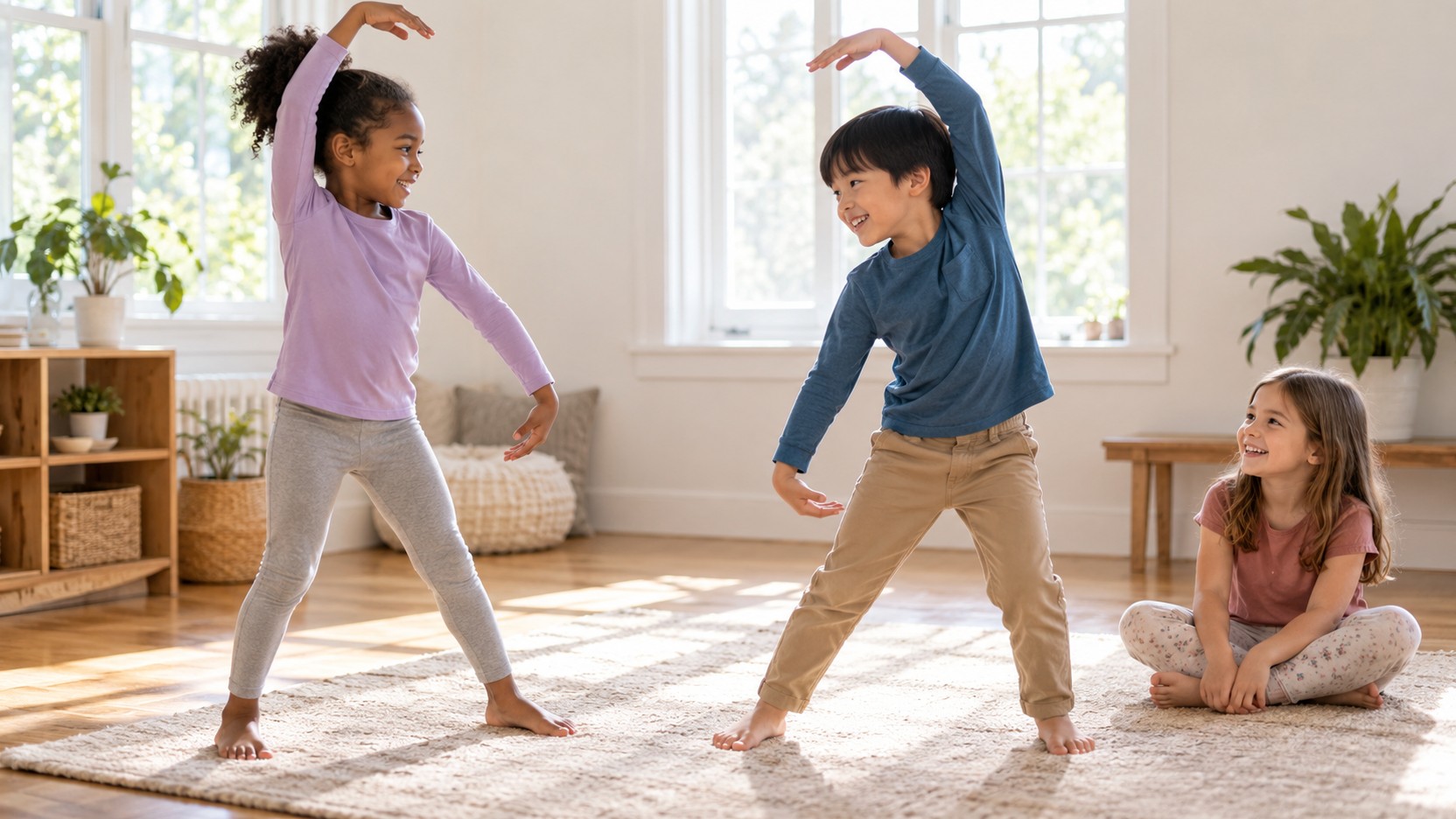
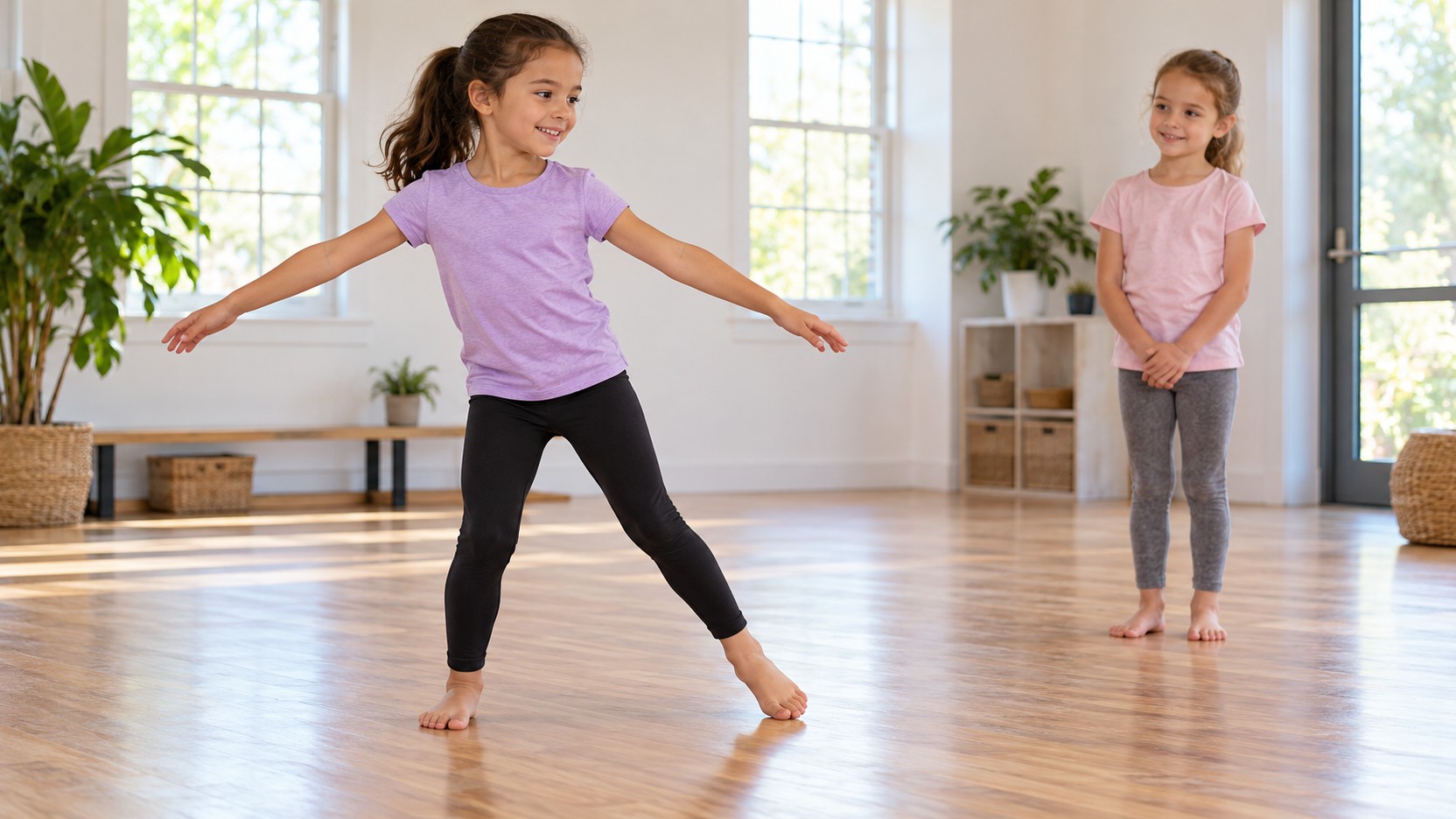
Begin with feet in an ordinary comfortable standing position, leaving clear space to one side. Step a short distance sideways, then bring the other foot nearer without snapping the feet together. Return through small steps in the opposite direction. Demonstrate the whole out-and-back action before asking the child to try. Keep it at a conversational pace, with suitable support and individual guidance where needed. A seated participant can explore the same change of direction through a comfortable arm pathway instead of copying the feet.
Try one out-and-back journey, pause, then decide whether to add another. The child can choose the direction by pointing, speaking, or using their usual communication. Once the action is familiar, pair it with a gentle repeated pulse and notice where the return begins. If the music is too quick, return to an adult-made cue that can wait. A first lesson can stop here; the later sequence uses this familiar action rather than introducing several new steps at once.
Explore Shape Through Space
A shape can be wide, narrow, rounded, angular-looking, high, or low within a comfortable range. Invite the child to create one shape and describe what makes it distinctive. They can use their whole body or a selected body part. A hand can draw a curved shape while the rest of the body remains seated. Avoid judging the shape by how far someone stretches or whether it matches an adult’s physical range.
Move slowly from one chosen shape to another. Ask whether the transition should feel continuous or include a pause. The route between shapes can become as interesting as the destinations themselves. A child might lead with an elbow, trace an imagined doorway, or let a curve travel from one arm to the other. Keep the invitation specific enough to begin while leaving the visual answer open.
Give shapes a purpose when the child enjoys stories. A small shape might protect a secret, while an expanding one might reveal a surprising discovery. Do not require everyone to interpret the image in the same way. Ask the maker what they intended before offering a description. Movement can carry personal meaning without needing to be understandable to every observer immediately.
Watch Dance With a Specific Curiosity
Choose a short suitable dance example and watch for one feature: a repeated gesture, a change of direction, or a pause before the next action. Ask the child to point or signal when it returns. Then try the artistic choice with a comfortable familiar movement, such as repeating an arm curve twice before pausing. Keep advanced physical techniques in the recording separate from the simple home experiment.
Identify the dance, performers, and context accurately when that information is available. A short clip can introduce curiosity about a style without representing its whole tradition. If the child wants to learn that form, ask a qualified teacher about a beginner route. The observation exercise can still stand alone as a way to notice repetition, timing, and direction in a performance.
Make Time a Choice Rather Than a Race
Try a familiar action at a steady comfortable pace, then make it slower without forcing an extreme sustained position. Compare a smooth continuous movement with a sequence of separated actions. A pause can emphasize what comes next or make an ending clear. Speed is one possible choice, but moving faster should never become the automatic sign of doing better. Give the child time to notice how timing changes the same basic action and to select the version that fits the intended effect.
Connect Movement to Music in More Than One Way
A child can move with a regular beat, follow the length of a phrase, or respond to a change in sound quality. Explain the particular invitation instead of saying only to dance correctly with the music. A simple side step may follow the pulse, while an arm curve may stretch across several beats. Demonstrate those different relationships briefly and invite the child to try whichever feels understandable.
Use music at a comfortable volume and consider the child’s preferences. A live hum or gentle tap can be easier to adapt than a busy recording, especially when a learner needs time to prepare. Silence can also support dance: a child can create a short sequence and later decide whether music adds anything useful. The relationship between movement and sound is an artistic choice, not a requirement that every action have a soundtrack.
Try a First Short Creative-Dance Lesson
Use a clear area and choose three already comfortable actions: the side-step journey, a small arm curve, and an ordinary pause. First demonstrate them in that order without music, including the return to the starting place. Next let the child try, adapt, or direct one round. Add a short suitable musical phrase only after the order makes sense. Ask which moment they want to emphasize and repeat that part once in the next version. Finish by returning to a stable comfortable position and announcing the ending. The sequence can take just a few minutes when that fits; its useful length depends on interest and access rather than an age formula.
Revise One Part and Compare the Effect
Watch the sequence or invite the child to describe how it feels from inside the movement. Ask which moment they want to emphasize. They might repeat a gesture, change its size, move a pause, or alter the direction they face. Choose one revision and try both versions. The later version is not automatically better; it simply offers another effect to compare.
If an adult demonstrates a possible change, do so in a separate attempt rather than physically moving the child’s body into position. Ask before giving hands-on assistance and respect a refusal. Some learners may benefit from clearer verbal cues, visual demonstrations, or a shorter sequence. Support should make the child’s intention easier to express while preserving control over the movement and its meaning.
Choose a Class Through Its Actual Teaching Environment
Ask the provider what happens in the first beginner session: how participants arrive, which actions are introduced, how demonstrations are given, and what help is available. Explain relevant access needs privately through the appropriate process. Request the actual clothing and footwear requirements before buying equipment. A clear account of the first visit helps you prepare the child for the setting.
Where observation or a trial is available, notice the response when someone misses an instruction. Does the teacher show the next action clearly, adapt the explanation, and maintain appropriate boundaries? Ask the child which part felt understandable or confusing afterward. Their experience and the teacher’s practical response are more useful than judging the promotional performance alone.
Check the full commitment, including travel, changing time, cost, and any later performance expectations. Ask which elements are required and which are optional. A teacher should also be able to explain the dance style and its context respectfully. Choose a manageable arrangement that supports the child’s current interest, and agree when to review how it is working.
| Before booking | Useful detail to confirm |
|---|---|
| First arrival | Entrance, receiving adult, and where caregivers wait |
| Teaching | Beginner demonstrations and support for a missed instruction |
| Participation | Access arrangements, breaks, and communication |
| Commitment | Equipment, travel, fees, and performance expectations |
Let Enjoyment and Intentional Choices Guide What Comes Next
Finish the first experience with a recognizable closing moment and a chance to rest. Ask which action the child wants to remember or which part they would change next time. Their answer can guide a small next step: another side-step variation, a new shape transition, or a different musical relationship. Keep performance optional and ask permission before recording or sharing movement. A beginner’s dance can remain a private experiment, become a shared game, or grow into a longer artistic interest at a pace the child helps choose.