Try an Age-Based Starting Game, Then Adapt the Movement
Begin with a toddler wave-and-answer exchange, a preschool growing-and-settling shape, or a school-age three-action movement phrase. Each example explains the sound cue, the response, and the ending. Use the age bands to browse, then match the actual action to the participant’s movement, communication, and comfort. The later sections show how to make a cue visible, share a musical idea across ages, and change a recording or sequence when it becomes difficult to follow. Start with clear space and comfortable sound.
A: They can share music when the movement and listening demands are adapted to each participant.
A: Seated gestures, sounds, gaze, and other comfortable responses can contribute meaningfully.
A: Use clear cues, ordinary comfortable stopping positions, and calm restarts without elimination.
A: It is a short chosen sequence of actions that can be repeated and revised.
A: No; the activity may respond to a phrase, texture, contrast, or melodic direction instead.
A: Offer parallel versions linked by a common opening, musical idea, or ending.
A: Demonstrate and offer appropriate support while respecting consent and the child's comfortable range.
A: Reduce sound, simplify the task, or use a live gentle sound that can adapt to the participants.
A: Observation can be a chosen role, and a child may contribute through selecting or directing.
A: Use a predictable closing phrase, return to comfortable positions, and allow time for rest or practical needs.
Separate Age From the Demands of the Activity
Age can suggest a starting point, but it does not tell you everything about a child’s balance, hearing preferences, movement experience, stamina, or confidence in a group. Look at the actual tasks. Does the activity require traveling while listening for a cue, remembering a sequence, or moving one body part independently? Begin with a manageable combination and adjust through observation. A child may enjoy complicated musical choices while preferring a small seated action, and another may want broad movement with a very simple listening task.
Make the Space Predictable Before Music Starts
Clear the floor of loose objects and check that the surface suits the movements being offered. Keep enough room between participants for arms and steps without touching. Establish the edge of the activity area and identify a place to rest or watch. A child should not need to leave the room entirely in order to reduce participation. Explain how to signal a stop and what will happen when the activity ends.
Introduce music at a comfortable level and avoid competing with other loud sound. Use a visible cue alongside any audible stop signal when that helps the group. Keep props optional and age-appropriate; movement does not require loose scarves, small shakers, or anything that complicates the setup. If materials are used, check them first and explain their intended handling. A predictable environment gives children more attention for the musical experience itself.
Toddlers, Roughly Ages 1–3: Wave, Wait, and Answer
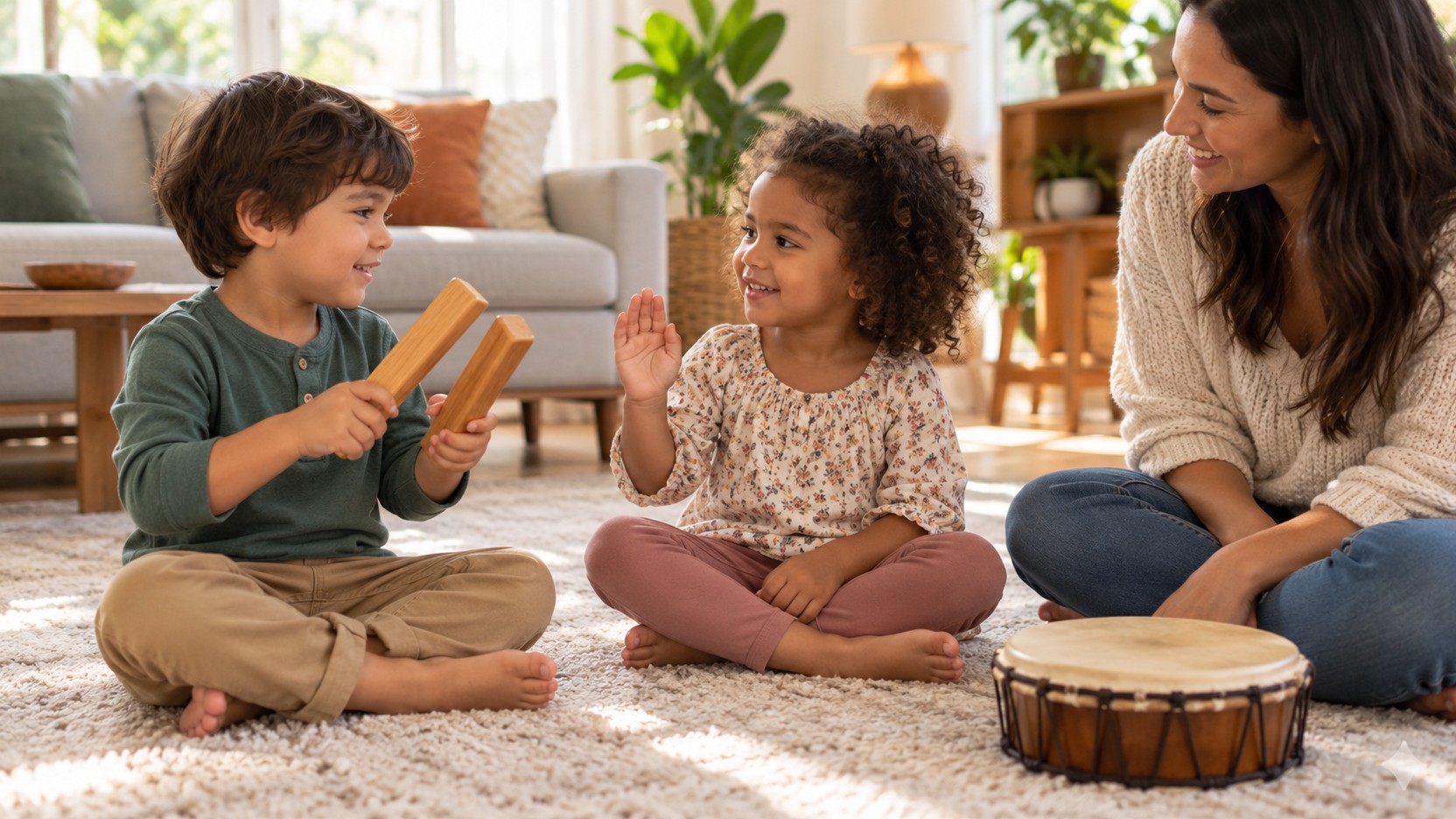
Sit nearby and sing a short original phrase such as “Here comes a little wave” while showing one comfortable hand wave. Pause and wait for the toddler’s response: watching, moving, sounding, or indicating more can all shape the exchange. Answer what they actually offer, then repeat the phrase if welcome. A small round can end after two or three exchanges, without treating that number as a target. Keep the sound gentle and the action visible. The adult demonstrates on their own body rather than positioning the toddler’s arms, and the game can remain entirely seated with suitable support.
Build Toddler Exchanges From Repetition and Choice
Choose one short original sung phrase or familiar family tune and pair it with a comfortable action. Repeat the pairing enough for the child to anticipate what comes next. A pause can invite a gesture, sound, or look that signals whether to continue. Respond to that contribution. The exchange becomes shared when the adult follows the child’s communication, rather than completing a routine regardless of the response.
Offer a choice between two actions that are both accessible, such as an arm wave or a gentle knee tap. Demonstrate them separately and allow the child to select through their usual means. Avoid presenting a large menu of movements. One clear choice can give genuine control without overwhelming the interaction. The chosen action can remain the favorite across several sessions.
Watch what happens at the pause. If the toddler offers another wave, answer it before repeating the phrase; if they look toward a different action, show that alternative separately. A child who turns away or signals that the sound is uncomfortable may need a quieter exchange or an ending. Keep the actual cue in view and respond to the communication offered. The next round can return to the action the child chose, without increasing the number of movements.
Preschoolers, Roughly Ages 3–5: Grow and Settle
Make personal space and demonstrate two comfortable arm shapes: a small folded-looking shape near the body and a broader opening. Explain that an ordinary gently rising hum invites the shape to grow, while a falling hum invites it to settle. Try the contrast once without a soundtrack, showing the whole return. Then let the children respond in their own comfortable ranges. Stop in an ordinary stable position between rounds instead of requiring a difficult frozen pose.
Invite a willing child to choose the next contrast: broad and compact, flowing and separated, or moving and pausing. Keep the chosen cue pair for one complete round before changing it. A child can direct the sounds, demonstrate a gesture, or choose through another familiar communication route. End with the original small shape and an announced finish. The game has a clear musical relationship without requiring everyone to create the same plant or copy an adult’s range.
Make a Musical Cue Visible Before Adding Equipment
Try the movement with an adult-made sound and a clear gesture first. For the preschool growing-and-settling game, raise or lower your own hand while humming the matching contour. Participants can see the direction as well as hear it. Check that the cue is visible from their actual places, including from a suitable seat.
If a visual object would help, choose one broad suitable card or another safe cue that the adult can hold clearly. Demonstrate where it appears, what response it invites, and where it rests between turns. Keep loose small parts and wrapping materials out of the activity. The object should clarify an action already understood, rather than introduce a second handling task without a purpose.
Use a trial to see what changed. If participants now watch the cue and find the entrance, keep it for that round. If attention shifts to passing or examining the object, either follow that different activity safely or put the cue aside. An empty-hand gesture may be the clearer option. Compare the practical result before distributing props to everyone.
Teach the Stop as Part of the Movement Phrase
Demonstrate a complete start, movement, and stop before adding a recording. For example, show a gentle arm curve, finish in an ordinary comfortable position, and lower the cue hand to signal the pause. Repeat once with a willing participant while others watch. If stopping is unclear, make the gesture easier to see or reduce the movement; a seated gesture can carry the same timing. Add the music only after the group recognizes the return to the resting position, then keep that cue consistent through the round.
School-Age Children, About 6 and Up: Compose a Movement Phrase
Choose three familiar suitable actions, such as a side step, an arm curve, and a pause. Arrange them in that order without music, showing where each starts and ends. Let the child perform, adapt, or direct the phrase once, then repeat it together at an easy pace. Keep the travel inside the available space. This first round establishes a sequence that can be recognized before another listening demand is added.
Add a short comfortable musical phrase or an adult-made pulse. Ask where the child wants each movement to begin, then try that relationship once. They may stretch the arm curve across several beats or leave a gap before the final pause. Repeat the preferred version, change one feature, and compare the effect. The musical decision belongs to the composer; a longer sequence is optional rather than the automatic next goal.
For partners, keep the agreed order and timing while allowing different physical actions. One child can make the curve from a suitable seat while another adds a step, then both meet at the final pause. Exchange the composing role if wanted. Finish by repeating the version the children chose to keep, then name the next ordinary activity. These approximate age bands describe starting invitations, not ability deadlines; adapt the tasks according to the actual participants.
Let Children Choose How Closely to Follow a Recording
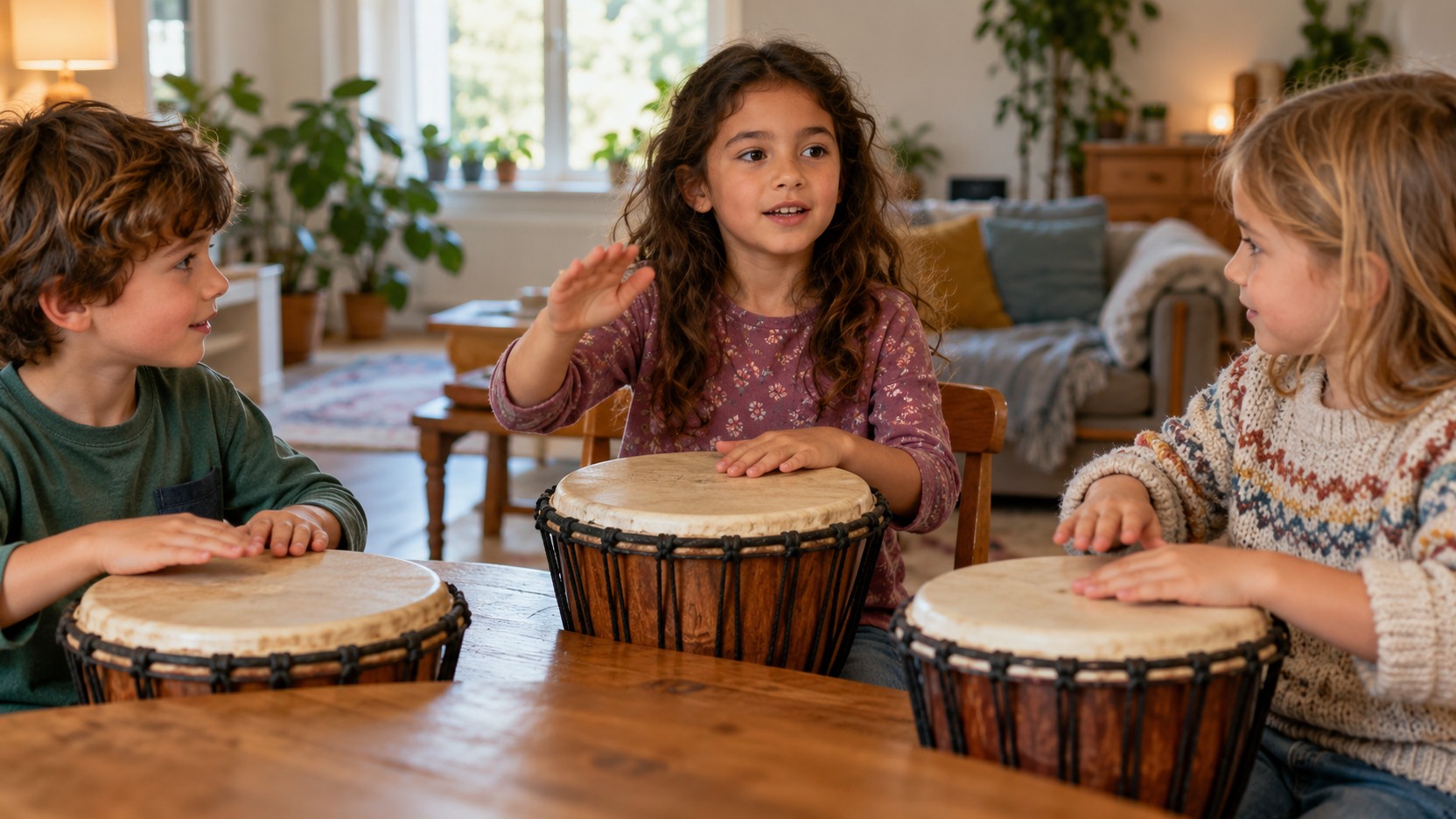
Some activities invite movement with a regular pulse; others respond to a change in texture, a melodic contour, or a mood. Explain which relationship matters before asking the child to follow the music. A slow arm sweep can respond to a long phrase even when it does not mark every beat. If the recording feels too busy, simplify the movement or return to a live adult-made sound that can adjust to the participants.
Choose recordings thoughtfully when using them. Keep volume comfortable, consider lyrics and context, and include music connected to participating families where appropriate. Invite children to describe or demonstrate what they hear without assigning one correct dance response. Avoid presenting a whole musical tradition as a single costume or gesture. Curiosity, accurate context, and respectful exploration matter more than collecting superficial themed activities.
Create Mixed-Age Activities Around Shared Decisions
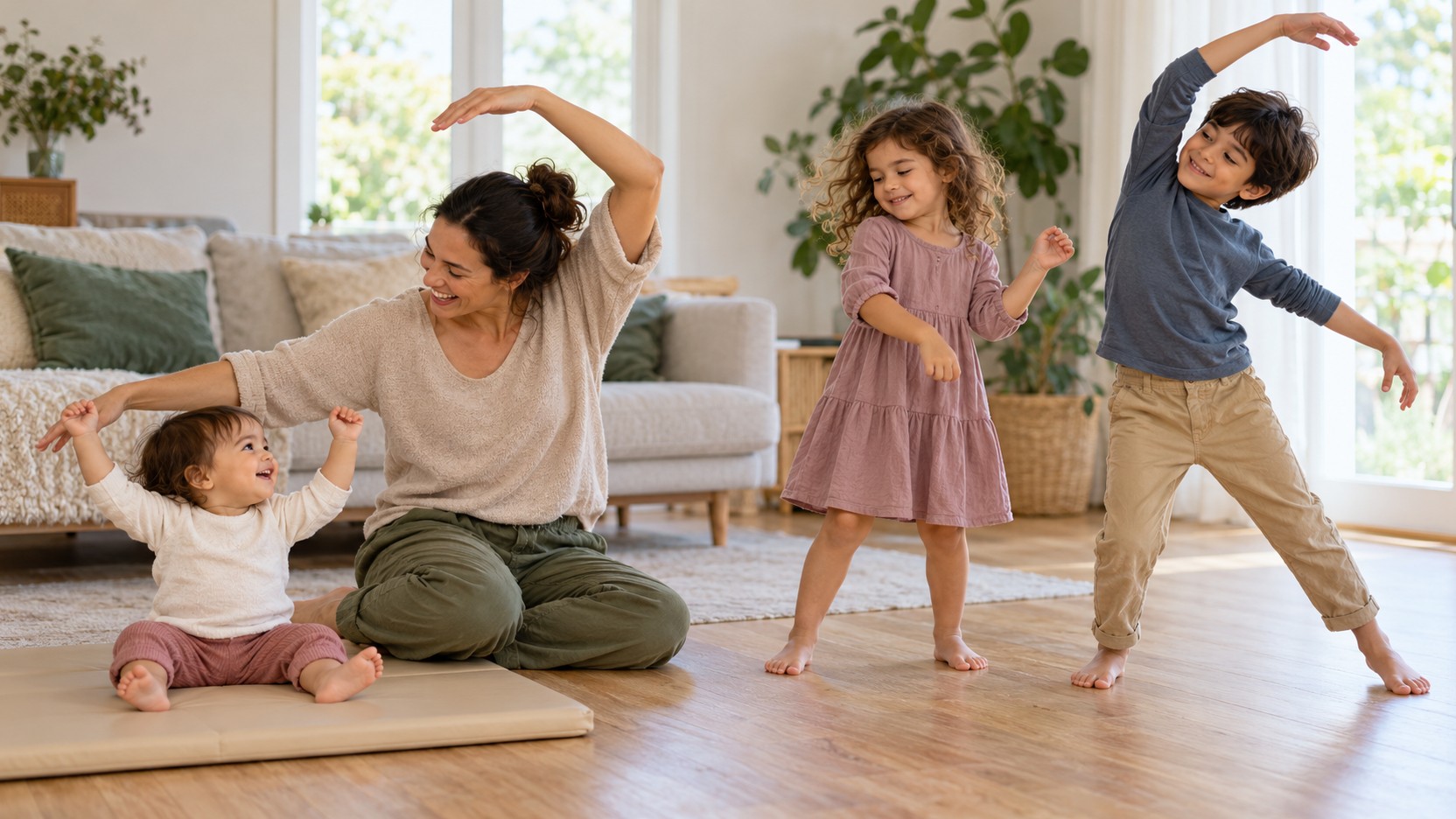
A mixed-age activity can share a beginning, a musical contrast, and an ending while offering different movement options. During a rising phrase, a toddler might lift a hand, a preschooler might reach upward, and an older child might develop a short sequence of expanding shapes. Everyone responds to the same change through an action that suits them. Keep enough space that broader movements do not crowd the smaller ones.
Give leadership roles across ages without assuming that the oldest child must direct the youngest. One person can choose the next sound, another can show the start cue, and another can select the ending. Make each role understandable and optional. Adult support may be needed to communicate a choice clearly, but the choice should remain the child’s.
When siblings want different levels of challenge, offer parallel versions. The older child might add a remembered sequence while the younger child repeats one favorite movement. They can meet again at the shared ending. Collaboration does not require everyone to spend the whole activity doing the same thing. A clear shared feature can hold different kinds of participation together.
Use Observation to Adjust the Invitation
Notice what children return to voluntarily. Repeating a small hand pattern may suggest interest in timing, while moving across the room may reflect enjoyment of travel. Ask before adding difficulty. If the group becomes crowded, reduce the number traveling at once. If attention drifts during instructions, demonstrate the next action more briefly. The response to an adjustment provides more useful information than a fixed expectation about what a particular age should manage.
Give the Activity a Clear, Comfortable Finish
Slow the pace when appropriate and choose a familiar final gesture or phrase. Let children return to an ordinary comfortable position without requiring a specific breathing pattern or a silent pose. Offer a drink or rest according to the setting and the child’s needs. A predictable ending helps separate lively musical play from whatever comes next, especially when the activity has involved broad movement or a group.
Ask one concrete reflection if the participants want to share: which action should return next time? A toddler may demonstrate it, while an older child may explain a change they would make. Save the idea without promising that the next session must become harder. Music and movement can grow through familiarity, more intentional choices, and improved access. The best next invitation is one the actual children can enter comfortably and help shape.