
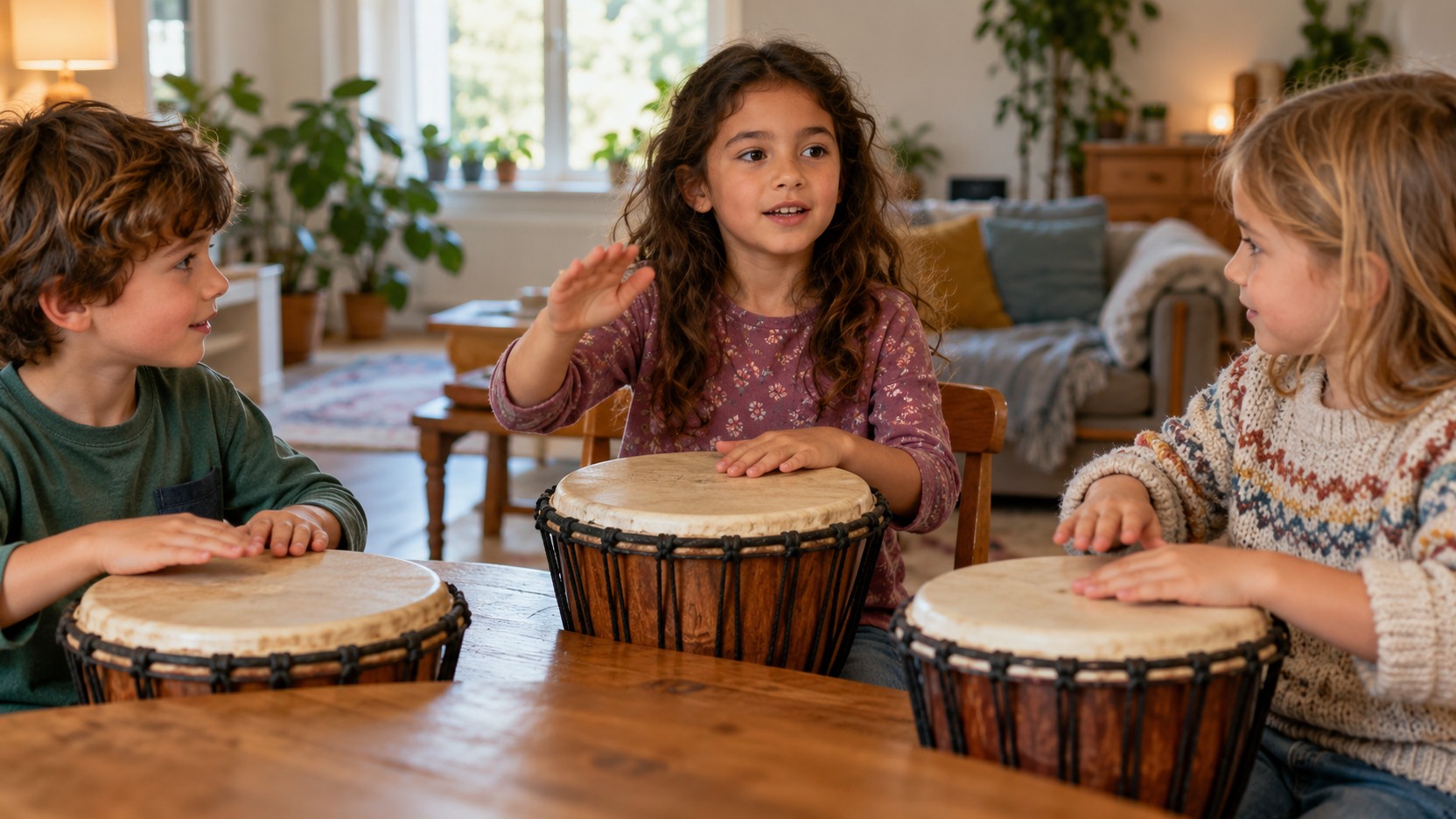
Choose a Rhythm Game for Pulse, Memory, or a Clear Entrance
Use the fifty-game collections below to choose a musical task, then follow the complete rounds in the main article. Traveling Tap passes a pulse around a circle; Two-Sound Echo copies a phrase; Pause Planner changes where silence falls; and Alternating Doors coordinates two groups. Start with a short demonstration, suitable sound sources, and an agreed stop cue. Once the round is clear, change one feature such as the sound order or the leader. Voices, gestures, and gentle body percussion can carry many of the same timing ideas.
A: Choose a few that match the group's attention and purpose; there is no need to work through the whole collection.
A: Identify one barrier such as phrase length, pace, or an unclear entry cue and adjust it.
A: Yes; taps, sways, gestures, and accessible movement choices can carry a regular pulse.
A: Keeping them involved provides another chance to understand and practice the shared timing.
A: Give a defined role such as choosing the pattern, indicating rests, or setting the ending.
A: Its place and timing connect to the surrounding pattern rather than being an accidental loss of place.
A: Repeat a satisfying level or finish when attention wanes; increased difficulty is optional.
A: Use their preferred gestures, movements, communication tools, or accessible sound-making options.
A: Describe a specific change in listening, cueing, timing, or turn-taking that the group can recognize.
A: Yes; a familiar rule can support new sound choices, leaders, and pattern variations.
Pick the Musical Skill Before Picking the Game
A game becomes confusing when several unfamiliar tasks arrive at once. Keeping a pulse while remembering a long pattern and following a new stop signal may be too much for a first round. Choose one main focus. If the aim is pulse, keep the pattern simple. If the aim is remembering a sequence, let an adult handle the steady beat. Explain the immediate task in everyday words and demonstrate it before expecting a response.
Use the collections as a menu. The first group offers ways to share a regular pulse, the second explores pattern recall, and the third makes silence and listening active parts of play. Cooperative timing appears in the fourth group, while the final group invites children to invent and transform rhythmic ideas. Select a game that fits the people and space today rather than treating the list as fifty required lessons.
Set Boundaries for Comfortable Sound
Check instruments and objects before distributing them. Choose age-appropriate, intact equipment and avoid homemade shakers with small accessible fillings. Gentle body percussion or voices may be enough. Establish a comfortable sound level and keep striking actions away from ears and other people’s bodies. A sound that seems mild to one person may still be unpleasant to another, so offer alternatives and respond promptly when someone wants a quieter version.
Agree on a clear stopping cue. A raised hand, a visible card, or another simple gesture can work if everyone understands it. Practice the cue once before adding the game. The stop should allow the group to reset calmly, not catch children out. Explain where instruments rest between turns so waiting does not become a constant stream of unplanned noise.
Make the space suitable for the movement involved. A seated tapping game can work around a table, while walking a pulse requires a clear level area and safe boundaries. Reduce travel when the room is crowded. Children can often explore the same timing idea through hands, voice, or a chosen movement without moving across the floor. Keep participation flexible enough that the musical purpose survives those adaptations.
Demonstrate One Complete Round
Show the beginning, the turn change, and the ending of a round. A brief complete demonstration usually explains more than a long set of verbal rules. For a passing game, show exactly when the next person enters and what the previous person does afterward. For an echo, leave an obvious gap between the offer and the reply. Let children see a simple version before you introduce optional variations.
Check understanding through action rather than asking for a formal explanation. Invite a willing participant to try a short exchange, or let the group watch an adult pair demonstrate. If the first attempt becomes tangled, identify the unclear point. Maybe the entry cue was hard to see, or the pattern was longer than expected. Change that part instead of repeating the entire explanation more loudly.
Play Traveling Tap and Silent Engine
Traveling Tap works with two players or a small seated circle. An adult models an easy evenly spaced knee tap, then passes one tap per beat around the circle in an agreed direction. Continue until it returns to the leader, pause, and let another player begin. If the handover drifts, return to the adult’s steady model before another round. For Silent Engine, everyone makes the same comfortable repeated gesture while the leader taps aloud. The leader then stops sounding but keeps the visible pulse going, and players continue their gestures until the sound returns. End with a visible stop cue. These games share pulse but have different aims: an orderly handover in the first and continuing through silence in the second.
Try Two-Sound Echo and Pattern Suitcase
Two-Sound Echo needs two comfortable contrasting sounds, such as a knee tap and a light clap or suitable alternatives. The leader makes a short phrase, for example tap-tap-clap, then leaves a clear turn for the partner to answer. Play three exchanges before offering the leadership role. A repeated demonstration is available when the phrase is unclear. Change either its sound order or its length for another round, keeping the other feature familiar.
Pattern Suitcase builds a shared phrase one contribution at a time. The first person chooses one sound, the next repeats it and adds another, and the group tries the growing phrase together before the next contribution. Stop adding while the sequence remains enjoyable to recall, then play the complete suitcase once more as the ending. A visible gesture reminder can preserve the order. If the chain becomes too long, keep its favorite short section instead of eliminating the person who lost the place.
Make a Rest Matter in Pause Planner and Sound Window
Pause Planner starts with a short repeated phrase, such as three comfortable taps followed by a clear gap. Demonstrate it several times at an easy pace. A child then chooses which sound position will become silent, and the group keeps that place through a small visible gesture. Repeat the changed phrase together and finish at the leader’s agreed cue.
Compare two placements of the gap while keeping the sound and pace familiar. Ask whether the return arrives where the group expected, and let a player demonstrate another version. The useful musical decision is where silence belongs. Nobody needs to name a formal note value to participate in that choice.
Sound Window gives a partner an entry instead of asking everyone to remain silent. One player repeats a short phrase and leaves the same open space each time; a second adds one gentle sound only in that window. After a few repetitions, exchange jobs. If the entry is hard to locate, make the gap more visible and model it again. End by playing the original phrase alone once, followed by the shared stop.
Coordinate Two Groups With Alternating Doors
For Alternating Doors, divide a small group into two willing teams with different comfortable sounds or gestures. The leader shows an open hand to one team, then the other, at an easy steady pace. Each team responds only when its door opens. Begin with alternating entries, then let the leader repeat a team or add a shared pause. Demonstrate a complete short round and finish with both doors visibly closed. A missed entry leads to another clear demonstration, not removal from the group. The teams can swap sounds before the next willing leader takes over.
Vary a Familiar Game One Musical Feature at a Time
For Traveling Tap, keep the direction and handover rule while changing the sound from a knee tap to another suitable gentle sound. Listen for whether the new sound makes the entrance easier to hear. Return to the original when comparing the effect. Changing pace at the same time would make it harder to tell which feature mattered.
For Two-Sound Echo, retain the two sound sources and add one sound to the phrase. Try tap-clap followed by tap-clap-tap, leaving a clear response turn after each. If the longer order becomes unclear, repeat it or keep the shorter phrase for another round. For Pause Planner, preserve the number of positions while moving the silence, so the group investigates placement rather than speed.
For a group variation, separate the jobs. One player can keep a steady pulse, another can offer the echo phrase, and another can show the stop cue. Demonstrate the combined version once before exchanging roles. Review the feature the group chose to change: a clearer entrance, a remembered order, or a silence held until the sound returns.
Let a Child Compose the Next Round
Name Rhythm Remix begins with a familiar chosen name spoken naturally by its owner or another willing participant. Tap that spoken pattern, then let the composer repeat one part or place a gap before it. The group answers with the new version. Compare the original and remix once before choosing another name. Avoid making anyone’s identity a joke or requiring a child to use their own name.
For Creature Footsteps, a child invents an animal and chooses a short sound pattern for its journey. They might give a huge slow creature two separated taps or a tiny busy creature a quick pair followed by a wait. Partners perform the offered pattern at a comfortable volume, then the composer changes one event in the journey. Finish when the creature reaches its imagined destination. The child can direct with a gesture, device, or demonstrated sound; the adult helps make that intention clear.
Adapt the Response While Preserving the Timing Idea
The same game can use a tap, a spoken sound, an arm movement, or an accessible switch-controlled sound source when available. Identify what must remain consistent: the timing of an entrance, the order of turns, or the shape of a remembered phrase. Then allow the action itself to vary. A visually directed response can be as intentional as an audible one when it serves the game’s agreed purpose. Ask the child what makes participation comfortable and workable rather than assuming one universal adaptation.
Use the Last Round to Pick the Next Demonstration
Listen for the particular moment that needs clarification. If replies begin before the leader finishes, demonstrate the offer, the gap, and the response using a shorter phrase. If the circle loses the handover, point to the next player while modeling the pulse. Match the demonstration to the event rather than restarting every rule.
Ask a willing player to show the version they want to repeat. Their demonstration can identify the favorite sound, pause, or entrance more clearly than a broad enjoyment score. Keep the example short enough for the group to hear its shape. If participants want to stop, use the familiar closing cue instead of adding another variation.
Keep the practical reminder needed for next time: the chosen sound sources, the phrase, or the gesture that marked the turn. A few large marks can preserve the order if the group wants them. Begin the next session with that known round, then offer one fresh musical decision. Familiar rules leave more attention for listening to the change.
Close With a Shared Ending
Choose a short final pattern or a visible group stop. Let the ending be clear enough that children know the game is complete. Put equipment away safely and invite one person to choose a game worth revisiting. The response might come through a sound demonstration rather than a name. That is enough to preserve the idea for later. Familiarity can become a useful doorway back into musical play.
On another day, return to the chosen game with one intentional change. Use a different comfortable sound, alter where the rest falls, or let someone else lead. Keep the rule that made the original exchange enjoyable. Fifty games provide variety, but the deeper value comes from children hearing, shaping, and sharing patterns in ways that make sense to them. A good game leaves them with a choice they want to try again.