Explore Beat, Rhythm, and Sound Through Short Musical Exchanges
Begin with a quiet knee tap, a short hummed shape, or two suitable sound sources that are easy to tell apart. The activities below show how to keep a beat, answer an echo, change pitch direction, and give sound and silence roles in a short story. Each uses a clear starting cue and a manageable turn. Choose one activity, demonstrate its pattern, and let the child copy, lead, or direct as that round allows. Keep the sound comfortable and the materials suitable for the participants.
A: Voices, suitable body percussion, listening, and movement can provide many useful starting points.
A: The beat is a regular pulse; rhythm is the pattern of sound lengths and pauses over time.
A: Different actions make different demands; use a comfortable way to participate rather than requiring clapping.
A: Decide the round's purpose: copying and contrasting are both useful musical exchanges.
A: It describes the sound quality that distinguishes sources such as a voice, drum, or wooden block.
A: They can direct entries, choose sound sources, move, observe, or use visual cues.
A: Keep sound comfortable; musical surprise can come from timing, silence, or a different gentle sound.
A: Yes; use the languages and musical traditions that are meaningful to the participating family.
A: Begin with a few clear roles so each event remains easy to hear and place.
A: Use a familiar closing exchange and invite the child to choose a moment worth repeating.
Create a Comfortable Listening Space
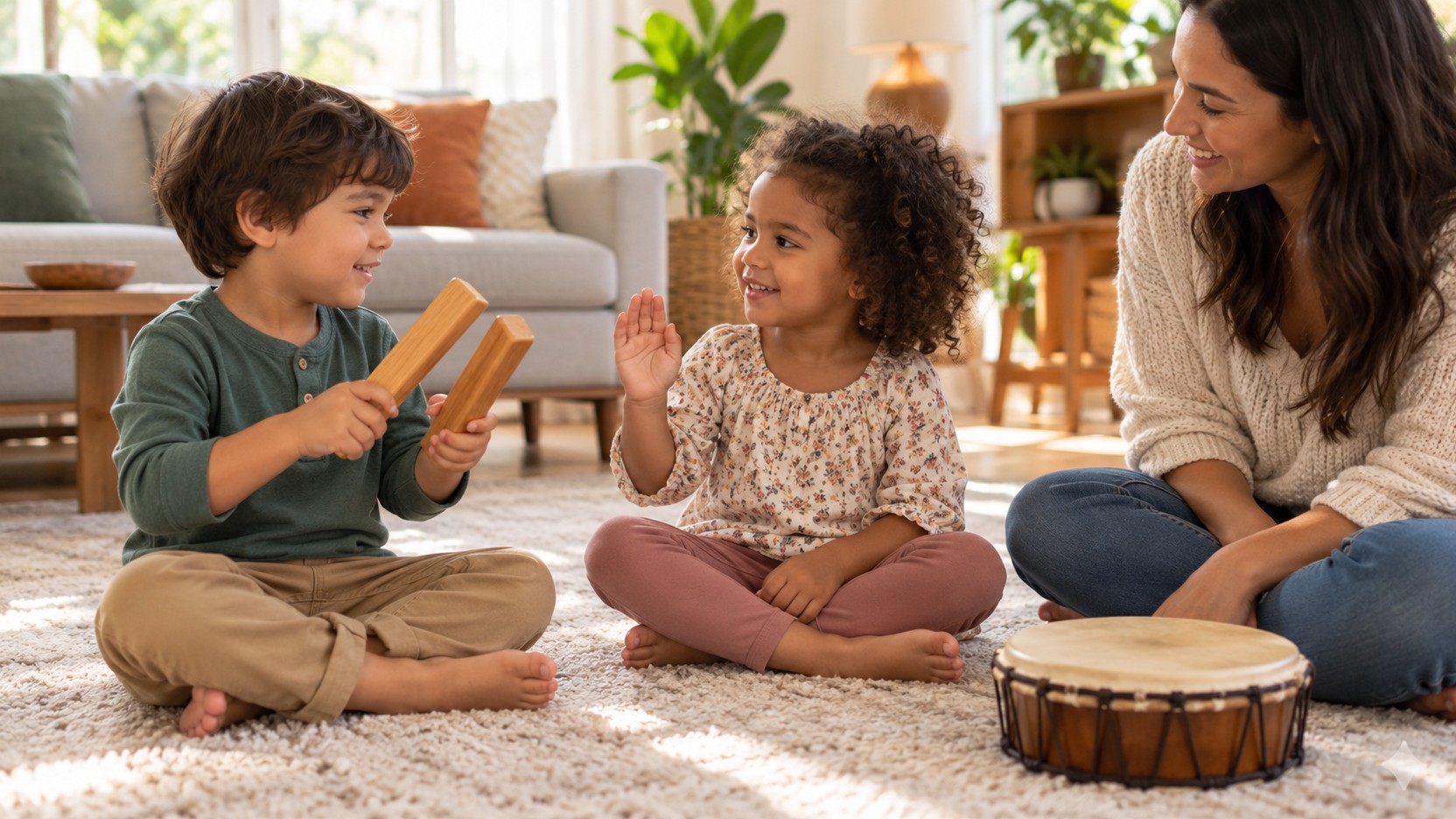
Choose a place where ordinary conversation is easy and where children can hear a quiet sound without competing with a television or another loud activity. Keep the group small enough that turns are understandable. A rug or seated circle can define the space, but children should be able to stand, move, or step away when appropriate. Explain how the activity begins and how someone can signal that they want the sound to stop.
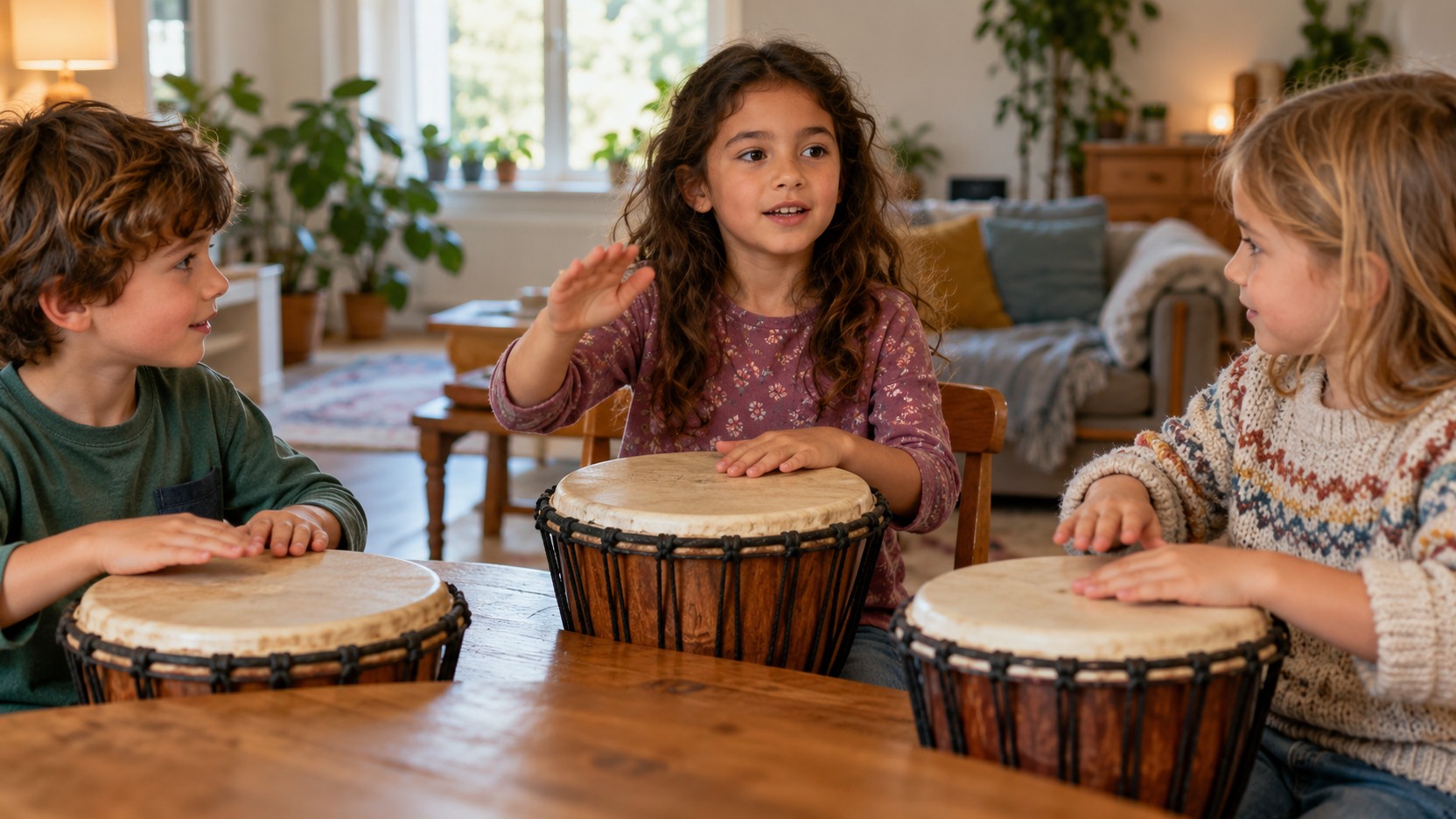
Introduce sound sources one at a time. A hand drum, wooden blocks designed for play, or gentle body percussion can provide plenty to explore. Check that objects are intact, suitable for the child’s age, and used as intended. Avoid makeshift shakers with small loose fillings that could spill. Keep sound comfortable, never strike near someone’s ears, and respect a child’s request for quieter participation or a break.
Take a Short Listening Walk
Pause together and notice the sounds already present. Indoors, that might be a fan, distant footsteps, or a bird outside; outdoors, choose a safe supervised location and listen without moving toward an uncertain sound source. Each child can describe, gesture, or point to something they noticed. Compare a continuous sound with one that arrives in separate bursts. Do not require closed eyes, especially when awareness of the surroundings matters. The purpose is to make listening an active choice rather than a demand for perfect silence.
Find a Steady Beat Through a Familiar Action
Tap a comfortable, evenly spaced pulse on your knees and invite the child to join in any accessible way. They might tap a hand, nod, sway, or indicate the beat with their usual movement or communication tools. Keep the pace manageable and stay with it long enough to become familiar. Avoid speeding up every time someone becomes excited. A stable model makes the shared pulse easier to find.
Connect the pulse to a familiar short song if desired. Listen for the ongoing beat beneath changing words. A child may feel the pulse more readily through swaying than through clapping, so offer alternatives. If the group drifts, return to a simple audible tap rather than correcting every person separately. Enjoying a coordinated moment matters more than making the activity feel like an accuracy test.
Hear the Difference Between Beat and Rhythm
The beat is the regular underlying pulse, while a rhythm is a pattern of sound lengths and pauses over time. Demonstrate by keeping a steady knee tap and speaking a short familiar phrase over it. The spoken syllables will not necessarily land on every beat. Then stop the words and continue the pulse. Keeping the example brief helps children hear the relationship without a long verbal explanation.
Invite a child to choose a phrase about something ordinary, such as a favorite imaginary animal going somewhere. Say it naturally, then clap or tap its pattern while someone else maintains the steady pulse. Do not require both jobs at once if that makes the task frustrating. Roles can be shared between an adult and child or between two willing participants.
Return to listening after the demonstration. Ask what stayed regular and what changed. A child may describe the rhythm through movement or sound rather than musical vocabulary. Accept that response and connect it to the demonstration. Formal notation is unnecessary for this activity; the useful distinction is something they can hear and experience before being expected to explain it in technical language.
Play an Echo Game With Manageable Phrases
Make a short tapping pattern, pause clearly, and invite a response. Begin with something easy to hold in memory, such as two evenly spaced taps followed by a longer pause. Wait long enough for the child to decide how to answer. They may copy, simplify, or invent a contrasting reply. Explain whether this particular round is about matching or about conversation so the expectation is clear.
Let the child lead after the response turn is clear. For a matching round, try tap-tap, pause, tap, then wait while the other person copies. Repeat the same phrase once if its order is hard to hear, or shorten it to two sounds. For a conversation round, announce that the reply can differ and answer the child’s pattern with a contrasting one. Keep those two purposes distinct so participants know whether they are copying a sequence or inventing a response.
Explore the Character of Different Sounds
The quality that makes a drum sound different from a voice or wooden block is often called tone color or timbre. Compare two suitable sound sources using gentle actions. Describe what you hear: ringing, dull, airy, sharp, short, or sustained. These everyday words can make the comparison accessible. A sound’s character may change with the action used to make it, so try a light tap and another appropriate technique only where the instrument permits.
Choose a sound for a particular imaginary role. Which sound might suggest a creature taking careful steps, and which might suggest rain beginning? There is no universal correct answer. Ask the child to demonstrate the connection and listen to the effect. Keep the activity focused on the chosen sounds rather than bringing out every instrument at once. A small range makes differences easier to notice and gives each contribution more space.
Some sounds may be uncomfortable even at a modest volume. Offer a different source, a quieter role, or a visual cue that supports participation. Do not turn a child’s discomfort into a challenge to tolerate more sound. A comfortable setting makes it easier to explore deliberately. The child can contribute through selecting, directing, watching, or moving as well as making an audible sound.
Keep a Sound Idea Available for Another Session
If the child wants to remember an original pattern or story cue, make a simple visual reminder. Large marks can represent sound entries, with spaces for pauses. The maker decides what each mark means and demonstrates the sequence. Try following it once together to see whether it preserves the intended order. This personal score does not need formal music notation or written explanations.
To save the stream story, use a broad footprint mark for walking, a wavy line for water, and a gap for the waiting moment. Point along the marks while the child supplies the sounds, then check whether the order matches the intended scene. Add a simple cue only where something was missing. A recording can also preserve the idea if the people involved agree to it and its audience. Choose the record that makes the next replay easy, and keep its meaning with the sound sources.
Use Pitch Without Requiring a Perfect Singing Voice
Hum a short gentle rising sound, then a falling one, and show the direction with your hand. Invite the child to answer with their voice, a movement, or a suitable pitched instrument already available. Keep the range comfortable and avoid asking for strained high or low notes. Compare direction rather than judging whether a voice is beautiful or precisely tuned. A sliding hum can become a character climbing a hill or a bird descending toward a branch. Let the child invent the next contour and follow their choice.
Make a Sound Story With Clear Roles
Choose a very short original scenario with a few audible events. A character walks toward a stream, waits, crosses, and hears rain begin. Assign one sound to footsteps and another to the water, leaving room for silence. Tell the story slowly enough for the child to place their contribution. The sounds should help the listener follow what happens rather than cover every spoken word.
Trade roles or let the child direct the story. They can decide when the rain grows quieter or when the footsteps stop. A gesture can serve as a cue if spoken instructions would interrupt the moment. Keep the story flexible enough that an unexpected sound can become a new event. The activity introduces musical choice through timing, contrast, and response without requiring a finished performance for an audience.
Let Pauses Have a Real Musical Job
Play a repeating pattern, then leave a clear gap. Ask the child to decide what happens in the silence: everyone waits, one person moves, or another sound enters. A pause becomes meaningful when it changes the relationship between sounds. Begin with a small number of participants so the entry is easy to coordinate. Avoid sudden extremely loud sounds after a quiet wait, since surprise should not depend on discomfort.
A stop signal can be visual as well as audible. Agree on a simple gesture and practice it gently before adding a song or movement. Let a child take the conducting role if they want. Stop-and-start play can support shared attention, but it should not become a punishment for moving at the wrong moment. If the activity becomes confusing, simplify the cue and repeat a calm trial.
Discuss what the pause did to the experience. Did it make the next sound feel more noticeable, create a moment of suspense, or give another person room to respond? Children can answer by replaying an example. Treat their musical choices as information about the effect they want. A short silent gap can be as deliberate a contribution as a drumbeat or sung phrase.
Bring Music Into Ordinary Routines Gently
A short invented tune can accompany putting materials away, walking to another room, or waiting while an adult finishes a task. Keep the words simple and original, and allow the child to change them. Music can make a shared routine more playful, but it should not be required every time or used to override a clear request for quiet. Families can draw on the languages and musical traditions that matter to them.
When listening to a recording together, choose one feature to follow. A child might signal each return of a recognizable phrase, sway with the underlying pulse, or point when a particular instrument enters. Replay a short part if the recording allows it, then try making a related pattern with familiar suitable sounds. This connects listening with an action the child can investigate. Use comfortable volume and a small enough excerpt that the feature stays easy to remember.
End With an Exchange the Child Wants to Repeat
Choose a familiar closing sound or short shared phrase and announce that the activity is complete. Put the instruments away safely, then ask which exchange the child would like again: leading an echo, choosing a rain sound, or keeping a pulse beneath a story. They can demonstrate instead of naming it. A brief activity can remain complete without a performance or achievement score. Save the practical choice that made the exchange enjoyable, and let a new decision about timing, sound, or silence shape another session.