
Understand a Strong Reaction Through What Happened Around It
Start with one event: what the child expected, what changed, what they communicated, and what help was available. An upsetting departure may involve unfinished play, an uncomfortable garment, or uncertainty about the destination, and each suggests a different response. The worked transition below shows how to look before, during, and after the visible reaction. Later sections cover brief immediate support, an adjustment for the next occasion, information from another setting, and when to seek professional advice. A concrete account gives the next conversation something useful to address.
A: It is an everyday description that needs context and cannot identify a condition by itself.
A: Visible intensity does not reveal the full experience; consider the child's account and daily functioning.
A: Keep safety and brief support central, then return to discussion when it is manageable.
A: Leave room for uncertainty and seek broader information or professional advice when concerns persist.
A: A focused change may improve a particular barrier while other needs remain.
A: Context, observable behavior, practical effects, offered support, and relevant responses can help a discussion.
A: Adults should manage safety and support without giving another child that responsibility.
A: Assessment requires appropriate professional consideration of a wider history and context.
A: Seek urgent local help when there is immediate danger or the child or others cannot be kept safe.
A: Look for safer participation, clearer communication, reliable support, and access to valued everyday activities.
Treat Big Feelings as a Description That Needs Context
Children can experience strong excitement, grief, disappointment, fear, or anger. The phrase big feelings does not identify a cause, tell you whether a condition is present, or reveal the best response. Start with a concrete description of what happened. A child may cry after a changed plan, become silent in a crowded place, or struggle to stop a valued activity. Those are different situations even when adults use the same broad phrase.
Describe the individual event rather than compare its outward intensity with another child’s response. A quiet withdrawal after a changed plan and loud tears after an uncomfortable transition provide different information. Ask what each child understood and needed. Include effects on ordinary participation, such as being unable to enter an activity or complete necessary care, when preparing to discuss the concern.
Follow One Difficult Transition Before, During, and After
Consider an example: a child becomes distressed when the family is leaving for an outing. Before the tears, they were asked to stop a building game, find shoes, put on a coat, and get into the car. Calling the whole event refusal hides several demands. Ask what happened at each point and what the child expected. The problem may involve the ending of play, an uncomfortable garment, uncertainty about the destination, or something not yet understood.
During the intense moment, the adult keeps people safe, limits language, and offers practical help. They might say, “The tower matters to you. I can put it on this tray while we get ready.” That offer does not require the child to stop feeling disappointed, and it may not be the right help if the actual difficulty is painful shoes. Observe the response without treating one improved moment as proof of the cause.
Afterward, the child might explain that they feared a sibling would dismantle the tower. That information suggests a protected storage place before the next outing, with a clear return plan. If instead they report discomfort or another concern, follow that account appropriately. The example shows why context changes the response: the same visible reaction can sit within different practical problems. It does not provide a diagnosis from a transition.
Keep Immediate Safety Clear and Communication Brief
If someone may be hurt, intervene to make the situation safer and seek urgent help when necessary. Move hazards or other people where appropriate, use brief clear language, and avoid threats or humiliation. A child who is overwhelmed may not be ready for a long discussion. The AAP guidance on supporting a stressed child emphasizes helping with regulation and connection before reasoning through events. Keep any response suited to the child’s actual needs and safety.
Offer the Help That Addresses the Immediate Difficulty
Use a small real offer connected to what is known. If the child points to a shoe hurting, stop and inspect the practical concern; if they want their unfinished tower protected, offer the prepared saving place. You might say, “I can help with the shoe,” or “The tray is here for the tower.” Wait for the child’s response through their usual communication. A choice between two relevant supports is easier to use than a long list of calming techniques.
Watch whether the help changes the action that was difficult. Can the child indicate where the shoe hurts, show the part of the model they want saved, or understand the next departure step? They may remain upset while that practical need is addressed. If the offer increases distress or misses the concern, reduce the extra talking and reconsider the information available. The child’s response can correct the adult’s first explanation.
Separate the Feeling From the Situation’s Limits
The child may remain disappointed even when the limit stays. A cancelled visit, a safety rule, or another person’s boundary cannot always change. Explain the fixed part simply and acknowledge what matters to the child. You can provide connection without promising the desired outcome. Consistent care does not require removing every frustration, and maintaining a limit does not require dismissing the experience that makes it difficult.
Review Patterns During a Manageable Time
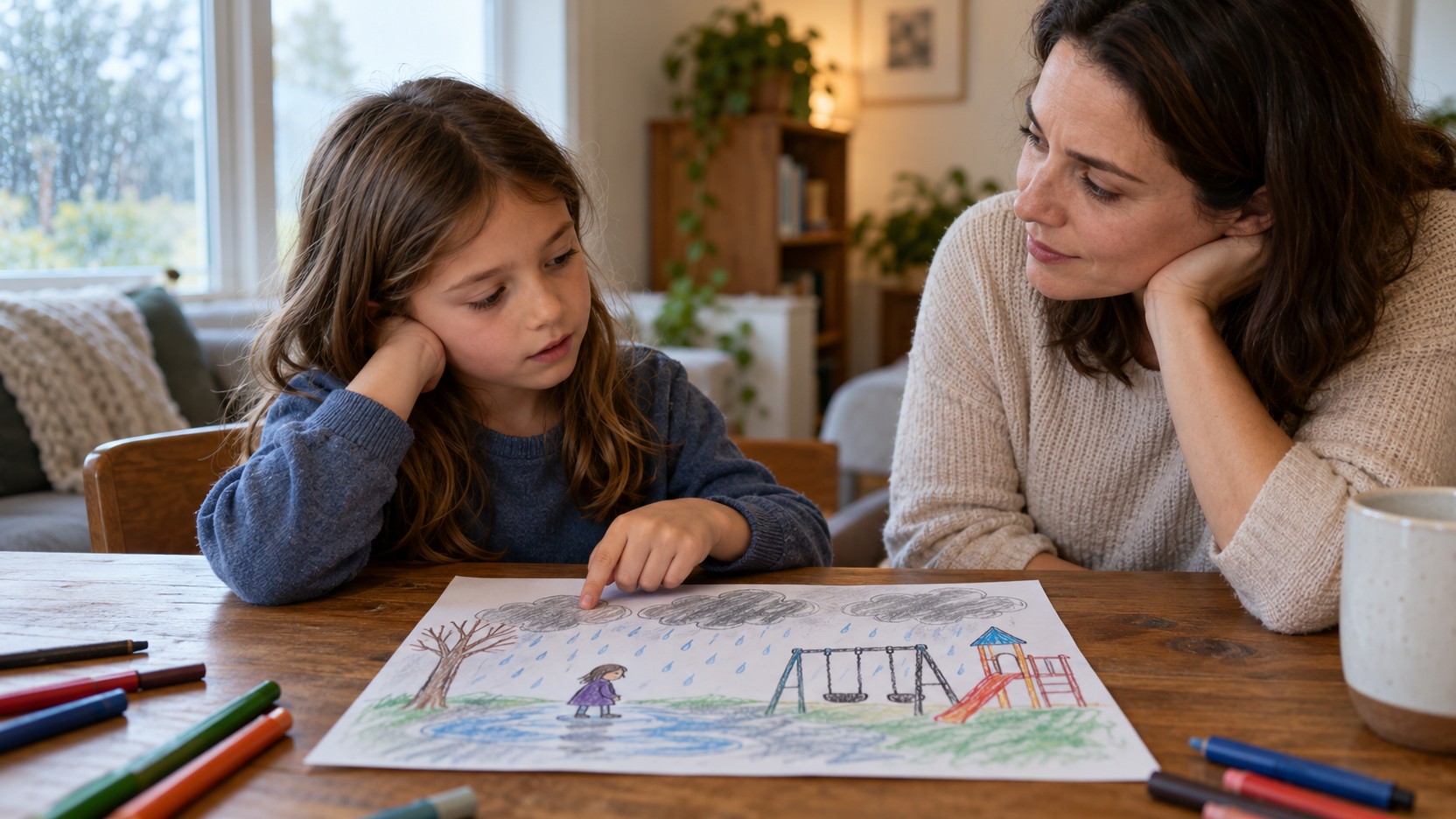
Return to one relevant part of the event when the child is ready. In the tower example, ask whether saving the build addressed the concern or whether something else mattered. Offer a brief private conversation, a drawing, or another familiar communication route. The child can add information later rather than reconstruct every moment on demand.
When a difficulty recurs, keep a small factual account of context, observable actions, practical effects, and support offered. Include occasions when a change helped. A useful entry might say that a protected tray made stopping play clearer, while putting on shoes remained difficult. This gives a professional more information than a broad label about behavior, without turning every ordinary day into surveillance.
Compare settings and adult demands respectfully. The child may have a workable stopping routine at home but no way to save an unfinished project at a group activity. Ask relevant adults for concrete examples and include the child’s account. The aim is to understand the conditions around the pattern, then seek appropriate advice when concerns warrant it.
Change One Practical Demand and Observe the Result
Choose the adjustment through the identified barrier. In the tower example, establish a protected place before the next departure and explain when the build will be available again. If the difficulty instead involves several instructions arriving together, show shoes first and give the coat instruction when it becomes relevant. Keep the departure requirement clear while changing the part that made it difficult to understand or carry out.
Try the changed arrangement during an ordinary relevant occasion and ask about its effect afterward. A protected model might solve the concern about a sibling but leave a clothing problem unresolved. Record both facts instead of treating the whole event as a success or failure. If the change does not help, return to the child’s account and the observed sequence before selecting another explanation.
Support the Adult’s Capacity to Respond
Parents can feel worried, embarrassed, angry, or exhausted during repeated difficult moments. Notice those reactions without making the child responsible for comforting you. When safe, use a brief pause, a trusted adult handover, or another agreed support to keep your response manageable. If you cannot keep people safe, seek immediate assistance rather than trying to manage alone.
Discuss recurring strain with appropriate adult support outside the child’s hearing when possible. A pediatrician, qualified professional, or relevant family service may help identify options. Practical barriers such as sleep disruption, limited respite, and conflicting demands can matter. Asking for support is a way to strengthen the caregiving environment, not a verdict on the family’s worth.
If you respond harshly, repair the specific harm afterward. Name what you did, acknowledge its effect, and explain the practical change you will try. Avoid asking the child to forgive immediately or reassure you that it was fine. Repair should return responsibility to the adult and make future support more predictable.
Write the Specific Preparation Adults Will Change
State the next action with its owner. “I’ll put the saving tray on the shelf before we begin” is more usable than “Tomorrow we’ll all stay calm.” Explain that action to the child and invite a correction if it misses what mattered. Keep the first change small enough to prepare reliably.
For another setting, agree on the actual resource needed rather than assuming the home arrangement exists there. A group leader may need to identify a saving place or explain a changed collection. Confirm the arrangement with the responsible adult and let the child know what has been agreed.
| Identified difficulty | Adult preparation | What to review |
|---|---|---|
| Unfinished work may be moved | Agree a protected saving place | Did the child know where the work stayed? |
| Several departure actions arrive together | Show one usable next step | Which action still needed help? |
| A collection plan is uncertain | Confirm and explain the actual receiving adult | Was the information available when needed? |
Keep Siblings and Other Children in View
Other children may need reassurance, space, and clear information about what adults will do to protect them. Do not assign a sibling the job of preventing or calming another child’s reactions. Give each child a way to request help and preserve ordinary individual time where possible. A family’s support plan should consider everyone affected without blaming the child whose distress is most visible.
Ask Another Setting for Events Rather Than Labels
Ask a teacher or activity leader about the same kind of transition. Request what happened before it, what instruction was given, how the child responded, and what support followed. Include occasions when the transition went more smoothly. A specific example may reveal that materials can be saved in one setting but must be cleared immediately in another.
Compare that information with the child’s account and share relevant details privately with the adults involved in support. A message might say, “Stopping the build is easier when its pieces remain together; where could that happen here?” Staff can explain the actual limits and options. Bring recurring concerns and these observations to an appropriate professional when advice or assessment is needed, rather than trying to identify a condition from one event.
Seek Help Promptly When Daily Life Is Being Affected
Contact a health professional whenever you are concerned, especially with persistent distress, substantial changes, or difficulty participating in sleep, school, relationships, or ordinary routines. The NIMH child mental-health overview describes reasons for professional discussion. Do not wait for a fixed time threshold if the situation is serious or worsening. If there is immediate danger, self-harm risk, or an inability to keep the child or others safe, seek urgent local emergency help.
Measure Progress Through Function and Understanding
Compare the action the adjustment was meant to help. With the tower safely stored, did the child understand where it would remain and move to the next step with the help they needed? Ask whether another difficulty was still present, such as the shoe or the destination plan. Keep that account beside the adult observation. The comparison is most useful when it identifies which part became workable and which part needs another response.
Review a plan with the child and relevant adults. A strategy may need to change as demands, interests, or circumstances change. Keep useful elements and adjust what no longer fits. If a professional is involved, discuss observations rather than quietly abandoning a plan or adding increasingly restrictive responses without guidance.
Use What You Learned for the Next Ordinary Day
Keep the child’s interests, relationships, and ordinary enjoyable activities in view while acting on a concern. Choose the next practical preparation or professional conversation, explain it clearly, and preserve what already works. An accurate account may develop over several exchanges as the child adds information. The useful result is support that fits the real situation more closely, with adults responding to safety and seeking appropriate help when a concern continues.