Help a Child Describe What Happened and What They Feel
Begin with the event, offer a feeling word when it helps, and let the child correct your understanding. A cancelled visit might bring disappointment and relief; a school performance might bring pride and worry at the same time. The conversations and activities below show how to explore those distinctions through words, pictures, play, or the child’s usual communication. They also explain how to keep a safety boundary, ask what help is wanted, and return to a misunderstanding later. Start with one experience the child wants you to understand.
A: Offer possible language tentatively and leave room for correction or another description.
A: An everyday account, gesture, or picture may communicate meaning before a specific term is useful.
A: Visible behavior alone does not reveal the full internal experience; ask and observe context.
A: Include pride, anticipation, relief, delight, and mixed experiences as well as distress.
A: Let art support communication without treating colors or symbols as diagnostic evidence.
A: Acknowledge the feeling while stopping unsafe actions and teaching workable alternatives later.
A: Ask what is welcome; space, quiet company, or practical help may be preferred.
A: Share necessary concrete information and include the child in appropriate planning.
A: Ask whenever worried, especially with persistent distress, substantial changes, or interference in everyday life.
A: Notice a clearer distinction, a corrected adult guess, or a more accessible request for support.
Listen to the Experience Before Selecting a Label
After a cancelled visit, an adult might begin, “You were looking forward to seeing Mina. What is the hardest part now?” The child answers, “I’m mad, but I also don’t want to go because we argued yesterday.” A useful response is, “You wanted to see her and felt unsure about being together. Have I understood?” The child may correct either part. This exchange leaves room for mixed feelings without turning the adult’s first guess into the official account. Offer a pause or another communication method if talking adds effort.
Offer a possible feeling word tentatively when it seems useful. Ask whether disappointed, worried, or another word fits, and accept a correction. The child may prefer an everyday description before a precise label. The American Academy of Pediatrics guidance on emotional development includes acknowledging and naming feelings within supportive relationships. Treat language as a tool for understanding rather than an answer the child must give to satisfy the adult.
Build Vocabulary During Ordinary Manageable Moments
Use the event to make a word useful. After a performance, a child might say, “I’m happy, but I don’t want to do it again.” Ask which part they enjoyed and which part was difficult. They may feel proud of remembering a line and worried about standing in front of the group. Offer those words tentatively and check which, if either, matches their account.
Model one small distinction from your own ordinary day. “I was frustrated when the drawer stuck, and relieved when I found what caught it” connects words to events the child can follow. Keep the example brief and show the practical action you took. Return the conversation to what the child wants to describe rather than asking them to take care of your response.
Revisit a useful word when another relevant event occurs. A child may use “bad” for several experiences before wanting a more precise description. Ask what happened and offer a small choice of words rather than a long vocabulary list. The examples below provide starting distinctions; the child’s explanation decides which one fits.
| What the child describes | A possible word to explore | A useful follow-up |
|---|---|---|
| Something wanted will not happen | Disappointed | Which part were you most looking forward to? |
| An uncertain event keeps coming to mind | Worried | What do you want to know about what happens next? |
| An uncomfortable wait or concern has ended | Relieved | What became easier once you found out? |
| An action took effort and mattered to the child | Proud | Which part of your effort do you want me to notice? |
| A turn or shared arrangement felt unequal | Angry, upset, or another chosen description | What happened, and which part do you want understood? |
Keep Communication Options Available
Ask which communication route is usable in the moment. A child might speak, point to familiar pictures, write a short message, sign, draw the event, or use an established communication device. Start with a manageable invitation such as “show me the part that changed.” Keep the usual tool available and allow time for an answer. If the child wants to return later, agree on a specific opportunity, such as a private conversation after the meal. The same event can be revisited through a different method when that makes expression easier.
Notice Body Clues Without Treating Them as Proof
If a child notices warm cheeks or tight hands around an event, ask what they feel and what was happening. A useful exchange might be, “My hands were tight when I thought I lost my turn,” followed by “Was it the waiting, the changed rule, or something else that bothered you?” Keep the child’s association connected to that actual occasion. Similar sensations can have different explanations.
Respond to a physical need directly while continuing to listen. A child who says they feel unwell may need ordinary care or medical advice, rather than another emotion label. Persistent, significant, or concerning symptoms deserve appropriate professional attention. The body clue can add information to the conversation without deciding its meaning on its own.
Use Stories to Consider Possibilities
Invent a short scene in which a character brings a carefully wrapped gift but finds the recipient sitting quietly. Ask what each might be feeling and what information would help explain the scene. Reveal that the recipient has just heard a favorite visitor cannot come, then ask which interpretation changes. The gift-giver could feel excited and unsure while the recipient feels disappointed and grateful. Point to the events that support those possibilities. The activity gives mixed feelings a concrete setting, and the child can suggest a different explanation that also fits the story.
Let Play and Art Offer Another Route
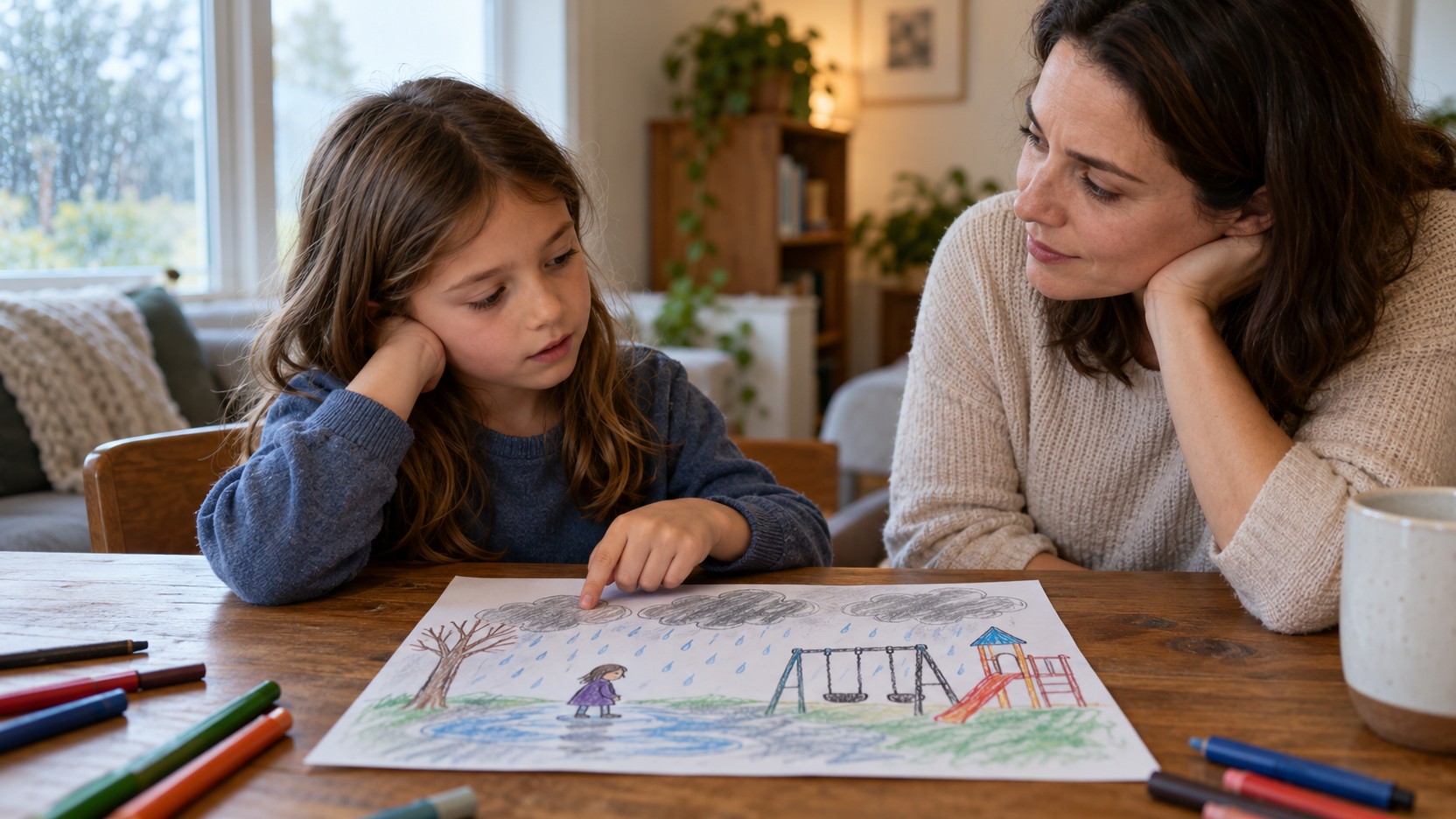
Offer a simple before-and-after drawing for an event the child chooses. Fold a sheet in half and invite the plan on one side and what actually happened on the other. The child can show people, places, objects, or marks and explain them through their usual communication. Ask which difference they want you to notice first.
For the cancelled visit, the first side might show two friends together and the second an empty place at the table. The child might then add the earlier argument to the first picture, revealing why the expected visit also felt uncertain. Follow that explanation rather than assigning a feeling from the picture’s color. The drawing makes parts of the account available without requiring a complete spoken retelling.
A play scene can do the same job with suitable familiar figures. Let the child position them, move the part that changed, and decide what to explain. Keep the work private unless sharing is agreed or necessary for appropriate support. If a genuine safety concern emerges, respond through the relevant safeguarding or professional route. The activity supports communication; it is not a way to diagnose meaning from artwork.
Separate Understanding a Feeling From Approving Every Action
Keep the emotional account and the safety boundary in the same brief response. After a lost turn, an adult might say, “You wanted to keep playing, and you’re angry. Hitting hurts; I’m keeping everyone safe.” Take the appropriate action needed for the situation. A longer discussion about what happened can wait until the child can participate.
Later, ask what message the child wanted someone to hear. They might have wanted the rule repeated or their remaining turn recognized. Agree on a usable way to communicate that message next time and on the adult response it will receive. The feeling can be understood while the harmful action stops and the practical issue receives attention.
Ask About Needs Without Promising Every Desired Outcome
In that cancelled-visit conversation, the child may ask the adult to make the visit happen anyway. Explain the actual limit briefly: “Mina is unwell, so today’s visit can’t go ahead. I can sit with you, or help you decide whether to send her a message.” If the earlier disagreement matters more than the cancellation, listening to that story may be the useful next step. A replacement activity does not have to resolve both experiences. The adult can support disappointment and uncertainty while keeping the practical answer honest.
Keep problem-solving collaborative. Ask what part might change and what remains fixed. The child can help choose a next step within the actual limits. Do not rush to a replacement activity merely to end visible sadness. Some feelings need acknowledgment before a practical plan becomes welcome.
Check whether the support helped rather than assuming the method was correct. A hug may be wanted on one occasion and unwelcome on another. Quiet company may work better than repeated questions. Let the child’s response inform the next action, while keeping the adult responsible for safety and necessary decisions.
Make Later Conversations Brief and Specific
Return to the detail that remained unclear. You might say, “Earlier I thought you were disappointed about staying home. You said the argument mattered too. What did I miss?” Allow the child to add one part rather than retell the whole event. They may choose a different feeling word or keep an everyday description. End by checking the action they want from you, such as listening, helping with a message, or returning to the topic another day. A focused follow-up is easier to use than a review of every response during the difficult moment.
Use School and Home Information Carefully
When communication is difficult in one setting, ask for a specific account of the event. A teacher might describe what changed, what the child communicated, and what help was offered. Compare that account with the child’s own explanation before selecting a response. Keep information with the adults who need it for support.
Agree on an understandable route to help. For example, the child might choose a trusted adult and a familiar way to indicate that they want a private conversation. Ask where that person can be found and what happens if they are unavailable. Explain the arrangement back to the child using their usual communication, and review whether the route was actually accessible when needed.
Seek Advice When Concerns Need More Than Everyday Support
You can ask a pediatrician or qualified child mental-health professional whenever you are worried; there is no requirement to wait until a problem becomes severe. Persistent distress, substantial changes, or difficulties affecting sleep, school, relationships, or everyday participation deserve attention. The National Institute of Mental Health’s child guidance describes signs that warrant professional discussion. If there is immediate danger or a child cannot be kept safe, seek urgent local emergency help. Everyday feeling-language activities should not delay necessary care.
Repair Adult Misunderstandings Openly
Use a specific correction when you guessed the feeling incorrectly: “I said you were jealous, but you were upset that nobody explained the changed rule. I misunderstood.” Give the child room to amend that account too. A useful repair acknowledges the actual message rather than asking the child to reassure the adult.
Change the practical response that followed the mistaken guess. Explain the rule, restore a missing communication tool, or use a quieter check-in if repeated asking made expression harder. Confirm which adjustment the child wants. The correction becomes meaningful when it changes what happens during the next similar exchange.
End With the Message You Now Understand
Summarize the child’s account briefly and check it: “You were looking forward to the visit and still worried about yesterday’s argument.” Agree on the next action you can actually provide, whether that is listening, practical information, a supported message, or another time to talk. Leave room for a later correction. Understanding grows through these small exchanges in which the child can describe an experience and see that the description affects the support offered.