Teach One Help Signal, Rehearse It, and Respond When It Is Used
Choose a response with a clear job: ask for a simpler instruction, request help with a stuck task, or take an agreed pause with adult support. Demonstrate it during a manageable moment, practice once in the relevant activity, and make the promised help available when the child needs it. The board-game example below follows that process from choosing a signal to reviewing its first use. Other examples show how to adjust the cue, place it within reach, and coordinate it with another caregiver or setting.
A: Choose an ordinary manageable moment when the child can explore it with support.
A: A small usable choice is often more practical than a large list; begin with one specific purpose.
A: Gestures, pictures, communication devices, and other accessible methods can serve the same practical job.
A: Use manageable ordinary situations and keep support available rather than provoking distress.
A: Provide direct help, protect safety, and review the fit of the plan later.
A: A child may communicate and act safely while still feeling upset or crying.
A: Keep it optional and comfortable, and offer a different response without forcing breath holds or large breaths.
A: The signal, adult response, location, or communication aid may not be accessible in that setting.
A: Identify a specific barrier with the child and revise a practical part of the plan.
A: Seek advice whenever concerns warrant it, especially when difficulties persist or affect daily life.
Choose a Skill With a Specific Job
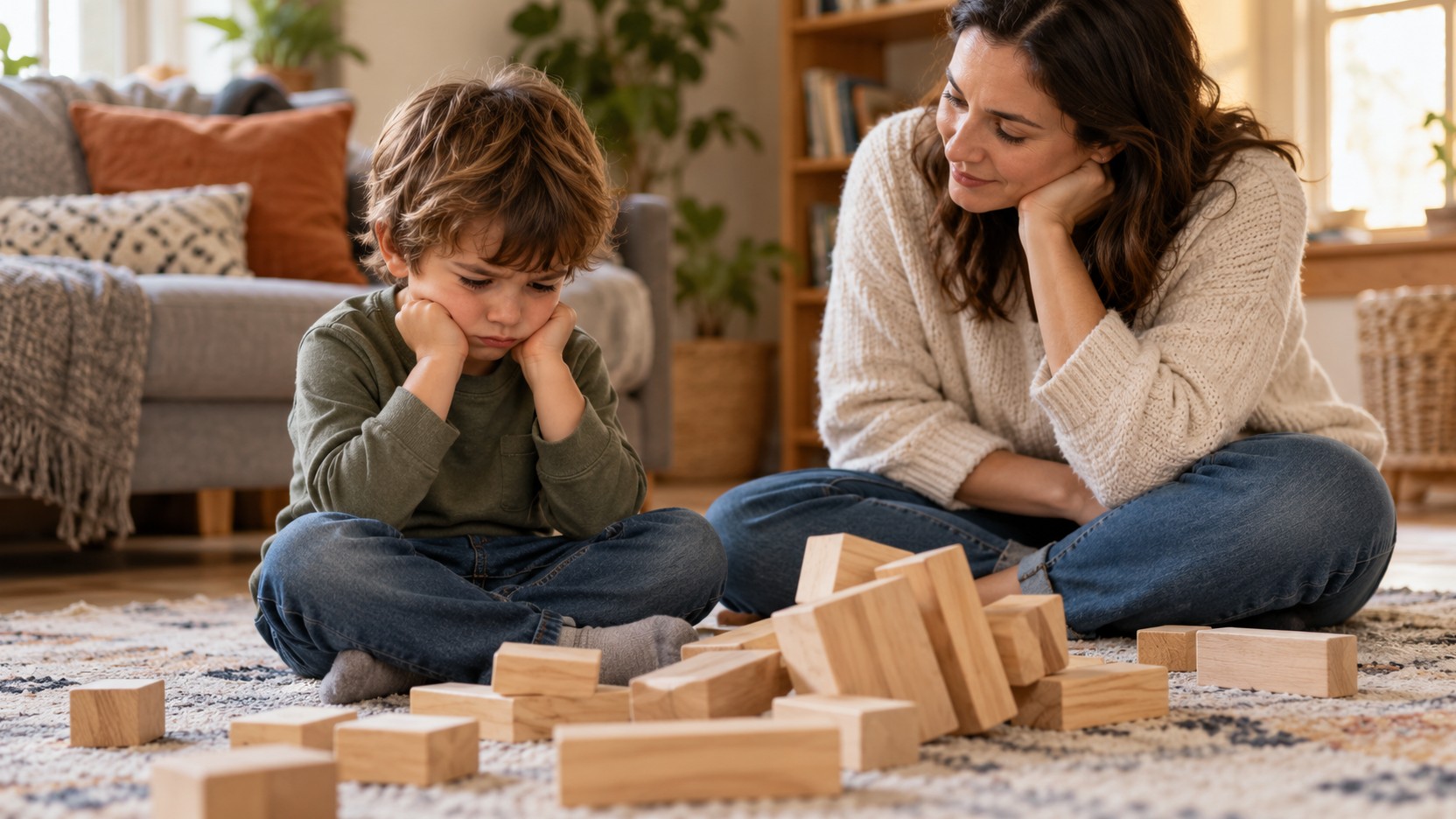
Consider a child who enjoys a board game but becomes distressed when several people explain a turn at once. In a comfortable moment, agree that placing a broad help card beside the board means “one person explain, please.” An adult demonstrates the signal, another person gives one short instruction, and the child tries the next turn with support. The skill’s job is to make the information manageable, rather than make disappointment disappear. Keep the card available throughout the game and agree who will notice it.
Avoid presenting a large menu of techniques as another task to master. Offer one or two accessible possibilities and invite the child’s preference. Asking for company, taking a brief break, changing position, or using an established communication tool may be more useful than an elaborate exercise. The best starting point is a response the child can actually use with the support available.
Introduce the Plan During an Ordinary Moment
Choose an ordinary time to show the response, using the actual activity or similar materials. For the game, place the help card where the child sits and explain what it means. An adult models using it, another person gives one short instruction, and the next turn begins. Keep the demonstration brief enough that its sequence remains visible.
Ask which signal the child can use comfortably. A familiar phrase, gesture, picture, or communication-device message may fit better than the example card. Confirm which adult notices it and what that adult does next. The child needs both a usable action and a reliable result.
Try one simple exchange while the child is comfortable, then ask whether any part is awkward. The signal may be too far away or its wording too long. Change that practical feature before relying on it during a difficult moment. The comparison below shows how the same teaching process can serve different needs.
| Practical need | Possible signal | Agreed adult response |
|---|---|---|
| Several people explain at once | A familiar request for one speaker | Pause overlapping talk and give one clear instruction |
| A task is stuck | A request for a demonstration | Show the next manageable action with appropriate help |
| A pause is needed | An accessible agreed break signal | Provide the planned safe pause and help with the next step |
Make the Help Signal Easy to Use
Place the signal where the action happens. A broad card belongs within reach at the game, and an established communication-device message needs to remain accessible during the activity. Practice the actual movement or message rather than only discussing it. Let the child choose a familiar alternative if the new method adds effort. Explain the adult response in the same short terms each time, such as “one speaker, one instruction.” Check who provides that response if the usual helper is unavailable. These details determine whether the plan can be used when the child has less attention available for a complicated request.
Explore Early Clues Without Claiming Certainty
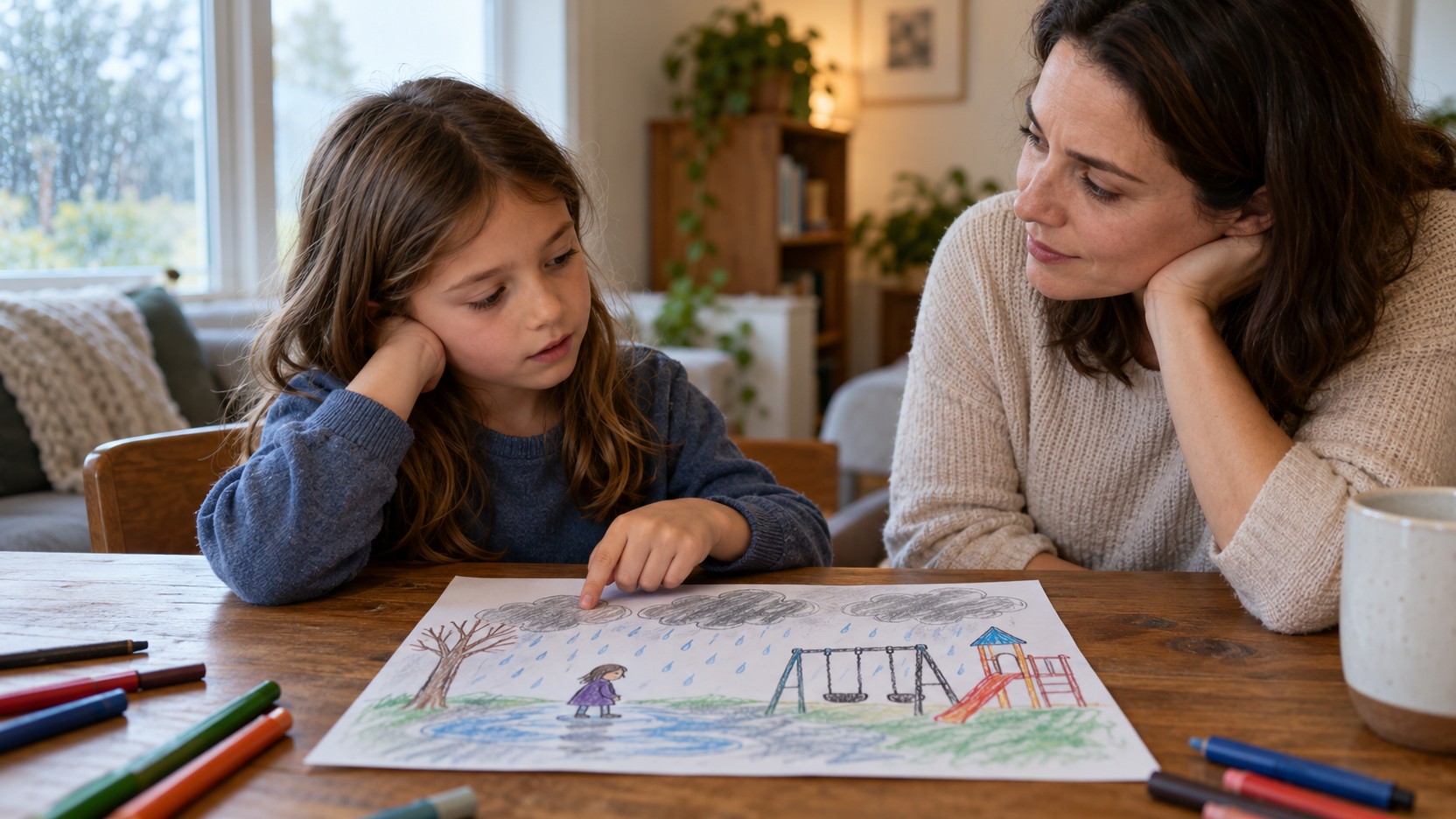
Ask what the child sometimes notices before a situation becomes difficult. They might describe wanting to leave, losing track of instructions, feeling tight, or becoming louder. Treat these observations as personal possibilities, not universal signs that prove a particular emotion. The child may notice nothing clear yet. Adults can still offer support based on context and communication.
Connect a recognizable clue with one available action. When a task starts to feel impossible, the child could move a help card toward the adult or request a pause. Avoid making successful early detection a condition for receiving care later. People do not always recognize a rising reaction in time, and a missed signal should lead to assistance and review rather than blame.
Rehearse With a Manageable Challenge
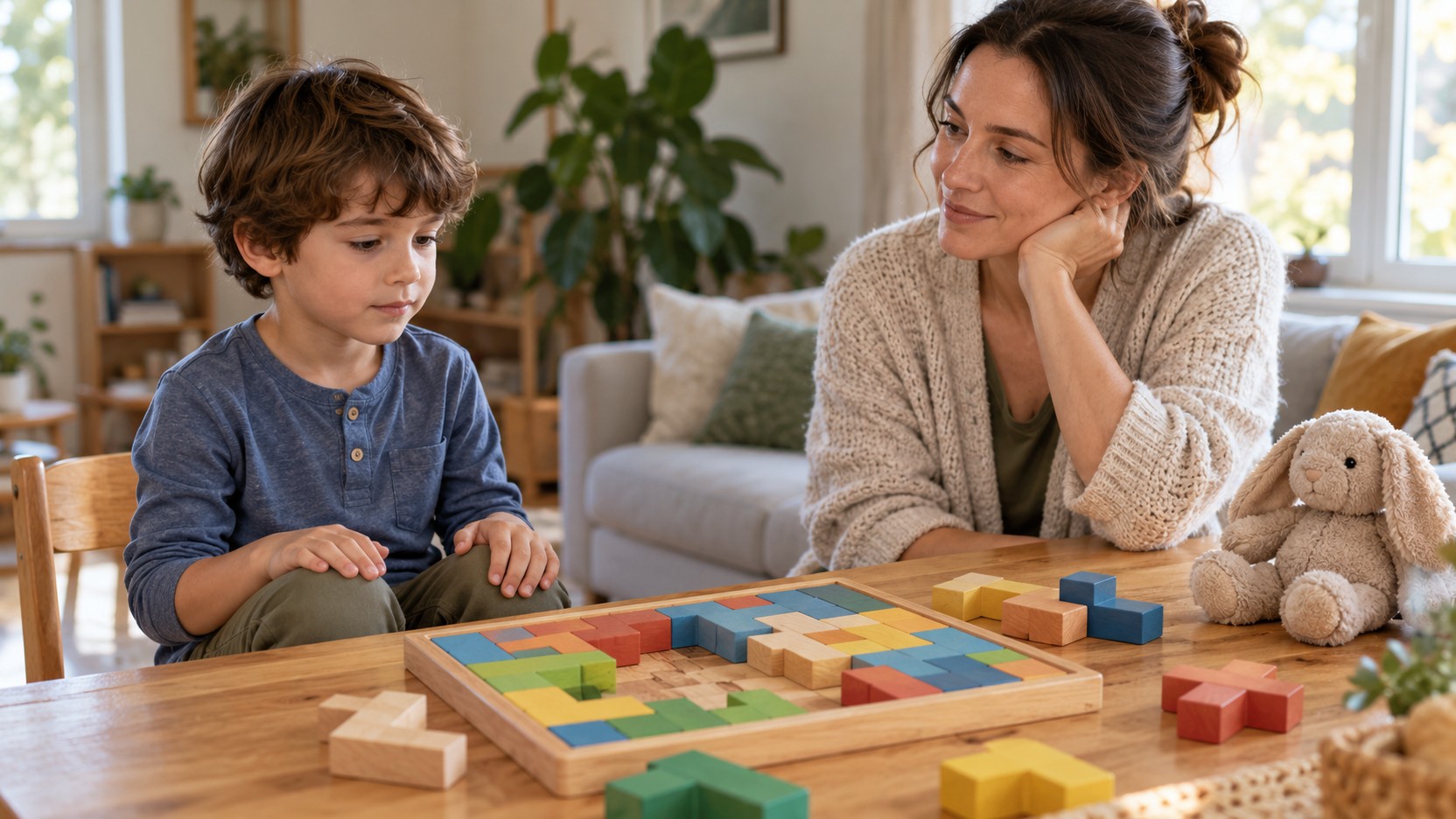
Use a comfortable moment in a familiar game or puzzle. Show the signal, provide the promised help, and let the child continue or finish the practice. For a puzzle, an adult might demonstrate setting a piece down and asking to see the next action, then help with the piece when the child tries the request. Keep ordinary support available throughout. There is no need to provoke distress to rehearse a help route. End while the purpose is clear and return to the activity the child chose.
| Puzzle rehearsal | What the adult and child do |
|---|---|
| Set out the activity | The child chooses a familiar suitable puzzle, with its pieces and the usual communication method within reach. |
| Show the request | The adult models putting a piece down safely and using the agreed request to see the next action. |
| Show the response | A helper demonstrates one relevant step, leaves time to look, and makes the piece available again. |
| Offer a brief turn | The child can try the request, watch another example, or indicate that a different signal would be easier. |
| Return to play | Keep the usable signal available during ordinary puzzle activity, with support still provided when the child needs it. |
Agree What Happens During a Requested Pause
If a pause is the chosen response, decide where it can happen and which adult remains available. A child may prefer quieter company, fewer competing instructions, or a short comfortable movement. Ask which of those would help in the actual setting. Explain how the child indicates that they want another step or continued assistance.
Try the proposed support during a manageable moment. A quieter place may still contain an unwanted sound, or the child may prefer practical help without moving away from the game. Adjust the arrangement to that information. Keep any familiar optional calming activity comfortable; if the child chooses gentle slower breathing, avoid forced large breaths, breath holding, or required eye closure.
Show the return route as well as the pause. In the game, the adult can repeat the missed instruction and identify whose turn is next. In a task, help locate the point where work stopped. Necessary communication and care remain available whether or not a particular calming activity is chosen. The pause has a practical purpose when it makes the next supported action more understandable.
Coach Briefly When the Skill Is Needed
During the next game, if voices begin overlapping, the adult can pause the explanations and point once toward the agreed help card. When the child uses it, respond as promised: one speaker, one instruction, time to act. If they cannot reach for the card, reduce the competing talk anyway and offer direct help. Later, ask whether the signal was easy to see and whether the instruction became clearer. A practical revision might move the card within reach or make the adult responsible for calling the pause earlier.
Notice whether the environment also needs changing. A request for help may reveal confusing instructions, an inaccessible activity, or a problem between children that adults must address. Coping skills should expand participation without requiring a child to endure avoidable harm. When someone may be hurt, prioritize safety and seek urgent local assistance if needed.
Recognize the Attempt in Concrete Terms
Describe the action you observed and why it was useful in that situation. You can acknowledge that the child signaled for help, put an object down safely, or returned to explain a need. Keep the observation respectful and private when appropriate. Avoid rewarding the suppression of emotion or declaring a child good only when quiet. A useful attempt can occur while tears or disappointment remain.
Transfer the Plan With the Child’s Input
A response practiced at home may need adjustment for school, a club, or another caregiver’s setting. Find out who will respond, where a break is possible, and whether the chosen signal is recognized. Include the child in this discussion using their preferred communication. Share the information needed to support participation while respecting privacy.
Check practical access rather than assuming agreement is enough. A picture stored in a bag across the room may not be usable during an activity. A designated adult may be unavailable at the relevant time. Establish an alternative that the child understands, and ask the receiving adult how the plan will work within the setting. Consistency is useful when it means reliable assistance, not identical behavior in every environment.
Review One Experience and Revise One Part
After a real attempt, ask about the signal and its response separately. Was the child able to reach or communicate it, and did the adult notice? Then ask whether the promised help addressed the difficulty. The child may explain that the card worked but the next instruction was still too long.
Change the identified component. Move the card closer, shorten the cue, arrange a backup adult, or demonstrate the instruction instead of repeating it. Keep the useful parts in place. An adult can say, “I saw the signal late; I’ll sit where I can see it,” making their own change clear.
Rehearse the revised part once in a comfortable relevant activity. Check that the child understands the same signal still brings help. Use the next ordinary opportunity to review that adjustment rather than adding several new techniques. A plan becomes more dependable through changes that respond to the actual attempt.
Check Whether the Skill Makes Its Intended Action Possible
Choose the sign of usefulness through the original job. For the board-game signal, check whether overlapping explanations stop and the child can understand the next turn with support. Ask about the effort involved as well as what the adult can see. If the signal works at home but not in a group, investigate the available helper, cue location, and instruction rather than assuming the child forgot the skill. Keep successful assistance while revising the missing part. The result may be a clearer request, a more reliable adult response, or an easier return to the activity.
Ask for Guidance When Skills Are Not Enough
Home practice cannot identify or treat every source of emotional difficulty. If concerns persist, intensify, or interfere with learning, relationships, sleep, or everyday participation, discuss them with the child’s health professional or a qualified mental health professional. Bring examples of the situations, supports tried, and the child’s experience. The National Institute of Mental Health describes persistent difficulties and interference with daily life as reasons to seek evaluation. Ask earlier whenever a concern feels significant; there is no need to complete a home program before requesting advice.
Support should fit the whole child, including developmental, communication, sensory, physical, and environmental needs. A professional can help consider the wider context and appropriate next steps. Continue offering ordinary connection and practical assistance while seeking guidance. The lasting lesson is that difficult feelings can be met with care, usable choices, and dependable help rather than a demand to manage everything alone.