Playful Challenges That Invite Children to Think Out Loud
A good logic activity creates a small, irresistible gap between what a child knows and what they want to discover. The answer is hidden, the rule changes, the route is blocked, or the materials cannot all be used. Children lean in because the problem has a purpose, not because an adult promised a score. The activities in this collection use cups, toys, cards, movement, building pieces, stories, and ordinary household decisions. Each can be simplified or extended without changing its central idea. Adults should explain the goal clearly, keep rules consistent, and invite the child to describe a strategy. Resist turning every pause into a hint. The delight often arrives in the quiet moment before a child sees a relationship, tries a bold idea, and discovers why it works.
A: Cups, stones, toys, cards, blocks, tape, household containers, and outdoor objects support dozens of strong activities.
A: Stop when concentration fades; a short successful encounter can invite a voluntary return later.
A: Cooperative roles and personal improvement usually protect reasoning better than rewarding the first answer.
A: Accept both if they satisfy every rule, then discuss what clue would create a unique answer.
A: Yes, after naming the change clearly and applying it consistently from that point forward.
A: Reduce choices, restate the goal, reveal one relationship, or ask the child to demonstrate what is already known.
A: They need not feel pleasant, but a safe game can make an error informative, recoverable, and sometimes amusing.
A: Designing is excellent reasoning; occasionally require the child to solve and revise another person's fair puzzle too.
A: They strengthen attention to conditions, sequence, evidence, checking, and explanation used across mathematics, reading, and science.
A: The child begins explaining choices, checking rules, inventing variations, and using similar strategies elsewhere.
Play the Hidden Stone Cup Game
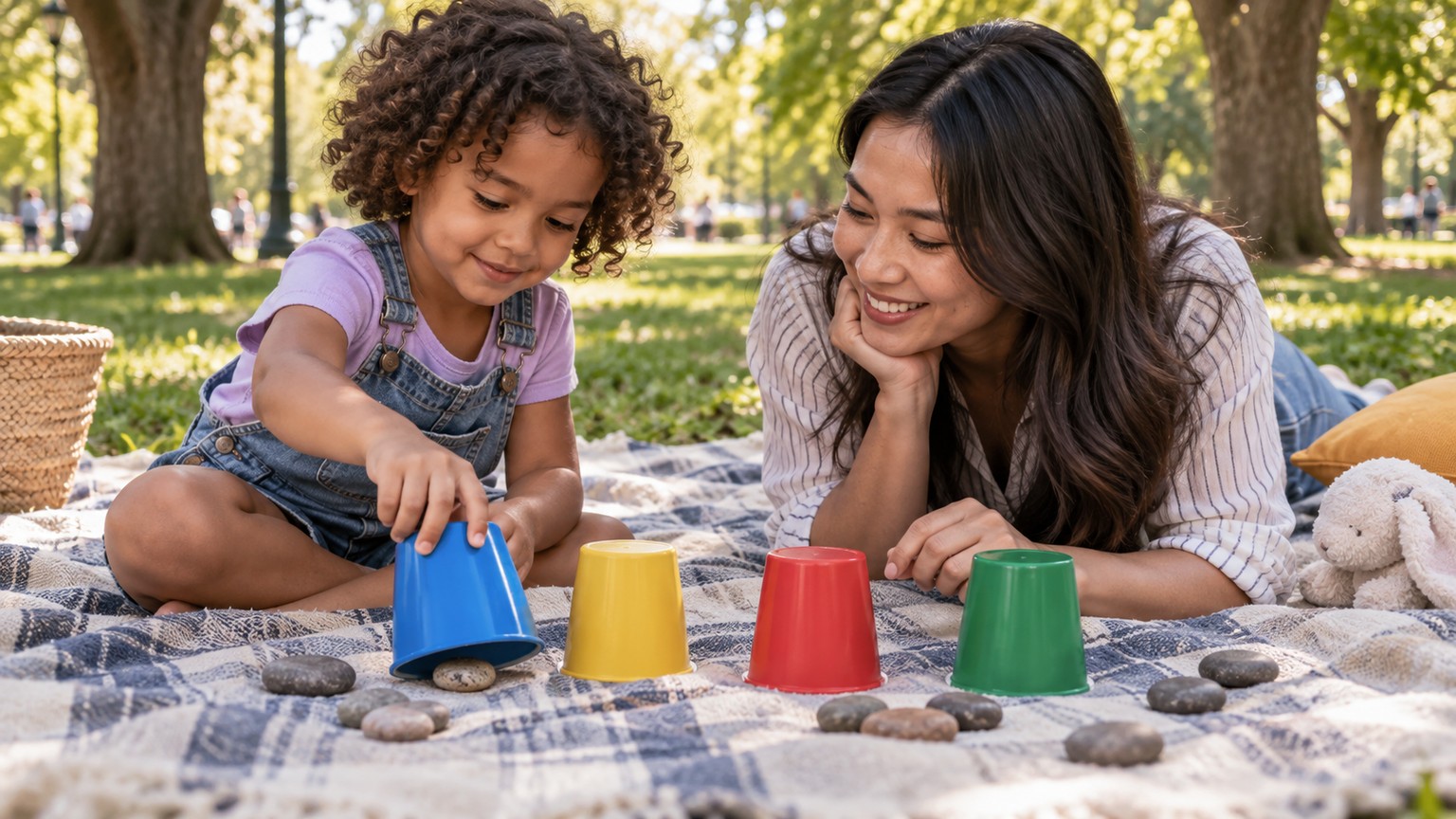
Arrange three colored cups in a row and let the child watch you hide a smooth stone, then cover their eyes while you move the cups. Begin with one accurate clue: the stone is not under the blue cup. Ask what remains possible. Add a second clue only if needed, such as the stone is beside the yellow cup. The child should point to eliminated choices and explain the final location. Switch roles so the child must create clues that are true and useful.
Extend the game with four cups, two stones, or position words such as between and immediately beside. For older children, write three clue cards and include one redundant clue that adds no information. Ask which clue could be removed while preserving a unique solution. Never peek and change the location after giving a weak clue. Fairness matters because deduction depends on trusting that the evidence and answer remain stable.
Build a Rule-Changing Sorting Station
Collect twenty varied objects and place two hoops or trays on the floor. Announce a rule such as objects that roll and objects that do not. After the child sorts, choose a new purpose: items for a pretend camping trip versus items left at home, or objects made mostly from natural versus manufactured materials. Some items may fit both or neither. Create an overlap area and a question area rather than forcing every object into a false choice. The activity becomes more interesting when categories express a reason, not merely color.
Design a No-Touch Route
Use cushions, tape lines, paper islands, or sidewalk chalk to create a start, destination, and several blocked spaces. The child plans a route under a constraint: cross using exactly six moves, touch each shape once, carry an object without stepping backward, or visit two stations in a particular order. Let the learner walk the planned route and discover whether it works. A physical path reduces memory demands and makes debugging visible.
Change one condition after a successful attempt. Move a barrier, close a shortcut, or require a stop at a new location. Ask which part of the original plan can remain. Children often restart automatically, so preserving a useful segment teaches efficiency and flexible thinking. Invite them to give directions to another player using precise spatial language. If the listener gets lost, revise the instruction rather than blaming the listener.
Turn the route into a cooperative challenge by giving two players different information. One sees the destination while the other sees which spaces are unsafe. They must describe what they know without grabbing control. This version develops listening and shared planning, but keep the map small enough that communication remains enjoyable.
Make a Mystery Rule Machine
Tell the child that an imaginary machine accepts some objects and rejects others. Begin with a hidden rule such as has a curved edge, is smaller than a hand, or contains two colors. Present examples and let the child test an object. After several trials, they propose the rule and deliberately search for a difficult case. A counterexample is more informative than many easy matches. When the rule is discovered, swap roles and require the new machine owner to apply it consistently.
Solve the Toy Lineup
Choose four toy figures and create positional clues: the bear is not first, the robot stands beside the rabbit, and the rabbit is somewhere left of the fox. Children arrange the figures until every clue is satisfied. Start with clues that yield one solution and check the puzzle yourself first. Place each clue beside the lineup and turn it face down once confirmed, then recheck all cards at the end.
Invite the child to alter one clue so two solutions become possible, then add a new clue that restores uniqueness. This makes puzzle structure visible. With younger children, use only three figures and picture clues. With older learners, add houses, pets, snacks, or arrival times, but increase one dimension at a time. Complexity should come from combining information, not from reading a wall of text.
Create a Pattern Repair Shop
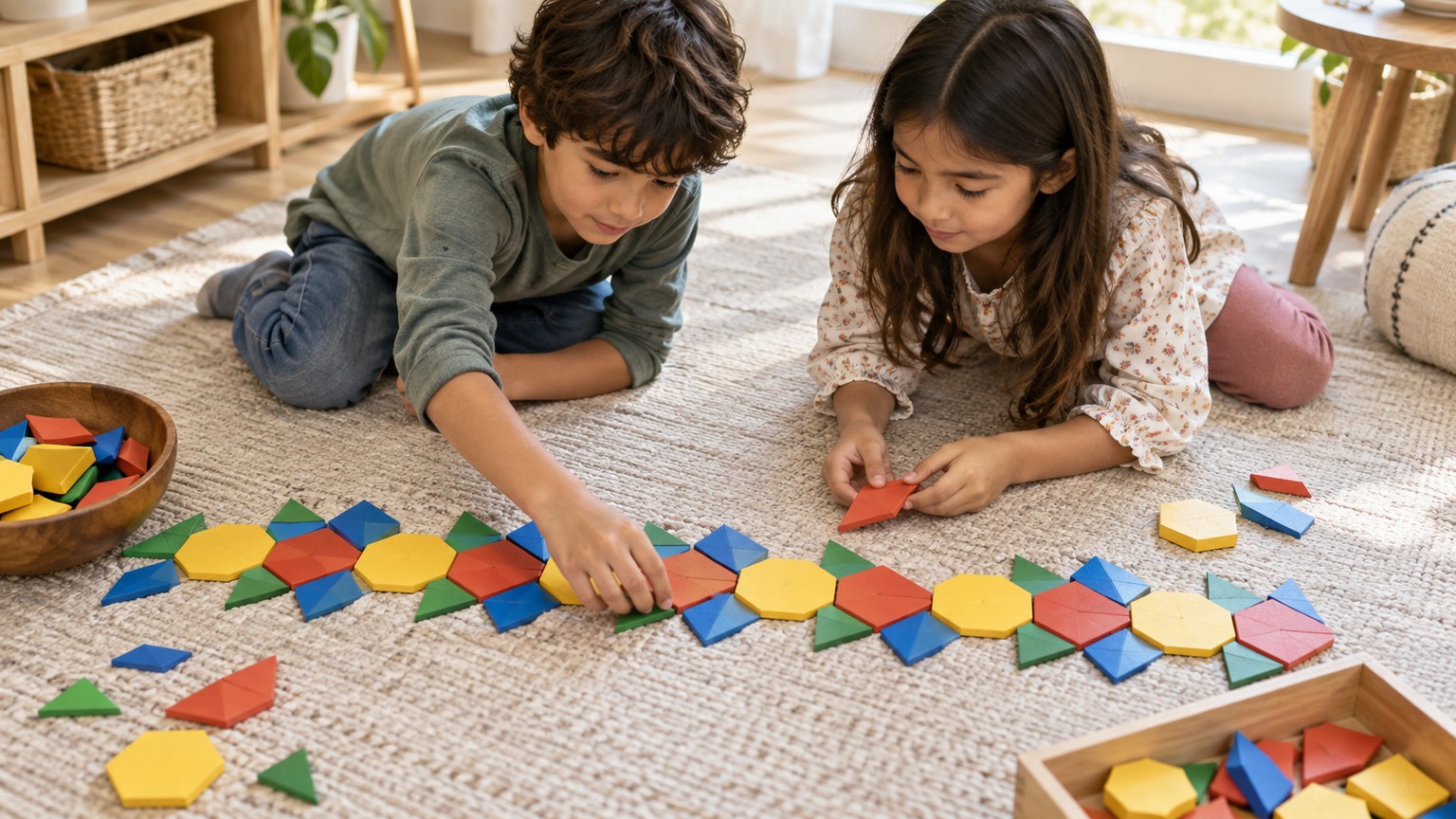
Build a repeating or growing pattern and secretly remove pieces from the middle rather than the end. The child acts as a repair specialist who must identify the unit, replace missing elements, and inspect the joins on both sides. Use movements, sounds, tiles, natural objects, or drawings so the concept travels across materials. Ask for a diagnosis before handing over replacement pieces.
Some damaged patterns permit more than one repair. Welcome both when each follows a defensible rule. Ask what extra evidence would make one repair more likely. For a growing pattern, keep enough stages visible to show the change. A child who merely continues a memorized color sequence is doing a different task from someone identifying how quantity, position, or orientation changes.
Let the child damage a pattern for the adult. They must leave enough information for a fair solution and explain the intended rule afterward. Children enjoy catching an adult's mistaken repair, and the role reversal encourages exact language.
Pack the Impossible Picnic Basket
Present more pretend picnic items than a basket can hold and give clear needs: food for three people, protection from light rain, one shared game, and no glass. The child chooses, arranges, and explains. Add realistic tradeoffs such as weight, allergies, temperature, or a long walk. There may be several excellent solutions, so evaluate whether the plan meets the constraints rather than comparing it with one hidden adult answer.
Tell a Clue-by-Clue Story
Begin a mystery with an ordinary event: a garden gate is open, a trail of leaves crosses the kitchen, or a library book appears on the wrong shelf. Reveal one clue at a time. After each, children list explanations still possible and cross out only those contradicted by evidence. Ask which new clue would be most useful. This keeps imagination active while teaching that an interesting idea is not automatically the best-supported one.
Include a clue that changes the meaning of an earlier detail without making it false. Damp shoes may first suggest rain, then a photograph of a sprinkler provides another cause. Discuss why revising a theory is a strength. Avoid mysteries involving frightening intruders or accusing real classmates. The stakes can stay playful while the reasoning remains genuine.
Run a Cooperative Logic Lab
Set out several short challenges and give each player a role that rotates: materials manager, rule reader, checker, and explainer. A team might copy a structure from verbal directions, arrange cards under a constraint, or transport objects with limited tools. Roles prevent the quickest child from taking every decision. The checker asks whether all rules are satisfied rather than declaring who is right.
Pause between rounds for one specific reflection. Which clue did the most work? Where did the team repeat an unhelpful approach? What did a partner notice? Keep praise connected to listening, testing, and revision. Competition can be omitted entirely, or teams can try to improve their own clarity rather than race. Logic grows socially when children learn to make thinking understandable to someone else.
Finish by asking each child to invent a variation, not simply request a harder version. They may reduce materials, reverse the goal, add an exception, or make two players exchange partial information. Test the variation for fairness. Designing the next challenge gives the child ownership and reveals whether the original structure was understood.
Keep Activities Inviting
Stop while interest remains. Five absorbed minutes can be more valuable than finishing every prepared round. If frustration rises, make one relation visible, remove a choice, or solve a smaller example together. Do not disguise correction as repeated praise followed by 'but.' Describe the effort accurately and return attention to the evidence.
Store a small logic basket with cups, stones, figures, index cards, tape, dice, and pattern pieces. Rotate only one or two challenges so materials stay familiar while rules change. Children may eventually create games without adult direction. When that happens, listen for fairness, consistency, and explanation. The activity has succeeded when thinking becomes part of play, not when every puzzle has been exhausted.
Match the Game to the Child
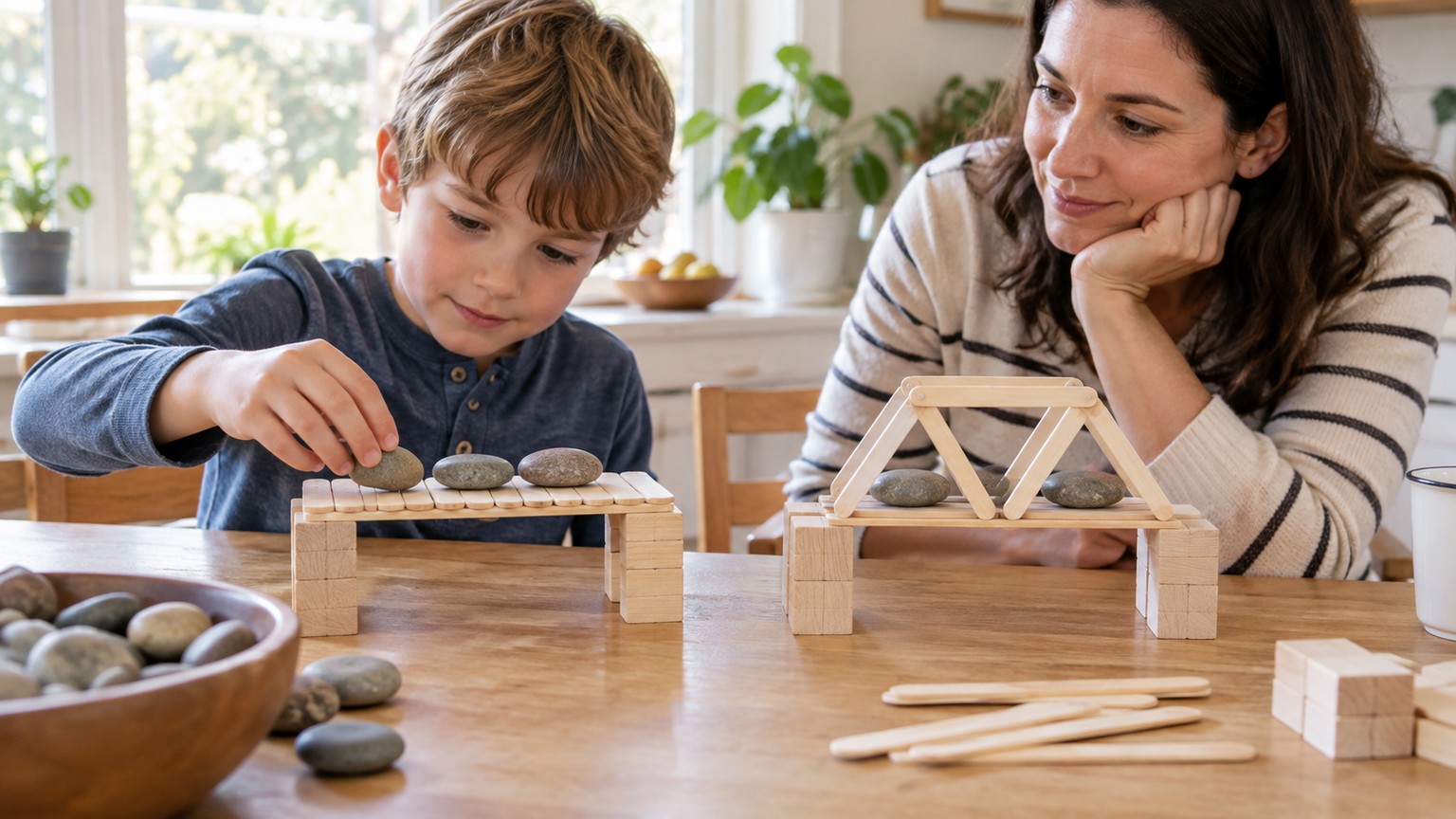
Interest is an important design tool. A child fascinated by vehicles can arrange delivery routes, diagnose which garage clue identifies a hidden car, or sort vehicles by terrain and purpose. A storyteller can solve character lineups and evidence mysteries. A builder can work under material constraints, while a child who loves movement can navigate rules across the floor. Keep the logical relationship intact while changing the theme. This is not bribing a learner with decoration; it is giving abstract thought a meaningful setting and a reason to persist.
Respect differences in language, vision, hearing, motor planning, attention, and working memory. Use large tactile pieces, picture clues, repeated oral directions, or a partner who handles materials without taking decisions. Remove unnecessary sensory clutter. A child may understand the deduction but struggle to hold three spoken clues, or see the pattern but find precise placement difficult. Adjust access before lowering the reasoning demand. Observing how the child communicates a solution often reveals competence that a narrow response format would hide.
Revisit favorite games with small changes over weeks. Familiar rules free attention for a new twist, and earlier strategies become available for comparison. Keep an occasional note about the child's own words: 'I checked the ends first,' or 'Both places still work.' Those comments show growth more honestly than a tally of wins. The best collection is not the largest. It is a handful of fair, adaptable activities that children request, reshape, explain to others, and eventually carry into situations no adult prepared.
End With an Explanation, Not a Score
After the solution appears, ask the child to reconstruct the route taken. Which clue removed the first option? Where did the plan change? Was any information unnecessary? A quick explanation consolidates the strategy and gives the adult a more accurate view than right or wrong alone. If the answer came from guessing, return to the materials and find a way to prove it. If the child used an unexpected valid method, invite a demonstration and compare it with another approach. Keep this conversation brief and genuine; a long interrogation can drain the pleasure from success. Then put the materials away with one open variation in mind. Perhaps the cups will move into a circle next time, the picnic basket will gain a temperature limit, or the route will require two travelers to meet. Anticipation gives the game a life beyond one sitting and tells the child that their reasoning deserves another thoughtful, playful challenge when everyone is ready to return once more.