Critical Thinking Begins With Careful Everyday Conversations
Young children think critically when they pause before deciding, compare what they notice, ask how someone knows, and change an idea after new evidence appears. These skills do not require debates about adult topics or a stack of formal exercises. They grow while choosing which bridge is stronger, deciding whether an advertisement makes a fair promise, interpreting a character's actions, or solving a disagreement about what happened. The adult's role is to make thinking discussable without interrogating every choice. Children need facts they can inspect, enough time to form an idea, and emotional safety to be wrong. When questions are genuine and evidence matters more than pleasing the adult, critical thinking becomes a practical habit: notice carefully, consider alternatives, test a claim, explain a reason, and remain willing to revise.
A: No. Young children can compare, predict, identify simple evidence, and consider alternatives through concrete experiences.
A: Offer what you know, admit uncertainty, and choose some questions to investigate together.
A: It includes asking for reasons, while adults still hold responsibility for safety, care, and age-appropriate boundaries.
A: Distinguish respectful evidence-based discussion from delaying, insulting, or refusing a clear boundary.
A: Usually not; transparent problems build trust and reward reasoning instead of guessing what the adult concealed.
A: Accept it when it fits the evidence and conditions, or compare the claims against a shared standard.
A: Feelings provide important information about one's own experience, but do not by themselves prove another person's motive.
A: They provide accessible examples of claims, persuasion, missing information, and incentives.
A: No. Adults should provide safe sources and model checking creators, dates, evidence, and commercial motives.
A: Show that changing your mind after better evidence is responsible rather than embarrassing.
Separate What Happened From What You Think It Means
A child sees a classmate turn away and concludes, 'She does not like me.' Help divide the event into observation and interpretation. The observable detail is that the classmate turned away; dislike is one possible explanation among several. Ask what else might account for the action and how the child could check kindly. This distinction is useful in science, reading, online media, and relationships. It does not deny feelings. It prevents a strong feeling from becoming the only available evidence.
Practice with neutral scenes before emotionally difficult moments. Look at a photograph and list only visible details, then make inferences and mark each one as a possibility. Listen to a sound behind a door and generate explanations without opening it immediately. When the answer is revealed, compare which clues helped and which assumptions came from habit. Children discover that minds fill gaps quickly, and that waiting for more information can improve a conclusion.
Ask How We Know
Use the question naturally when a claim appears in a story, video, advertisement, or family conversation. The answer may be direct observation, a trusted person's report, a measurement, a memory, or a guess. These sources are not equally suited to every claim. A friend can report what they chose for lunch, but cannot know what every child prefers. A package can promise the world's best snack without offering a meaningful comparison. Keep the tone curious rather than suspicious; the aim is informed trust, not automatic disbelief.
Compare Options Against a Clear Goal
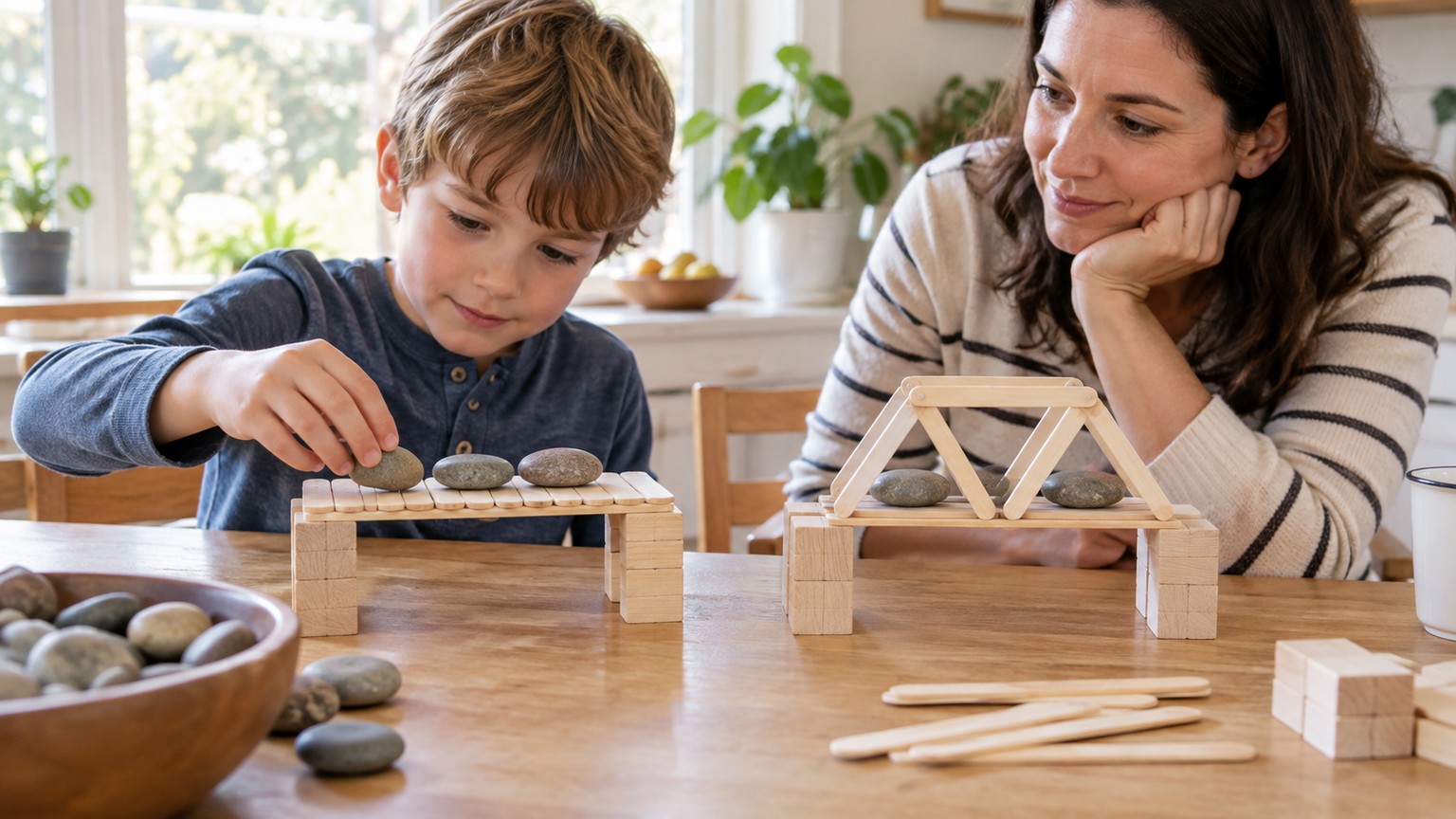
Children often hear that one choice is better without knowing the standard. Make criteria visible. The best shoe for rain may differ from the best shoe for running; the quickest route may not be the safest; the strongest bridge may use more materials. State the goal, identify two or three relevant features, and compare. A simple grid made with objects or pictures can reduce memory demands. Children learn that good decisions depend on purpose.
Include tradeoffs rather than arranging every problem with one perfect answer. Two lunch containers may both prevent spills, while one is lighter and the other easier to open. Ask which feature matters most today and why. The child may choose differently from the adult yet reason well. Respect a defensible choice when it meets the agreed conditions. Critical thinking weakens when questions secretly demand the adult's preference.
After deciding, review the outcome. Did the chosen umbrella fit in the bag? Did the block base hold the planned weight? Reflection links reasoning to consequences without turning every choice into a performance review. Sometimes the decision was sound even though luck produced an unfortunate result; sometimes a lucky result hides weak reasoning. Help children evaluate the process as well as what happened.
Generate More Than One Explanation
A broken plant stem, a missing marker, or a character arriving late can trigger an immediate story. Invite three plausible explanations before choosing one. Then ask what evidence would distinguish them. This practice reduces impulsive blame and makes curiosity useful. Keep examples age appropriate and avoid turning real family conflicts into guessing games when direct, respectful conversation is available.
Use Stories to Examine Reasons and Consequences
Pause at a genuine decision point, not after every page. Ask what the character knows, what remains hidden, and which goals may conflict. Children can predict two choices and likely consequences, then continue reading. When the character acts differently, compare the new information or value that may explain the decision. Avoid asking for mind reading; anchor interpretations in words, actions, and context.
Retell a scene from another character's position while preserving the known facts. This reveals how access to information shapes judgment. A character outside the room may misunderstand a sound that readers saw being made. Discussing perspective does not mean every interpretation is equally strong. Return to the text or illustrations and identify which details support each account.
Test Claims With Fair Comparisons
When a child claims one paper airplane design flies farther, ask how to test it fairly. Use the same thrower, starting line, location, and number of trials while changing the design. Explain that holding conditions steady helps reveal which difference influenced the result. Young learners do not need formal vocabulary to grasp fairness in a test.
Record results with objects, marks, photographs, or spoken observations. One surprising trial should not erase the rest. Ask whether the outcome happened repeatedly and what uncontrolled differences remained. Children begin to see why confident claims need enough evidence. The lesson is not that every question requires an experiment, but that testable claims deserve a test designed to answer them.
Allow results to challenge the favorite idea. Adults can model disappointment without manipulating the test: 'I expected the wide bridge to hold more, but our trials did not show that.' Wonder about why, check the setup, and decide whether to repeat or revise. Intellectual honesty becomes believable when children see it practiced.
Teach Children to Notice Persuasion
Advertisements, packaging, and influencers are built to attract attention and encourage action. With a familiar ad, identify the claim, the feeling it creates, and what information is missing. Bright colors, exciting music, a smiling person, or the word new may influence desire without proving quality. Ask whether the person speaking benefits if viewers believe the message. Keep the analysis concrete and avoid making children feel foolish for wanting something.
Compare a promotional statement with a label, independent review, demonstration, or actual need. A toy shown moving dramatically may require a hand outside the camera frame; a snack described as natural may still contain ingredients the family avoids. Children can learn to pause and consult an adult before clicking, buying, or sharing. Media literacy at this age is a habit of questions, not a demand that children investigate alone.
Make Disagreement Productive
Critical thinking develops when ideas can be challenged without attacking the person. Use sentence frames that connect claims to reasons: 'I see it differently because,' 'Which clue supports that?' and 'What would change your mind?' Adults should apply the same standard to themselves. If a child supplies stronger evidence, acknowledge it plainly. Authority remains responsible for safety and boundaries, but it does not need to pretend every factual judgment is infallible.
Teach listening as part of thinking. Before responding, a child can restate the other view accurately enough for that person to agree. This prevents arguments against something no one said. In a group, invite quieter children to prepare with objects or drawings before speaking. The loudest or fastest explanation is not automatically the strongest.
Know when the topic is not open for debate. A person's identity, dignity, pain, or stated boundary is not a classroom puzzle. Safety rules may require action before discussion. Explain the boundary and revisit reasoning when everyone is regulated. Critical thought should help children treat people more carefully, not provide tools for relentless argument.
Protect Curiosity From Performance Pressure
Avoid praising a child as the smart one or presenting trick questions meant to embarrass. Those habits make children defend answers instead of examining them. Praise the process specifically: noticing a missing detail, checking another source, finding a counterexample, or revising after a test. A child can be proud of a conclusion and still hold it lightly.
Offer wait time and multiple ways to reason. Some children speak while thinking; others need to build, draw, move, or sit quietly first. Reduce language load when the concept is the challenge. If a child repeats the adult's words, ask for a demonstration or example rather than assuming full understanding.
Build a Family Culture of Thoughtful Decisions
Invite children into choices that genuinely affect them: selecting a park based on weather and distance, planning how to spend a limited activity budget, or deciding which household material can be reused. Share the constraints and accept a well-supported option. Do not offer a false vote when the adult has already decided. Authentic responsibility gives reasons consequences and teaches that thinking can improve shared life.
Model your own process without narrating every thought. Say when you need more information, compare two sources, or notice that an earlier assumption was unfair. Apologize when a rushed conclusion affected someone. Children learn more from this visible humility than from repeated instructions to think carefully.
Over time, look for a broader pause between claim and conclusion. The child may ask where an image came from, seek another explanation for a friend's behavior, or test whether a building idea works. These moments are the real milestones. Critical thinking is not cynicism or constant debate. It is disciplined curiosity joined to evidence, empathy, and the courage to change course.
Keep the Habit Manageable
One thoughtful exchange during a meal, walk, story, or building project is enough to practice. Let some questions remain unanswered and write down the ones worth revisiting. Consistency matters more than turning every ordinary moment into a lesson.
Extend the Skill Without Taking Over
As children become comfortable explaining everyday choices, invite them to examine claims with wider consequences. They might compare two playground proposals, decide which source best explains a local weather event, or evaluate whether a rule works fairly for people with different needs. Supply information at a readable level and define the actual decision. Critical thinking is strongest when the child can use evidence to influence something real, even if the decision is small.
Teach source comparison gradually. Two pages may agree on a basic fact while emphasizing different details. Identify the author or organization, date, purpose, evidence, and intended audience. A primary source may offer direct experience but limited scope; an expert summary may connect many studies but remain distant from one family's circumstances. Children can learn that trustworthy does not mean perfect and biased does not mean useless. The useful question is how a source's position affects what it can show.
Return critical thought to responsibility. Evidence should help children make fairer decisions, avoid spreading rumors, repair mistaken judgments, and choose when to seek adult help. It should not become a performance of cleverness or a reason to dismiss every shared fact. A thoughtful child can be skeptical of a dramatic claim while still trusting a caregiver, teacher, doctor, or librarian who explains evidence and limits honestly. Discernment grows from practice inside trustworthy relationships.
Measure Growth by Better Judgment
Progress may sound like 'I need another clue,' 'That happened once, not always,' or 'I thought she was ignoring me, but I should ask.' Notice those pauses. They show that careful thought is becoming available when it matters, beyond any puzzle or planned lesson. Keep inviting reasons without demanding a defense for every preference, and let thoughtful uncertainty remain acceptable while the child gathers information across stories, media, relationships, and everyday choices.