Growing a Child's Reasoning Through Everyday Problems
Logic is not a collection of tricks reserved for older students. Young children use it whenever they sort laundry, predict what comes next, explain why a tower fell, follow a rule, or notice that two statements cannot both be true. Pattern work strengthens attention to relationships, while flexible thinking helps children test alternatives when the first plan fails. Adults can support all three without turning play into constant correction. The most useful response is often a calm question: What did you notice? What must stay the same? What could you try next? With objects, movement, conversation, stories, and games, reasoning becomes visible and enjoyable. This guide explains the core skills, how they develop, and how to offer challenges that are demanding enough to invite thought without making speed or perfection the measure of intelligence.
A: Toddlers already classify, predict routines, and connect simple causes with effects; the materials and language should match their experience.
A: No. Objects, movement, conversation, construction, stories, and daily decisions often reveal reasoning more clearly.
A: Use a meaningful problem connected to cooking, routes, building, stories, collections, or pretend play instead of insisting on jigsaws.
A: When safe, ask the child to test the claim or explain the evidence so the inconsistency becomes discoverable.
A: Not necessarily. Familiarity and processing speed differ from careful inference, flexible strategy use, and accurate checking.
A: Offer the smallest hint that restores productive thinking, then return the decision to the child.
A: Yes. Maintaining roles, causes, sequences, and agreed rules requires substantial reasoning even in invented worlds.
A: Switching requires inhibition and working memory; show both rules visually and allow time to restate the new goal.
A: A manageable mistake reveals assumptions and gives the learner evidence for choosing a better strategy.
A: Look for clearer explanations, better use of clues, deliberate checking, tolerance of uncertainty, and willingness to revise.
Notice the Reasoning Children Already Use
Watch a child prepare for the day. They may infer that wet pavement means boots, remember that a lunchbox belongs near a backpack, or realize that a missing mitten must be somewhere between the bedroom and the door. Name the thinking rather than supplying the answer: 'You used the weather clue,' or 'You checked the places in order.' Specific feedback helps children recognize strategies they can use again. Avoid declaring someone naturally logical after one success, because reasoning grows through practice and every learner has uneven strengths.
Everyday mistakes also expose useful thinking. Milk poured before the cup is ready, blocks sorted by color when the rule was shape, or a game move that traps the player's own piece creates evidence. Ask the child to describe what happened and choose one change. When adults rush to repair the outcome, children lose the chance to connect cause with effect. Safety and frustration matter, but a manageable error is information, not a verdict.
Teach Sorting as a Choice About Attributes
Sorting is more than putting similar objects together. The thinker must decide which feature matters now and ignore features that do not. Offer buttons, leaves, toy animals, lids, socks, or recycled containers and ask for one arrangement. Then request a different rule using the same collection. A red wooden triangle might belong with red objects, wooden objects, or triangles depending on the goal. Ask the child to name the rule and find an item that almost fits. The near match reveals whether the category is understood precisely.
Build Patterns Beyond Repeated Colors
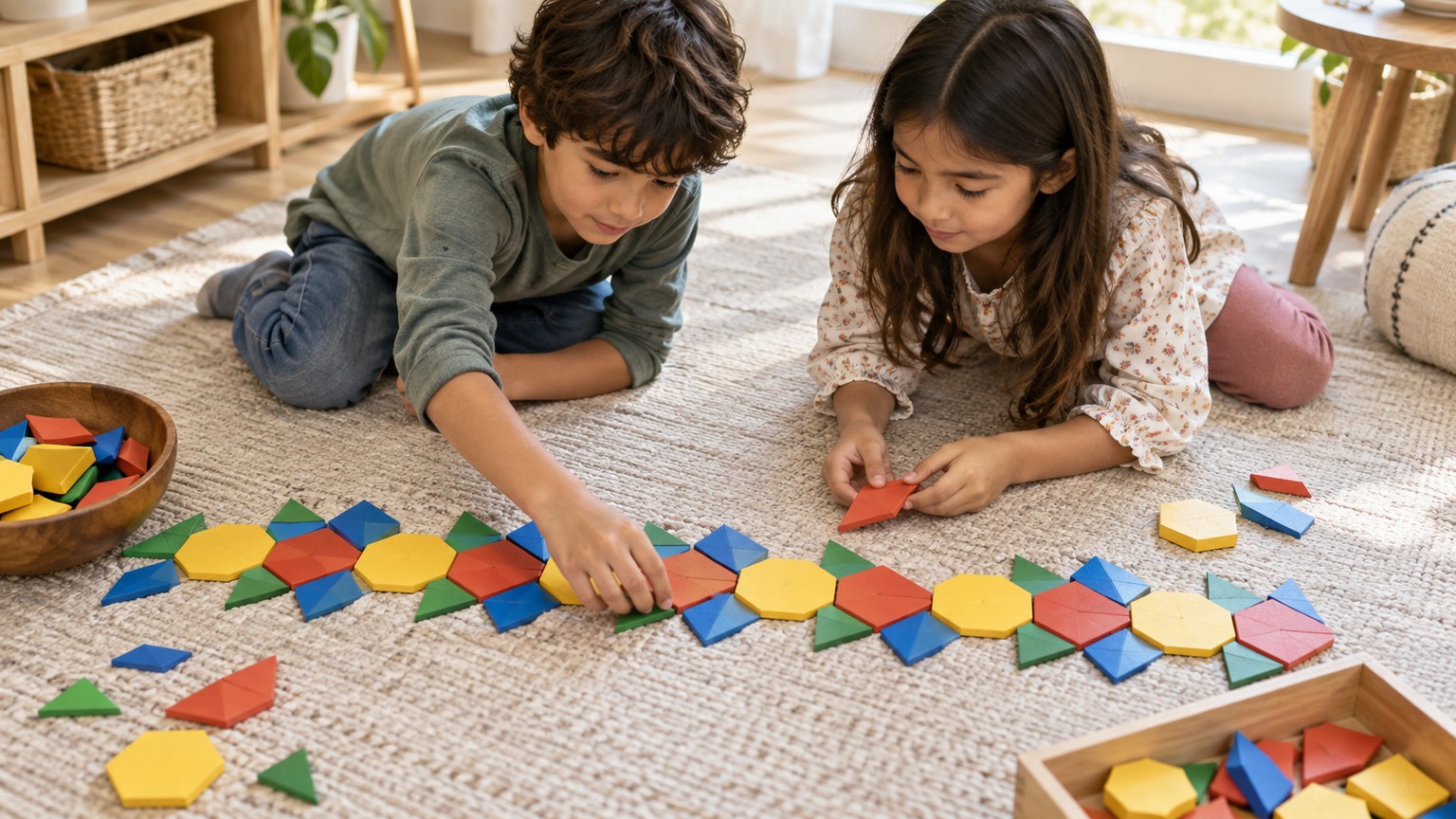
Begin with a repeating unit that can be seen and touched: clap-stomp-stomp, spoon-fork, or red-blue-blue. Have the child copy it, continue it, and mark where the unit starts again. Next, translate the same structure into new materials. If clap-stomp-stomp becomes circle-square-square, the child is attending to relationship rather than memorizing objects. Vary position, sound, size, movement, and time so pattern does not become synonymous with colored beads.
Growing patterns require a different kind of attention. A staircase of one block, then two, then three changes by a rule rather than repeating a fixed unit. Ask what changes each time and what remains constant. Children can build the next stage, predict a later one, and check by constructing it. Do not introduce symbolic notation before the relationship makes sense through action. The symbols should compress an idea the child already understands.
Patterns can mislead when there is too little evidence. A sequence of red, blue, red could continue in several reasonable ways. Invite more than one possibility and ask what additional term would distinguish the rules. This small conversation develops intellectual caution. Children learn that spotting a pattern is proposing an explanation, not proving it, and that good thinkers seek enough evidence before becoming certain.
Use If-Then Thinking in Real Situations
Conditional reasoning appears in routines and games: if the timer rings, then shoes go on; if a card is blue, it belongs in this pile; if the bridge bends, add support. Keep the condition and result clear, then test cases that do and do not meet the condition. Children often assume the reverse is automatically true. If rain makes the sidewalk wet, a wet sidewalk does not prove rain because a sprinkler could be responsible. Concrete counterexamples help this idea grow without formal terminology.
Strengthen Spatial and Sequential Reasoning
Puzzles, maps, construction sets, dance steps, and packing tasks all require children to hold relationships in mind. Ask them to describe a route using landmarks, rotate a piece before trying it, or predict whether an object will fit in a container. Language such as beside, between, above, behind, clockwise, nearer, and farther gives spatial thought handles. Let children move themselves or the materials; mental rotation develops from physical experience.
Sequence work asks what must happen first and which steps can switch places. Mix up picture cards showing a familiar process, then discuss more than chronology. Socks might be folded before or after shirts, but washing must happen before drying. Cooking, planting, building, and preparing for an outing offer authentic sequences with dependencies. Ask what would break if a step disappeared. That question shifts attention from reciting an order to understanding why the order works.
Practice Deduction With Hidden Information
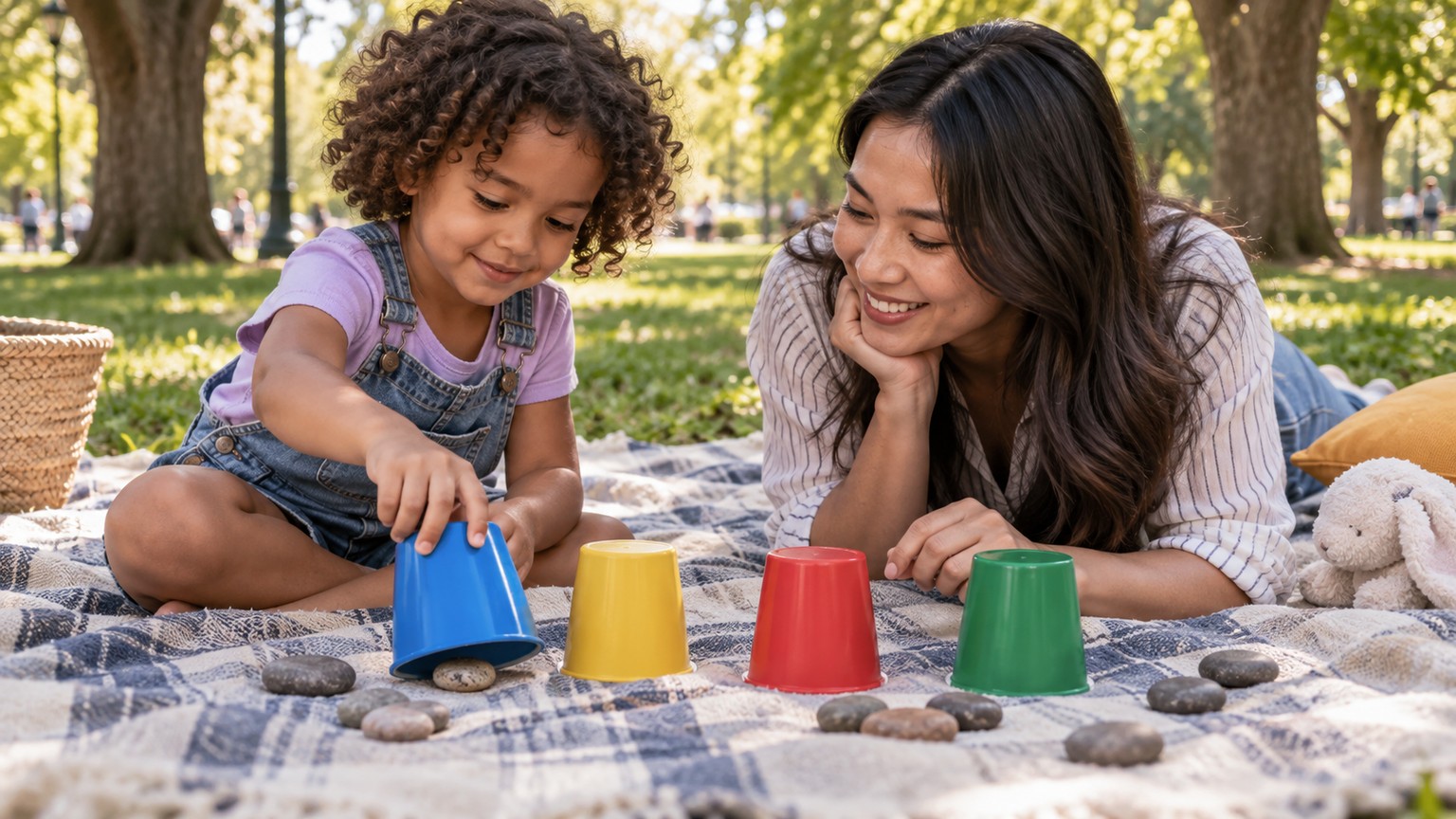
Simple deduction games create a satisfying reason to use clues. Hide an object beneath one of several cups and offer statements such as 'It is not under green' and 'It is beside blue.' The child removes impossible locations, explains what remains, and may request another clue. Start with visible choices and one-step elimination. Increase difficulty by adding attributes, positions, or clues that must be combined. Make every statement accurate; a logic game loses its value when the adult changes the rule to prolong suspense.
Stories can hold deductions too. Pause after a character discovers muddy footprints, an open gate, and an empty bowl. Ask which explanations fit all three clues and which fit only one. Separate possible from proven. A child may invent a clever story, but the evidence may support several. Encourage the phrase 'One possibility is' until a clue rules alternatives out. Imagination and logic cooperate when the learner knows which role each is playing.
Let children become clue makers. To design a fair puzzle, they must know the answer, anticipate what each clue eliminates, and ensure there is one intended solution. Test the puzzle on someone else and revise confusing language. Designing often reveals more understanding than solving because the child must work backward from the outcome and consider another person's information.
Develop Flexible Thinking Without Making Rules Meaningless
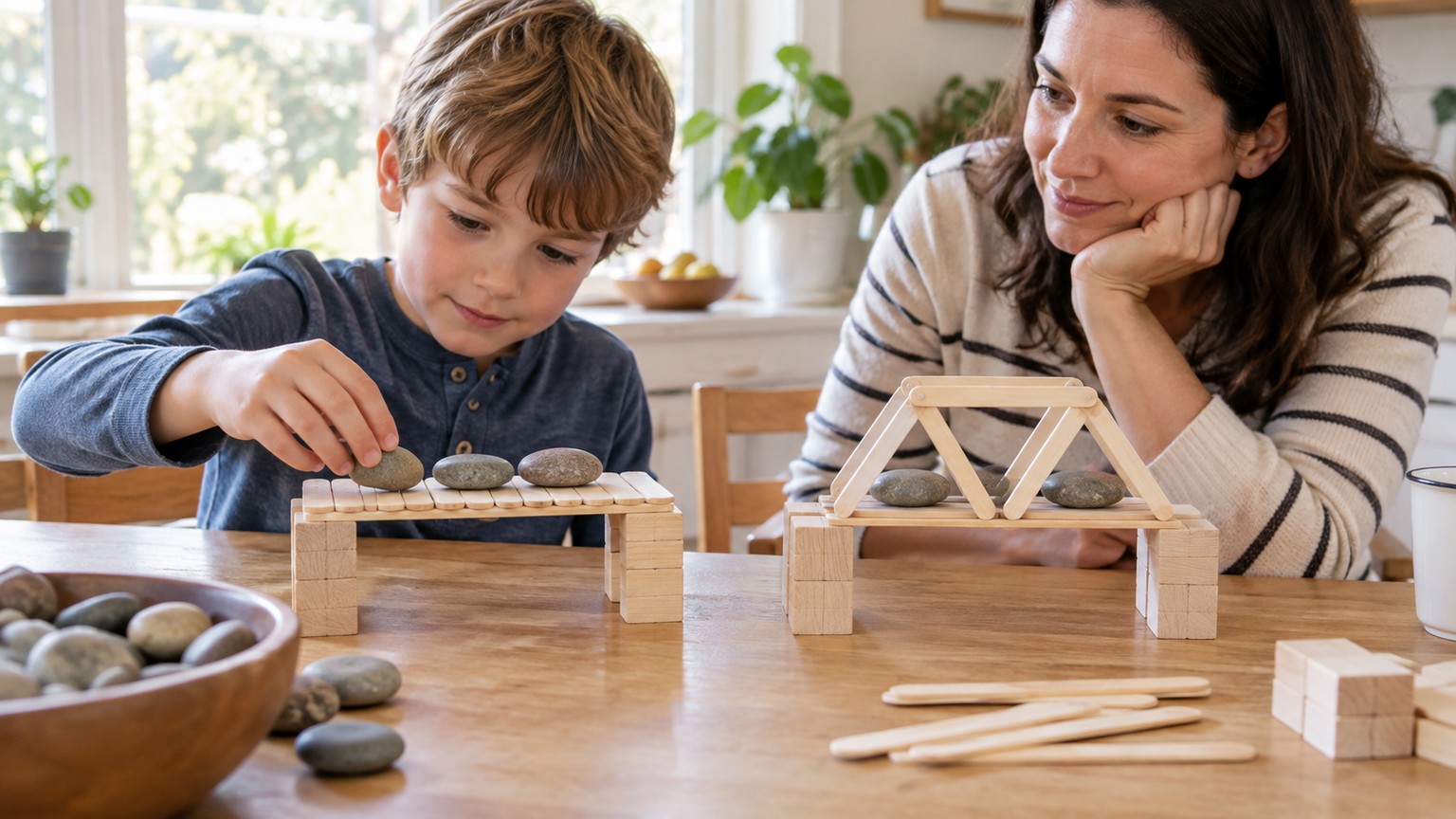
Flexibility means changing approach when evidence or goals change, not ignoring constraints. Build a bridge with ten pieces, then remove two materials and ask for a redesign. Sort a collection by habitat, then imagine the purpose is packing for transport and choose a more useful rule. Ask which part of the first strategy can be kept. This shows that revision is not starting from nothing; thinkers carry forward what still works.
Some children need advance notice before a rule changes. Present flexibility as a challenge rather than a surprise test, and keep the emotional demand separate from the reasoning demand. A visual card can show the old rule and new rule. Give time to restate the goal. Children think more effectively when working memory is not consumed by uncertainty about what the adult expects.
Ask Questions That Reveal Process
Questions should open thinking, not disguise a correction. 'Why did you do that?' can sound accusing, while 'What were you looking for?' invites description. Ask what the child knows, what remains unknown, which clue is strongest, and how a result could be checked. After success, resist moving on immediately. Compare two methods or create a similar problem with one changed condition. Reflection helps a strategy become portable.
Wait long enough for an answer. Young children may need to manipulate objects, whisper possibilities, or restart a sentence. Silence is part of the task. If support is needed, reduce the choices, restate the goal, or model one observation without completing the reasoning. A useful hint returns control to the learner.
Reasoning also benefits from disagreement handled well. Invite children to compare claims using the shared materials. They can say, 'I think this because,' ask for a demonstration, and change their minds publicly. Adults should model revision without embarrassment. The goal is not to produce a child who argues endlessly, but one who can connect a conclusion to evidence and listen when another explanation fits better.
Choose Challenge, Pace, and Support Carefully
A strong task sits just beyond automatic success but remains understandable. If a child guesses randomly, simplify the choices or make the rule visible. If the answer appears instantly, ask for another method, a general rule, or a puzzle design. Do not use speed as the default difficulty increase. Fast response may reflect familiarity, while deep reasoning often looks slow. Timers can add excitement for a child who enjoys them, but should not determine who is considered capable.
Keep sessions short enough to preserve curiosity and revisit ideas in new settings. Sorting in the laundry room, route planning outdoors, pattern translation through music, and deduction at the table exercise related skills without feeling repetitive. Notice growth in explanations, checking, persistence, and strategy changes rather than workbook pages completed. A child who pauses and says, 'That clue does not prove it yet,' is demonstrating a powerful thinking habit that will support mathematics, reading, science, and everyday judgment.
Connect Reasoning Across Subjects and Relationships
Logic becomes durable when children meet the same structure in different forms. A repeating musical rhythm can reappear as a bead design; a story's sequence can become a map route; a science prediction can be checked with the same evidence language used in a deduction game. Point out the connection after the child has experienced it rather than announcing every activity as a lesson. Ask, 'Where have we used a strategy like this before?' The child may recognize elimination, working backward, grouping by attributes, or holding one condition constant. That recognition helps a strategy travel into new situations instead of remaining attached to one set of materials.
Social life also requires reasoning, although people are never puzzles with one guaranteed answer. Children can distinguish what they observed from what they assumed when a friend leaves a game or a sibling takes an object. Generate several possible explanations before choosing how to respond. Check by asking rather than claiming to know another person's thoughts. This practice combines logic with empathy: evidence limits conclusions, and uncertainty calls for curiosity. Adults should be careful not to turn feelings into a courtroom exercise. The purpose is to slow an impulsive interpretation and make room for communication.
Keep a household or classroom culture in which changing one's mind is respected. Say when new information altered your own plan, and show how you check instructions or retrace steps. Avoid using logic as a label that elevates one child above another. A careful builder, perceptive storyteller, strategic game player, organized planner, and child who notices unfair rules may all display powerful reasoning in different forms. Offer varied entry points and sufficient processing time. The long-term aim is not flawless puzzle performance. It is a learner who can notice relationships, state a claim clearly, test it against evidence, adapt when conditions change, and collaborate without treating disagreement as defeat.
Keep Curiosity in Charge
Reasoning grows when the child still owns the problem. Offer time, useful materials, and an honest audience for the explanation. A good challenge ends with confidence to investigate another one.