Make a Monthly Craft From the Seasonal Changes Around You
Choose a local observation each month, then turn it into a contrast picture, weather study, plant collage, dated panorama, or another craft below. The projects connect familiar making techniques with changes in light, growth, ground conditions, and the places children know. Move a suggestion when your climate follows a different pattern, keeping the observation central. January through December provides an order for returning to those changes, with practical starting steps and ordinary supplies. Adults prepare difficult tool work while children choose the details worth showing.
A: Use the calendar as a menu and skip or move invitations when another choice fits better.
A: Start with local observations and rearrange or replace subjects to reflect the actual year.
A: Different formats can serve different creative purposes and need not form a matching set.
A: Use the familiar method for a new subject, purpose, or design decision.
A: Let the maker decide whether to share their work and choose another contribution if needed.
A: Describe the different effects and ask which features serve the maker's intention.
A: Observe, sketch, or recall the form without removing materials from the place.
A: Agree on the connecting feature and ask before altering or overlapping another person's contribution.
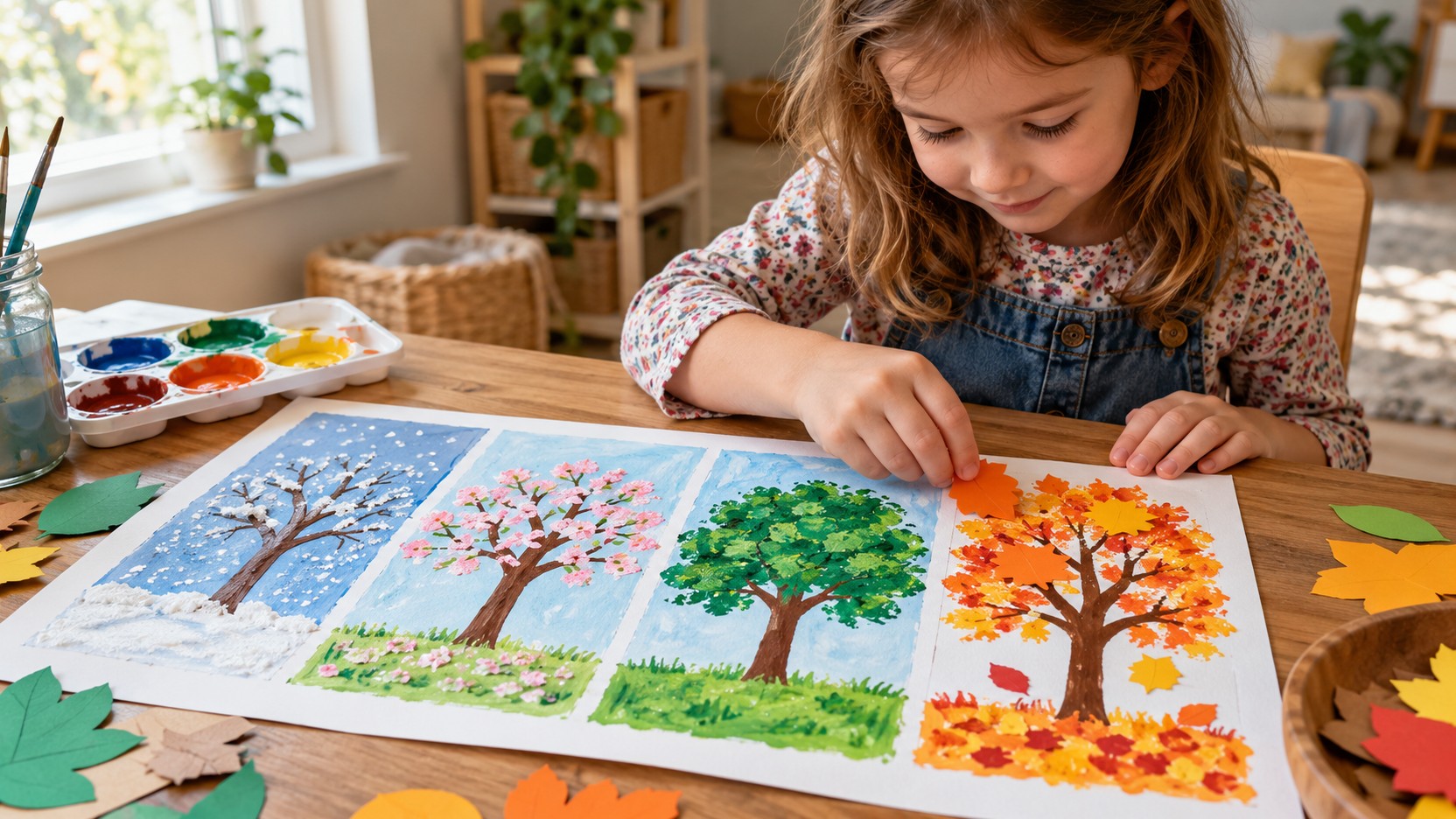
A: Keep the viewpoint consistent and depict specific differences such as ground moisture, new growth, shade, or the colors actually observed.
A: Keep basic supplies ready, choose small invitations, and include cleanup and storage in the plan.
Prepare a Flexible Monthly Starting Point
The year’s projects share a small supply: plain and colored paper, card, crayons or pencils, suitable adhesive, and child-appropriate scissors with adult preparation when needed. January and winter contrast work need light and dark paper; March’s sky and July’s color study can use paint or dry drawing tools. May’s texture portrait needs a safe textured surface or broad fabric scraps, June needs a foldable strip, and August needs card for a pocket. February’s message, April’s plant, September’s repeat, October’s comparison, November’s display, and December’s return to a favorite technique can all start with the basic paper supply. Choose drawing alternatives whenever a suggested material is unavailable.
Choose the subject through a view, object, memory, or recent outing the child can describe. Move the suggestion to another month when climate or local events differ; a night scene can explore January’s contrast without snow, and a familiar indoor place can become June’s folded setting. Keep the making technique while changing the context. If an observation is unclear, compare the same view another day before choosing which feature to show.
January: Explore Light and Dark Paper
Offer a dark backing sheet and a few broad lighter shapes. Invite the child to make a place, creature, or pattern that remains clear against the background. A snowy scene may fit some locations, while stars above a warm evening garden may fit another. Arrange pieces before attaching them so the maker can compare spacing. Ask which shape should attract attention first. Large shapes and drawn details keep the activity approachable without tiny embellishments. The project introduces contrast through visible choices rather than requiring a particular winter symbol.
February: Make a Message for Someone Chosen
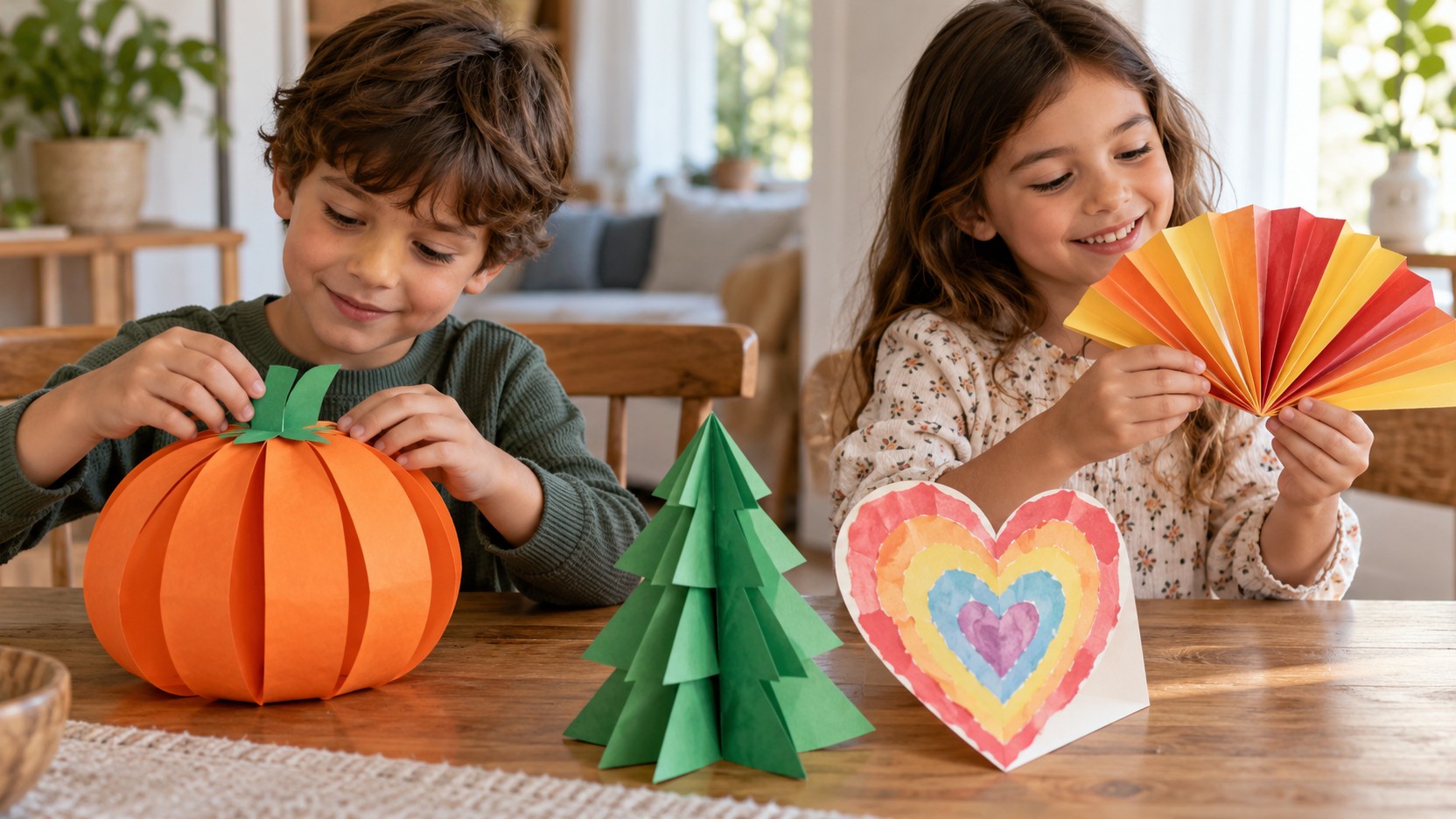
A folded picture card can communicate appreciation, humor, or a shared memory. Let the child choose the recipient instead of assigning the same relationship to everyone. The image might show a favorite place or an imagined adventure together. If words are wanted, an adult can record the child’s exact message and read it back for approval. Decoration should support the communication rather than hide the central picture.
Test whether the card closes before adding raised parts. A broad pop-open shape may be manageable with adult preparation, while a flat collage may suit a younger maker or a mailed greeting. Discuss whether the child wants to give the work away. Keeping a first experiment is also reasonable, and another contribution can be chosen for the recipient. A thoughtful message does not depend on a complex mechanism.
March: Turn a Changing Sky Into Marks
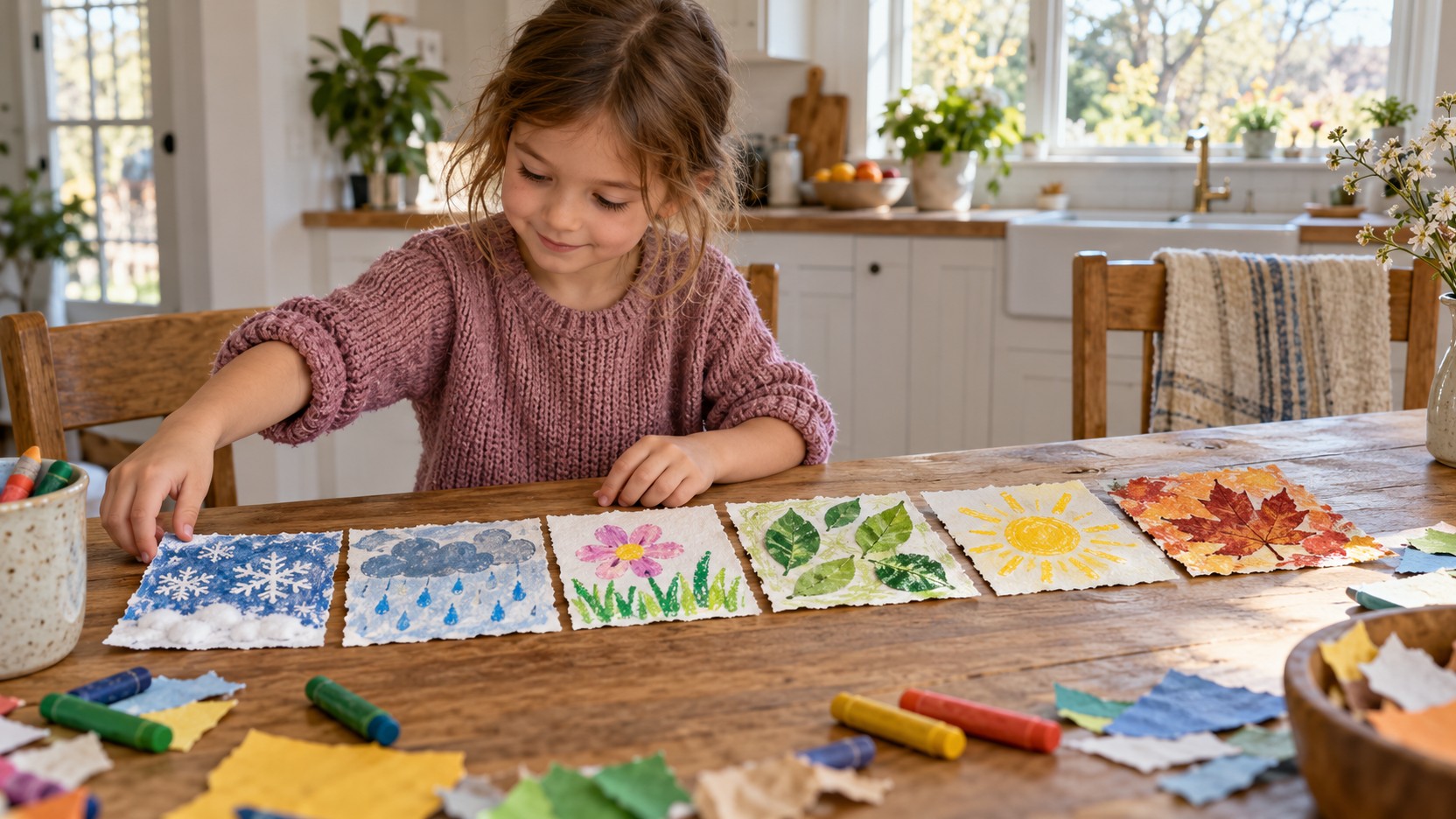
Observe a sky or recall its changes over several days. Use broad strokes, soft pencil areas, or torn paper to suggest clouds, clear space, rain, or another locally relevant condition. Children can compare one continuous area with a group of separate marks. Keep painting water manageable and provide a suitable surface. The picture does not need to predict weather or copy a photograph exactly. Ask which mark best expresses the change the child noticed, then let them decide whether to make another version with a different mood.
April: Build a Plant From Broad Shapes
Look at a suitable plant without picking or disturbing it. Notice the direction of a stem, the position of leaves, or a repeated shape. Offer broad paper pieces for a plant collage, with adult-prepared components if cutting would block participation. The child can preserve one observed feature and invent the rest. A real plant can lead to an imaginary species rather than becoming a test of botanical accuracy.
Try the parts loosely before attachment. A leaf may overlap the stem or extend beyond the backing sheet. Ask what the maker wants to emphasize and compare arrangements. If a standing plant is preferred, use a broad stable folded base and lightweight paper. Keep the first construction simple enough to test immediately. The activity can end with a flat picture or a small play object according to the child’s purpose.
May: Make a Texture Portrait of a Familiar Place
Choose a place the child knows: a garden corner, a balcony, a room, or a route observed with an adult. Combine two or three suitable textures through rubbings, broad fabric pieces, or paper marks. Screen surfaces before rubbing and avoid sharp or dirty materials. The child can use texture to distinguish areas rather than reproduce every object. A smooth patch might suggest a path while repeated ridges suggest a fence. Ask which detail makes the place recognizable to its maker.
June: Fold a Panorama of the Season Outside
Observe a familiar outdoor view from a safe comfortable place and identify what distinguishes it this month. The child might notice a dense canopy, bare branches, standing water, dry ground, or the position of shade. Fold a strip of sturdy paper into three standing panels. Use the panels for different parts of that actual view, preserving one locally observed seasonal detail in each.
Mark the main features lightly before drawing or attaching broad paper shapes. Connect a ground line across the folds and compare how the view changes as the strip opens. A removable figure can revisit the scene in play. Date the back and save a flat sketch of the same view for comparison in another season; the panorama records this June rather than a generic beach scene.
July: Make a Palette From This Month’s Light
Choose a familiar view and observe its colors at a safe ordinary time without looking toward the sun. Select three colors from something present this month: wet pavement, a flowering plant, a winter sky, or sunlit walls. Make trial patches with available drawing tools or suitable paint, then arrange a large and two smaller areas on a card. Add a small sketch showing where each color came from. Label the month on the back if wanted and compare with an earlier sample from that place. The palette can show local seasonal conditions without requiring July to mean summer.
August: Build a Pocket for Seasonal Evidence
Choose two or three drawings or permitted photographs of changes noticed locally during August. A child might record a ripening garden, a winter branch, a changing water level, or another familiar feature. Fold a broad card pocket to fit those actual records, allowing room to remove them easily. Adults prepare difficult cuts, while the maker designs a cover showing one feature from the collection.
Put a simple date and place on each chosen record in a suitable communication form. Test whether the pocket opens without bending the pictures, then store it beside an earlier month’s work. On a later visit, add a new drawing only if it reveals a change worth keeping. The holder serves a seasonal comparison, with a selective collection rather than an unrelated school organizer.
September: Print a Pattern From a Local Seasonal Form
Find a repeated form visible locally this September, such as a budding branch, a seed head, or the outline of a seasonal leaf. Observe without collecting when handling or removal is unsuitable. Draw a broad simplified version and repeat it across a strip with a pencil, crayon, or suitable paint. Vary the gaps to suggest a cluster or a sparse branch. Add one changed copy that represents an observed difference in size, color, or stage. Compare that choice with the original view so the pattern stays connected to this month’s subject.
October: Compare Two Versions of a Natural Form
Look at a safe observed form such as a tree, a shell, or a broad fallen leaf where collection is permitted. Make two versions using different techniques. One might use a drawn outline and the other torn paper, or one may emphasize color while another emphasizes texture. The subject can remain the same while the material changes the effect.
Place the versions together and invite description. Which one shows the edge more clearly? Which feels closer to the maker’s intention? The answer does not have to identify a winner. A child can keep a feature from each for a third experiment later. Avoid gathering more natural material than needed, and choose observation drawing when collection would disturb a place or involve uncertain plant safety.
November: Assemble a Display of the Same Place This Month
Choose a familiar place the group can observe safely, then assign willing makers different seasonal details to depict on separate card panels. One might show the ground, another the branches, and another the sky or water. Discuss what is actually present this November before agreeing on a connecting ground line. Draw or collage the panels, then stand them with broad folded supports prepared with help. Place a previous month’s sketch nearby and compare which details changed. Ask before altering anyone’s contribution, and display the work away from heat and walking routes. The group creates a dated account of one place.
December: Make a Fold-Out Record of Seasonal Change
Choose two earlier observations of the same place and make a third drawing of its current December condition. Fold a short strip into three panels and arrange the images in date order. Keep a fixed feature, such as a doorway or tree trunk, recognizable across all three. Show the changing parts through the child’s chosen colors, shapes, or textures. An adult can record dates on the reverse and read them back if useful.
Open the strip and ask which change the sequence makes easiest to see. The child might add a small detail to distinguish two similar panels or replace a remembered feature after another look. Keep the comparison specific to the local year, including wet-and-dry or other seasonal patterns that fit. Store the fold-out flat or share it with a chosen person as a record of observations.
Let the Plan Change When Life Changes
A monthly craft invitation can move, shrink, or disappear when the household needs something else. Illness, travel, changing interests, and limited energy all affect what is workable. There is no need to catch up on missed months. Begin again with an observation and a manageable action. The value lies in recurring opportunities to make choices, not in maintaining an unbroken calendar.
Adapt access as deliberately as the subject. Larger pieces, a stabilizing mat, a comfortable drawing tool, or a partner holding a joint can remove a barrier. Keep communication supports available and ask before altering the child’s work. The same monthly direction can support different forms of participation. A child may plan through pictures, gestures, spoken language, or their usual communication system.
At the end of each session, choose what happens next. A creation may join play, stay on display briefly, return to the supply as loose parts, or be stored safely. Keep the basic tools ready for another invitation. A craft year becomes sustainable when it fits the real family, respects the maker’s decisions, and leaves room for local observation to keep changing the plan.