Tell a Visual Story With a Clue, a Sequence, or a Movable Scene
Make a picture suggesting an event, reorder three scene cards, build a paper-room mystery, or create a small setting for movable characters. Each activity below connects a visual choice to what a viewer understands: a gaze points toward a clue, an object implies an earlier action, or a page edge hides part of an event. Use familiar suitable materials and an adult’s help with difficult tool steps. Begin with one image or short sequence, then compare a change before choosing whether the story needs another form.
A: Images, arrangements, objects, and movement can carry narrative relationships without text.
A: A suggestive event, clue, or relationship can imply what happened before or may happen next.
A: Movable cards make sequence changes easier before time is invested in finished detail.
A: Some ambiguity can be intentional; clarify only what the maker wants to communicate clearly.
A: Selected objects, scale, and unfinished actions can imply an invented user's presence.
A: It can distinguish places or emphasize an effect when chosen for a specific visual purpose.
A: Add them when they contribute information, contrast, voice, or a necessary connection.
A: Describe the viewing experience, ask before advising, and leave final choices with the child.
A: Do not assume fiction is autobiography; respond appropriately to actual safety concerns while respecting privacy.
A: Let the maker choose whether to keep the form, continue into play, or explore another visual decision.
Begin With an Event Rather Than a Required Plot
Offer a situation broad enough for different answers: someone discovers an unfamiliar object, a place changes while nobody is looking, or a character must find another route. Let the child accept, alter, or reject it. A prompt should open a doorway rather than supply the whole story. The maker may begin with an image and discover the event afterward.
Ask what the child wants the viewer to notice first. That choice can guide scale, placement, color, or the amount of detail. A tiny figure beneath an enormous leaf suggests a different relationship from a figure filling the frame. Keep the first decision visual. Words can support the story later if the child wants them, but the artwork should have room to communicate on its own.
Make One Image With a Before and an After
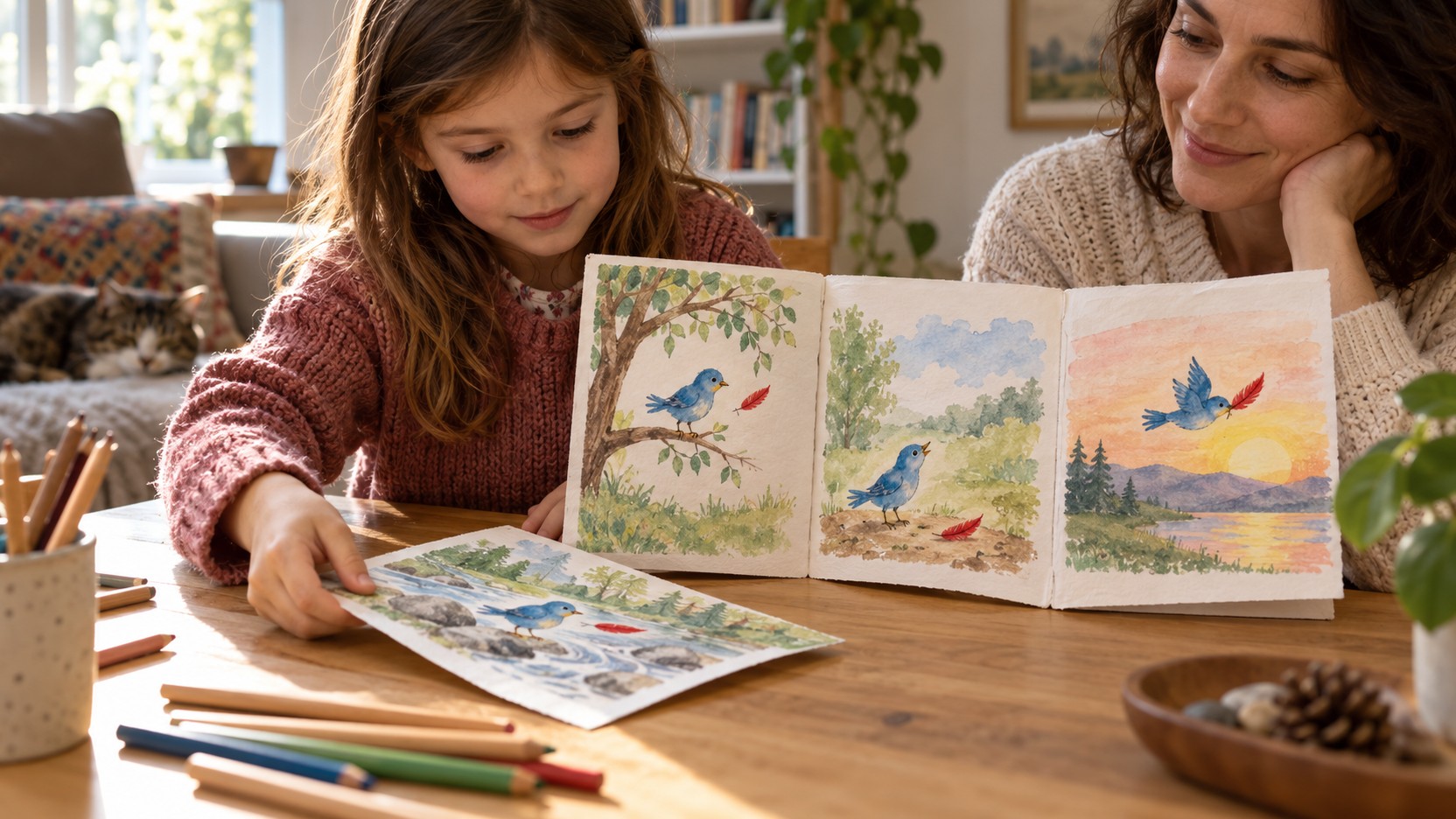
Invite a picture that seems to belong in the middle of something. A fallen hat might suggest an earlier gust of wind; a character’s reaching hand might suggest what happens next. The child chooses the clues. Avoid demanding that every observer infer the same exact plot. A suggestive image can support several readings while still carrying a deliberate intention.
After making, invite the child to point out one detail that refers to an earlier event and another that hints at a possible next action. They can explain through speech, gesture, drawing, or their usual communication tools. Do not add adult explanations directly onto the picture without permission. The maker may want to keep part of the event uncertain.
Try a second version only if the comparison interests the child. Remove a clue, change the direction of a gaze, or move an object nearer the edge. Ask how the viewer’s experience changes. The later image is not automatically better. The activity explores how visual information creates expectations, and a small revision can reveal that relationship clearly.
Arrange Three Scenes That Can Move
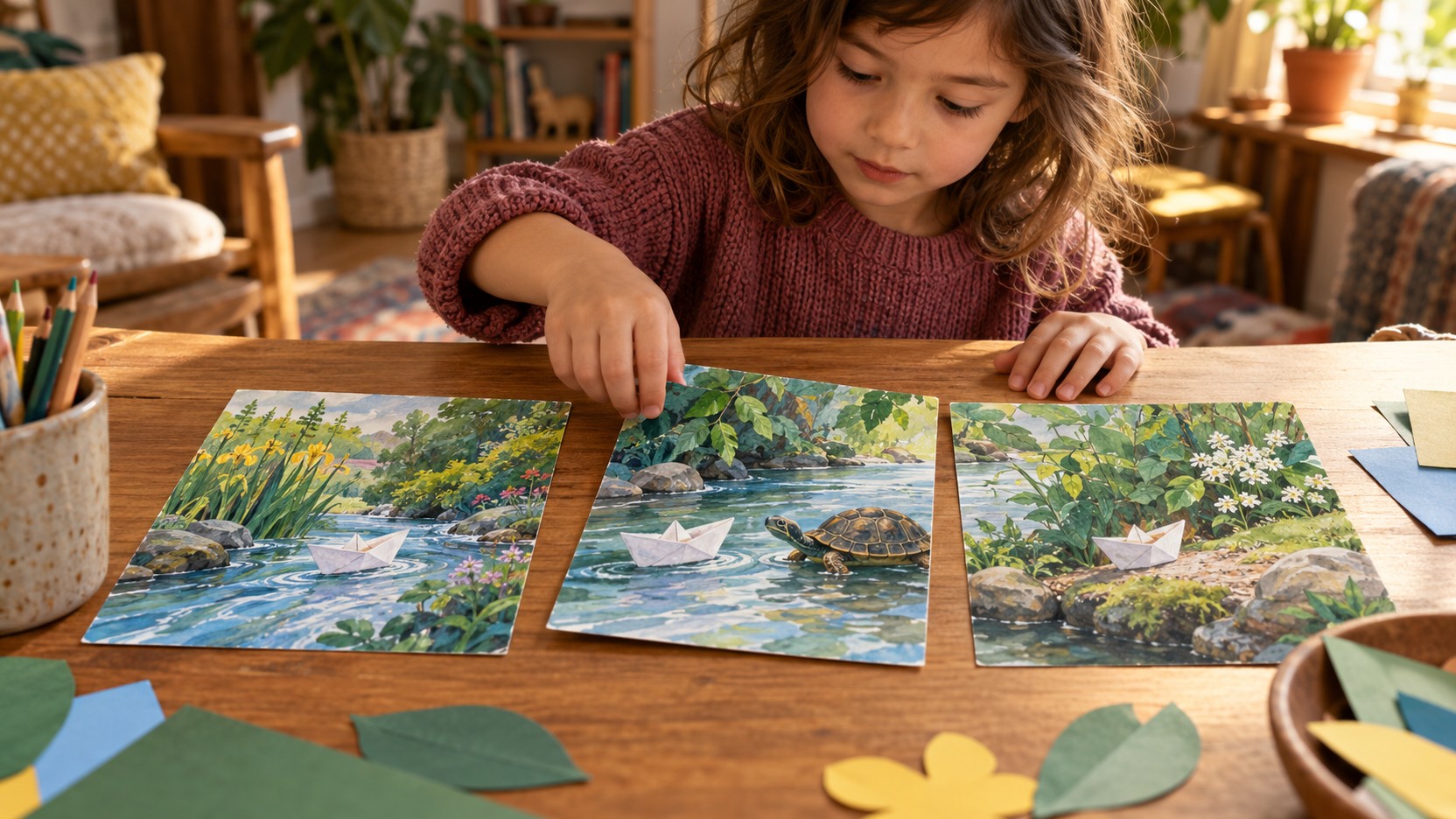
Make three broad picture cards: a paper boat beside a stream, a turtle blocking its route, and the boat resting on the bank. Place them in that order and tell the action while pointing. Next, move the bank scene to the beginning and ask what new event might connect it to the boat returning to the stream. Add one drawn clue only if it helps that new telling. This makes the exercise something children can actually try: select the moments, change their order, and decide whether a connection needs another image.
Move the middle scene and see what happens to the connection. Does the change create a surprise, a gap, or a different reason for the final event? The child might add a scene or decide that two pictures are enough. Loose cards support experiments that a fixed page can make awkward. Keep the sequence in the maker’s hands rather than imposing a standard beginning-middle-ending formula on every idea.
Use Collage to Change a Setting’s Meaning
For a visual mystery, build a familiar room from four broad paper pieces: floor, wall, window, and door. Add a long shadow that points toward the closed door, then place a small bright shape partly behind a chair. Ask the child which clue they want a viewer to notice first and move that clue until it stands out. Try a second version with the door open; does the same shadow still suggest the same event? Keep the pieces loose during this comparison and use clean age-appropriate materials, with adult-prepared shapes when needed. The child can invent an explanation or leave the scene deliberately unresolved.
Create a Character Through Objects and Surroundings
Draw an absent character’s work area using three selected objects. A tiny chair beside an enormous map and a half-packed bag could suggest someone preparing a journey. Change the bag to a broken model and compare the implied activity. Keep the character outside the picture while the objects supply the clues. Choose their size and position so a viewer can notice the relationship without a caption listing every object.
Ask which object is essential to the imagined character. Remove it temporarily and compare the effect. Another detail may become more important than expected. The child can choose whether to draw the character later or leave them absent. Absence can create curiosity, and a viewer can infer a story from the relationships between objects.
Build a Small Scene With Movable Elements
Use a broad stable base and a few lightweight components. Prepared card trees, folded furniture, or large paper characters can create a setting that is easy to rearrange. Test scale with the intended figures before attaching background parts. A doorway should allow the action the child imagines. Keep construction simple enough that the story does not wait indefinitely for adult assembly.
Choose which parts remain movable. A character may need a place to hide, a bridge may need to shift, or a roof may need to open. Those features should serve the events rather than exist merely as decoration. Try the story through play and notice where the setting helps or blocks it. The first game can provide a reason for a later construction change.
Store loose parts beside the scene and agree on its display or play period. A removable arrangement can pack more easily than a large fixed sculpture. Ask before dismantling it. A child’s unfinished scene may hold a plan that is not obvious to an adult, so preserving the next intended action can make returning easier.
Explore Viewpoint Without Changing the Event
Show a character finding an object from two positions. In the first picture, place the whole character and the object inside a broad view of the room. In the second, draw the object larger with part of the character’s hand or face nearby. Keep the object recognizable in both. Compare which image explains the location and which makes the discovery more immediate. A quick arrangement of broad paper shapes can test the change before a detailed drawing. The exercise is choosing what information the viewer receives, without needing a technical perspective lesson.
Use Color and Texture as Supporting Clues
Ask what the maker wants an area to feel like and compare possible materials. A rough patch, a smooth open field, or a dense cluster can support the setting’s character. Do not assign universal meanings such as one color always representing one feeling. The child can explain their own association or simply compare which version serves the intended scene.
Keep the important action readable. A highly textured background may compete with a small character, while a quiet area can make a clue more visible. Step back and look at the relationships between parts. The child may enlarge the subject, simplify nearby marks, or deliberately create a busy scene. Each option should be connected to what they want the viewer to experience.
Add Words Only When They Contribute Something
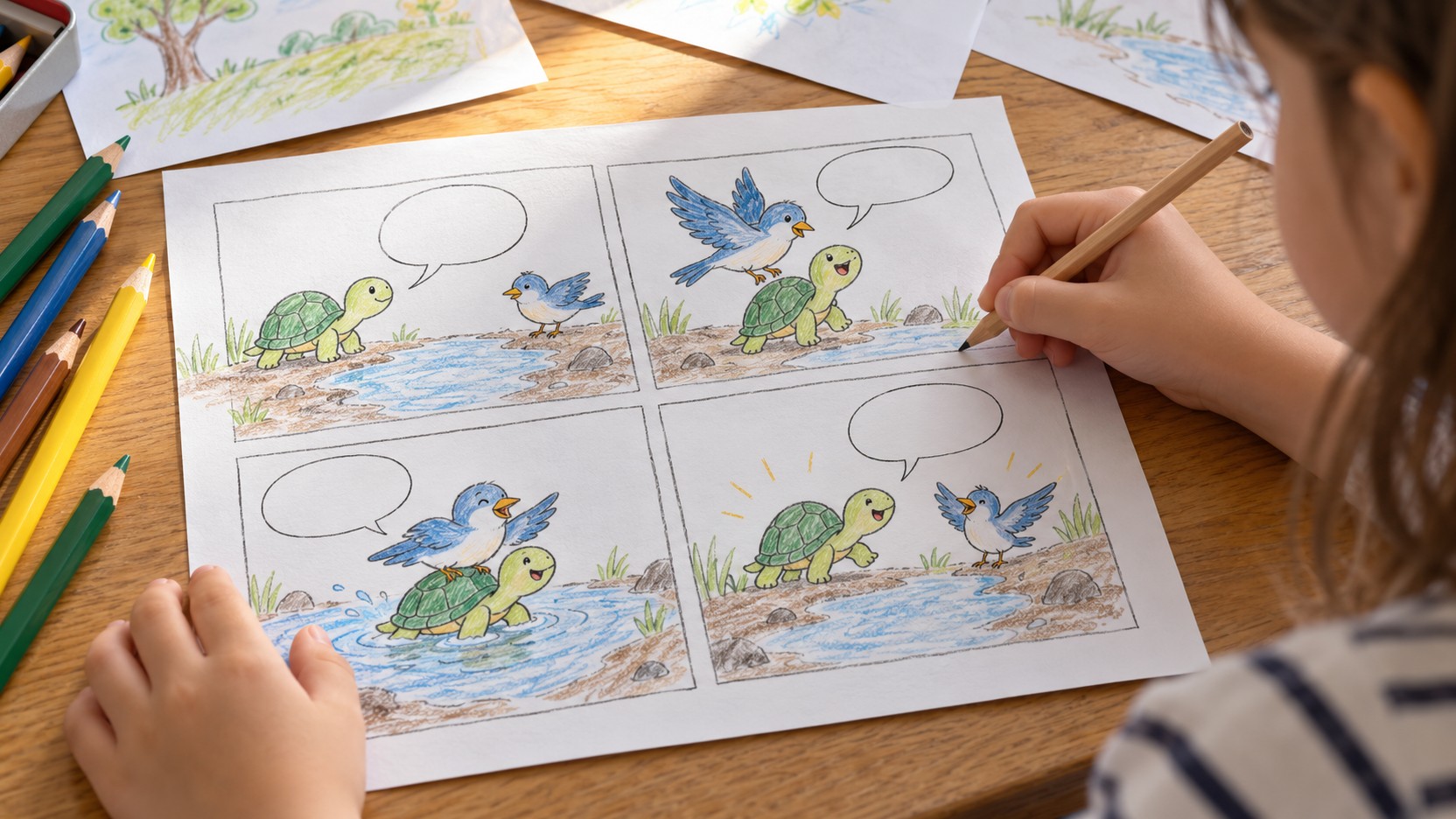
A title, caption, short dialogue, or dictated line can support visual storytelling. Ask what the words should add that the image does not already provide. They may reveal a private thought, create a contrast, or identify a necessary detail. Preserve the maker’s wording when an adult scribes, and read it back for approval. Text should remain an available tool rather than a requirement that turns every art session into handwriting practice.
Test Which Visual Clue the Viewer Notices
Show the work to a willing viewer and ask what they notice first. For the paper-room mystery, listen for whether the shadow, bright shape, or doorway attracts attention. Describe your own viewing path briefly if asked. The maker can compare that account with the clue they intended to emphasize.
Try one change on spare material if an important event remains hidden. Move the bright shape, simplify the nearby pattern, or shift the character’s gaze toward it. Show that version without explaining the answer first. Keep a deliberate mystery where the maker wants one, and revise only the connection that needs to become clearer. The test supplies information about the visual effect rather than an adult-written plot.
Offer Access Through Materials and Communication
Large shapes, a stable surface, suitable grips, or a partner holding a component can make a visual idea easier to realize. Keep the child’s preferred communication system available during planning, making, and discussion. A story can be composed through selected images, movement, signs, dictated language, or a temporary arrangement. Do not confuse a particular production method with the amount of narrative thinking involved.
Some children prefer a clear short invitation, while others need open time to explore a material before a story emerges. Offer a choice that helps them begin without overwhelming the table. An adult can prepare difficult cuts or provide one unfamiliar technique while leaving the important design choices open. Ask permission before physical guidance or changes to the work.
Keep personal disclosure optional. A child may want to make fiction rather than explain their own experience, and adults should not treat every dark or unusual image as autobiography. If something raises a real safety concern, respond through appropriate safeguarding processes without conducting a public interpretation of the artwork. Ordinary creative discussion should respect privacy and the maker’s chosen audience.
Let the Artwork Choose Its Next Form
A single image may remain complete, a sequence may become a small display, or a scene may continue into play. Ask what the maker wants to do with it before proposing a book or performance. A new format introduces practical demands, and not every interesting picture needs to become a larger production. The next form should serve the child’s purpose rather than an adult’s desire for a polished project.
Save the Visual Choice You Want to Use Again
Keep a selected rough image, loose sequence, or approved photograph of a temporary scene if it will help another session. Place the original and revised clue together so the difference remains visible. A brief maker-directed reminder can identify what changed, such as “the doorway hid the ending” or “the brighter shape was noticed first.” Store loose parts beside that reminder.
Choose the next work through that discovery. An open gate and a dropped ribbon could suggest an event without showing who passed through; another sequence might reveal the missing person in a second image. Decide how much the viewer should know before adding another picture or caption. Keep a manageable set of materials ready for that specific action. The next story can use the same visual technique with a new subject, rather than repeat every feature of the earlier scene.