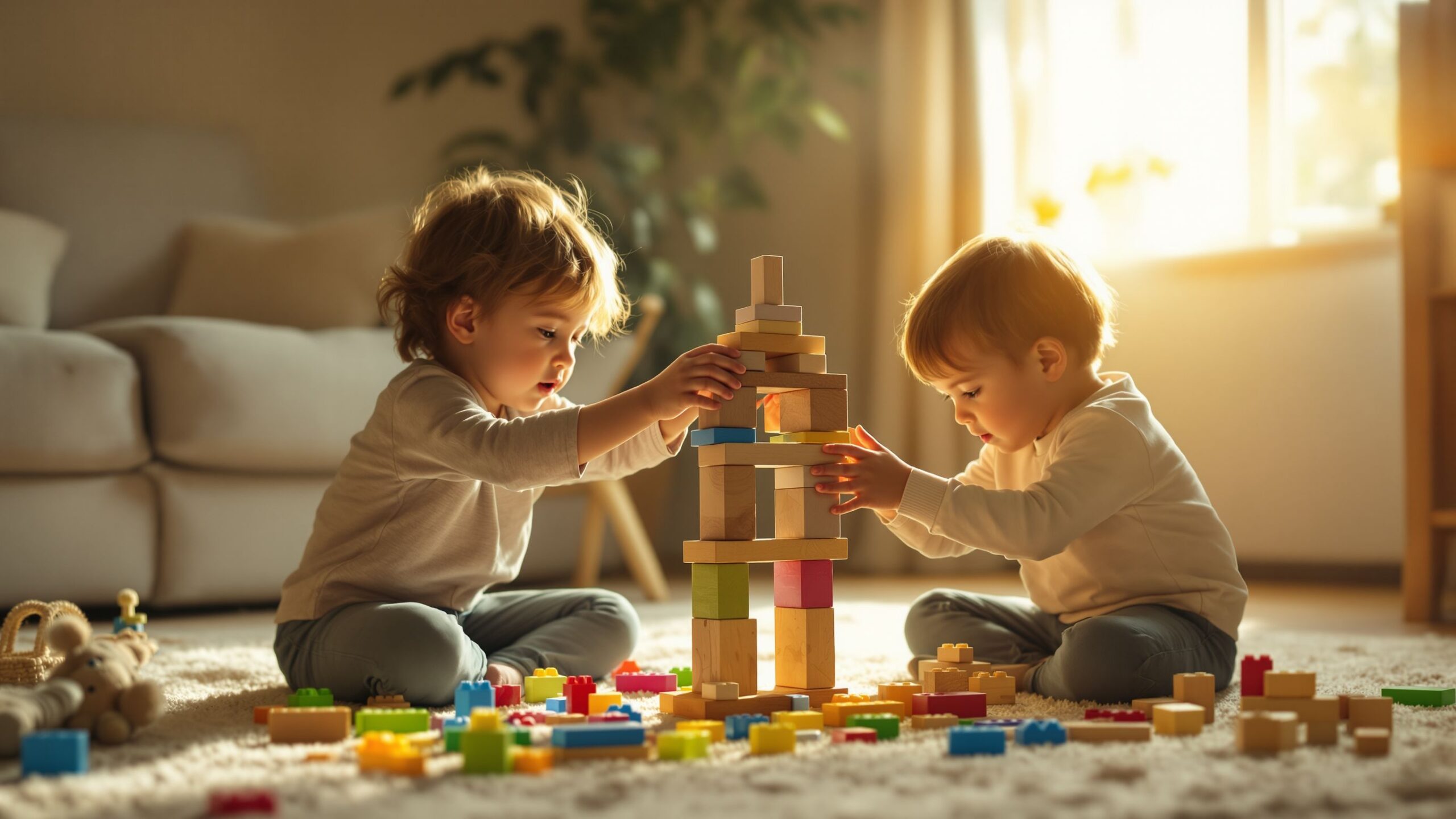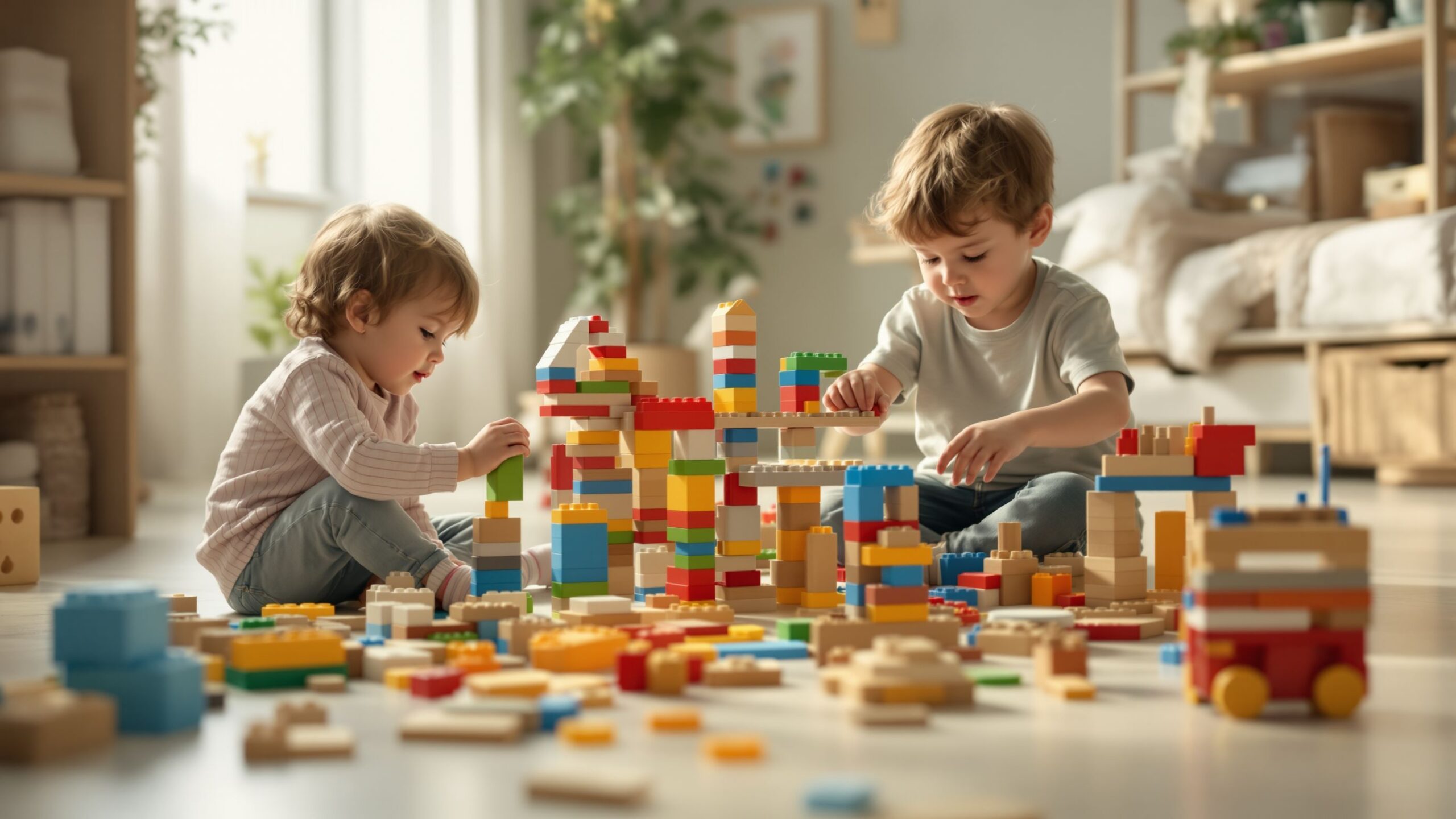
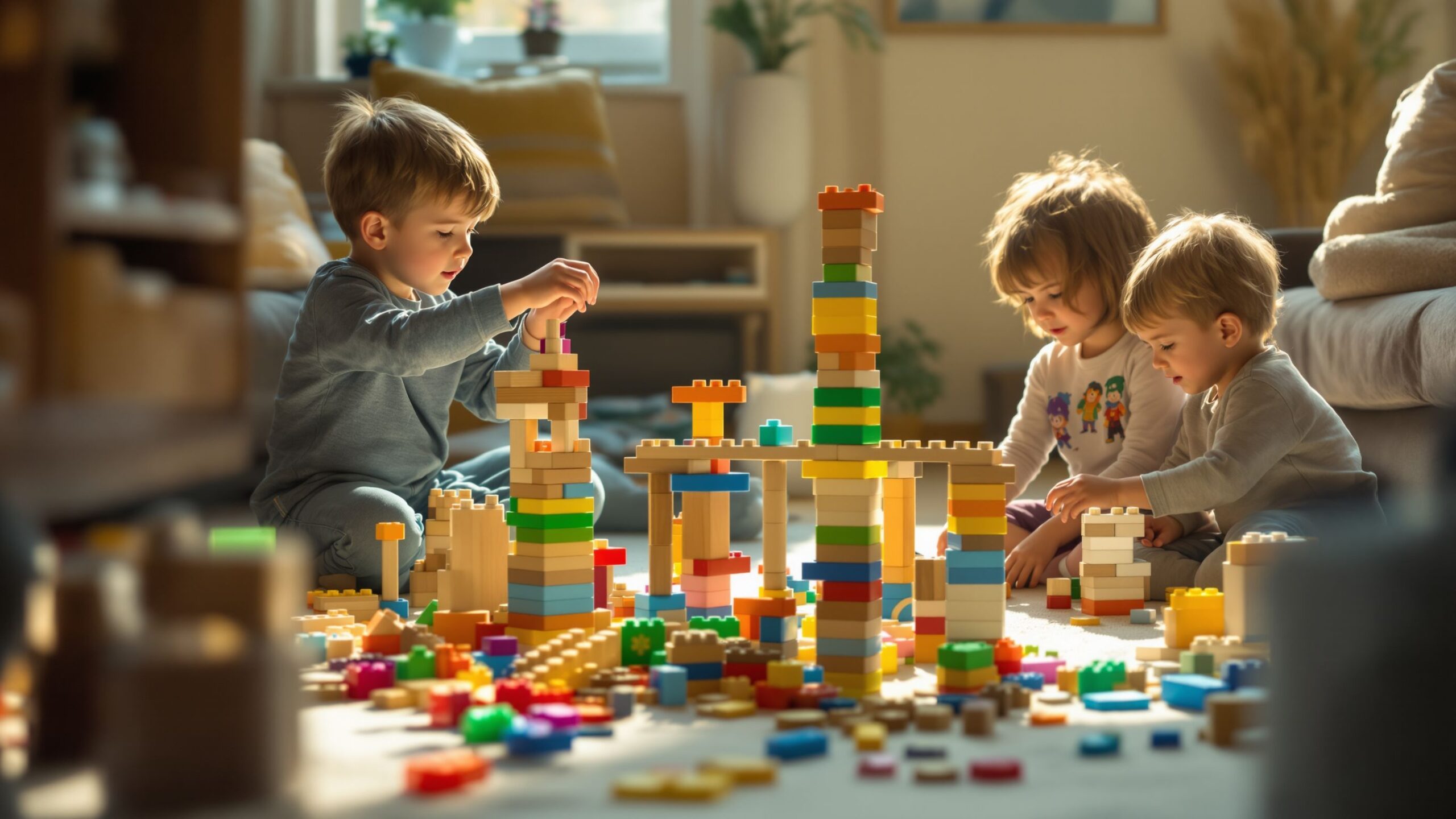
Building and construction play is one of the most powerful, engaging, and developmentally rich activities children can experience. From stacking simple blocks as toddlers to designing elaborate structures as older kids, construction play taps into imagination, problem-solving, creativity, and real-world understanding all at once. It is more than just play—it is the foundation for critical thinking, spatial awareness, and even early engineering skills. In a world increasingly driven by innovation, giving children the opportunity to build, experiment, and create prepares them for both academic success and lifelong curiosity.
A: It can start in toddler years with large blocks and grow into more detailed building as kids get older.
A: Large blocks, soft foam blocks, chunky bricks, toy trucks, and simple stacking sets are great starters.
A: Yes, it supports early math, science, motor skills, language, creativity, and problem-solving.
A: Add a challenge, story, toy figures, vehicles, ramps, pretend tools, or a simple blueprint.
A: Child-safe toy tools are usually fine when they are age-appropriate and used with supervision.
A: That is normal and valuable because it teaches motion, sound, balance, and cause-and-effect.
A: Yes, group building encourages sharing ideas, solving disagreements, and working toward a shared goal.
A: No, boxes, cups, tubes, sticks, tape, and recycled materials can inspire amazing construction play.
A: Ask questions like “What are you building?” or “How can we make it stronger?” and let them lead.
A: Encourage testing wider bases, shorter walls, stronger supports, and trying again.
What Is Building and Construction Play?
Building and construction play refers to any activity where children use materials to create structures, designs, or systems. This can range from traditional wooden blocks and LEGO-style bricks to cardboard forts, sandcastles, magnetic tiles, and even digital building games. The essence of this type of play lies in the act of creating something from individual components, testing ideas, and refining them through trial and error.
Unlike passive forms of entertainment, construction play requires active participation. Children must plan, adapt, and often collaborate with others. Whether they are building a tower, a bridge, or an imaginary city, they are constantly making decisions about balance, shape, and structure. These decisions mimic real-world engineering challenges in a simplified, accessible way.
Why Construction Play Is Essential for Child Development
Construction play supports nearly every area of a child’s development. Cognitively, it encourages problem-solving and logical thinking. When a tower falls, a child must figure out why and adjust their approach. This process builds resilience and persistence, teaching kids that failure is simply part of learning.
Physically, construction play enhances both fine and gross motor skills. Manipulating small pieces strengthens hand-eye coordination, while larger builds—like stacking boxes or assembling outdoor structures—engage the whole body. These physical interactions help children gain control over their movements and improve coordination.
Socially and emotionally, building together fosters teamwork and communication. Children learn to share ideas, negotiate roles, and resolve conflicts. At the same time, successfully completing a project boosts confidence and provides a strong sense of accomplishment. The pride a child feels after building something tangible is a powerful motivator for future learning.
The Role of Imagination in Building Play
Imagination is the driving force behind construction play. While adults may see a pile of blocks, children often see castles, spaceships, cities, or entire worlds. This imaginative overlay transforms simple materials into storytelling tools, allowing kids to create narratives alongside their structures.
When children build with imagination, they are not just constructing physical objects—they are building stories and scenarios. A bridge becomes a pathway for toy cars, a tower becomes a lookout point, and a simple box can transform into a robot or a house. This blend of creativity and structure is what makes construction play uniquely powerful.
Encouraging imaginative building also helps children think abstractly. They begin to understand that objects can represent ideas, which is a key step in cognitive development. This ability to think symbolically is essential for skills like reading, writing, and mathematical reasoning.
Types of Construction Materials for Kids
The variety of materials available for building play is vast, and each type offers unique benefits. Traditional wooden blocks are timeless and versatile, encouraging open-ended play without predetermined outcomes. Interlocking bricks provide more precision and allow for complex designs, making them ideal for older children.
Magnetic tiles introduce concepts of geometry and balance in a visually engaging way, while cardboard boxes and recycled materials encourage creativity and resourcefulness. Sand, clay, and other natural materials add a sensory dimension, allowing children to explore texture and form simultaneously.
The best approach is to provide a mix of materials. This diversity allows children to experiment with different building techniques and discover what they enjoy most. It also prevents play from becoming repetitive, keeping engagement high and curiosity alive.
How Construction Play Builds STEM Skills
Building and construction play naturally introduces children to STEM concepts—science, technology, engineering, and mathematics—without the need for formal instruction. When children stack blocks, they learn about gravity and balance. When they create symmetrical designs, they explore mathematical patterns. When they build bridges or towers, they are engaging in basic engineering principles.
These experiences are intuitive and hands-on, making them far more impactful than abstract lessons. Children learn by doing, testing, and observing outcomes. This experiential learning helps them internalize complex concepts in a way that feels natural and enjoyable.
As children grow, construction play can evolve to include more advanced challenges. They might experiment with weight distribution, explore structural stability, or even incorporate simple machines. These activities lay the groundwork for future interest in STEM fields.
Age-Appropriate Construction Activities
Construction play can be adapted to suit children of all ages. For toddlers, simple stacking toys and large blocks are ideal. These activities focus on basic skills like grasping, stacking, and knocking down structures. The emphasis is on exploration rather than precision.
Preschoolers can handle more complex materials, such as interlocking bricks or magnetic tiles. At this stage, children begin to plan their builds and create recognizable structures. They may also start to incorporate storytelling into their play.
School-age children are ready for more advanced challenges. They can follow instructions, design their own creations, and experiment with structural concepts. This is the perfect time to introduce kits, blueprints, or themed building projects that encourage deeper thinking.
By tailoring construction activities to a child’s developmental stage, parents and educators can ensure that play remains both challenging and enjoyable.
Indoor vs. Outdoor Construction Play
Both indoor and outdoor environments offer unique opportunities for construction play. Indoors, children can work with smaller, more detailed materials. This setting is ideal for focused, quiet play that encourages concentration and precision.
Outdoors, the possibilities expand dramatically. Children can build with natural materials like sticks, stones, and sand, or use larger items such as boxes and planks to create forts and obstacle courses. Outdoor construction play often involves more physical activity, combining building with movement and exploration.
The combination of indoor and outdoor play provides a balanced experience. It allows children to develop a wide range of skills while keeping their play environment dynamic and engaging.
Encouraging Creativity Without Over-Directing
One of the most important aspects of construction play is allowing children to lead. While it can be tempting to guide them or suggest specific designs, too much direction can limit creativity. Instead, adults should provide materials, ask open-ended questions, and offer support when needed.
Questions like “What are you building?” or “How can we make it stronger?” encourage children to think critically without imposing solutions. This approach empowers them to take ownership of their creations and develop confidence in their ideas.
Mistakes should be embraced as part of the process. When a structure collapses, it presents an opportunity to learn and improve. By creating a supportive environment, adults can help children view challenges as exciting rather than frustrating.
The Benefits of Collaborative Building
Building together introduces a social dimension that enhances the overall experience. Collaborative construction projects require communication, cooperation, and shared decision-making. Children learn to listen to others, express their ideas, and work toward a common goal.
These interactions are invaluable for developing social skills. They teach children how to negotiate, compromise, and resolve conflicts. At the same time, working together often leads to more ambitious and creative builds than individual play.
Group construction activities can take many forms, from building a shared city to designing a large-scale fort. These projects encourage teamwork while still allowing each child to contribute their unique perspective.
Incorporating Real-World Concepts Into Play
Construction play provides an excellent opportunity to introduce real-world concepts in a fun and engaging way. Children can learn about architecture, engineering, and design by observing buildings and then recreating them in their play.
Parents and educators can enhance this learning by discussing simple ideas like foundations, stability, and materials. Visiting construction sites, looking at bridges, or exploring different types of buildings can inspire new ideas and deepen understanding.
By connecting play to the real world, children begin to see the relevance of what they are learning. This connection fosters curiosity and encourages them to explore further.
Creating a Construction-Friendly Environment at Home
A dedicated space for building can significantly enhance a child’s experience. This doesn’t require a large area—just a consistent place where materials are accessible and projects can be left unfinished if needed. Having a space where children can return to their creations encourages long-term projects and deeper engagement.
Organizing materials in a way that is easy to access and clean up also promotes independence. When children can choose their own materials and manage their workspace, they develop a sense of responsibility and ownership.
Rotating materials periodically can keep things fresh and exciting. Introducing new elements or challenges prevents boredom and encourages continued exploration.
Balancing Digital and Physical Construction Play
In today’s digital age, construction play is not limited to physical materials. Many games and apps allow children to build virtual worlds, offering a different but equally engaging experience. These platforms can enhance spatial reasoning and introduce new design possibilities.
However, it is important to balance digital play with hands-on experiences. Physical construction provides sensory feedback and motor skill development that digital play cannot replicate. The combination of both can create a well-rounded experience, allowing children to explore different aspects of building and design.
Encouraging children to translate ideas between digital and physical formats can also be beneficial. For example, they might design something in a game and then attempt to recreate it with real materials.
Long-Term Impact of Construction Play
The benefits of construction play extend far beyond childhood. The skills developed through building—problem-solving, creativity, collaboration, and resilience—are essential for success in many areas of life. These abilities are not only valuable academically but also in everyday decision-making and future careers.
Children who engage in construction play often develop a strong sense of curiosity and a willingness to experiment. They learn to approach challenges with confidence and view obstacles as opportunities for growth. These traits are the foundation of innovation and critical thinking.
In a rapidly changing world, the ability to adapt and think creatively is more important than ever. Construction play equips children with these skills in a way that feels natural and enjoyable.
Conclusion: Building a Foundation for the Future
Building and construction play is far more than a simple pastime—it is a powerful tool for learning and development. Through the act of creating, children explore the world around them, develop essential skills, and build confidence in their abilities. Whether they are stacking blocks, designing cities, or constructing imaginative worlds, they are laying the groundwork for future success.
By providing the right materials, encouraging creativity, and supporting exploration, parents and educators can unlock the full potential of construction play. In doing so, they give children not just the ability to build structures, but the ability to build ideas, solve problems, and shape their own futures.