Creativity is one of the greatest gifts a child can develop. It helps young minds explore new possibilities, solve problems, communicate ideas, and build confidence. While academic skills such as reading, writing, and mathematics are essential, imagination is often what transforms knowledge into innovation. Children who learn to think creatively become better equipped to navigate challenges, adapt to change, and see opportunities where others see limitations.
Imagination is much more than make-believe. It is the ability to form new ideas, envision possibilities, and create connections between different concepts. Every invention, masterpiece, scientific discovery, and technological breakthrough began as an idea in someone’s imagination. By encouraging creative thinking early in life, parents and educators help children develop skills that can benefit them for decades to come.
In today’s fast-paced world, children are surrounded by screens, schedules, and constant stimulation. While technology offers incredible opportunities, it can sometimes limit opportunities for independent creative exploration. That is why imagination boosters are more important than ever. They help children think beyond what is directly in front of them and inspire them to create, discover, and innovate.
A: Give them open-ended materials, unstructured playtime, and permission to try ideas without needing perfection.
A: Blocks, art supplies, dress-up clothes, puppets, pretend food, boxes, and building materials are great choices.
A: Yes, pretend play supports language, problem-solving, social skills, emotional growth, and flexible thinking.
A: Offer a simple prompt, then give them space to create their own activity or game.
A: Only if safety is involved; otherwise, let unusual ideas grow and ask questions that encourage more thinking.
A: Balance matters; screens can inspire ideas, but kids also need hands-on play, movement, reading, and outdoor time.
A: Creativity is not only crafts; try building, storytelling, music, pretend play, nature games, or problem-solving challenges.
A: Start with prompts like “Once there was a tiny dragon…” and let your child add what happens next.
A: No, everyday items like paper, boxes, blankets, spoons, socks, and recycled materials can spark huge ideas.
A: Follow their lead, ask what role you should play, and add small ideas without taking over.
Why Creative Thinking Is Important for Kids
Creative thinking influences nearly every area of a child’s development. It strengthens problem-solving skills, encourages curiosity, improves communication, and supports emotional growth. Children who think creatively often feel more confident tackling challenges because they understand there is rarely only one way to solve a problem.
Imagination also plays an important role in learning. When children connect lessons to stories, pictures, and creative ideas, they often retain information more effectively. Creative thinkers naturally explore concepts from different angles, which helps them gain deeper understanding.
Another benefit of creativity is resilience. Imaginative children learn that setbacks are part of the creative process. If one idea does not work, they simply try another. This mindset encourages perseverance and adaptability throughout life.
Creative thinking also supports emotional intelligence. Through imaginative experiences, children explore different perspectives, process emotions, and develop empathy. These skills contribute to stronger relationships and healthier social interactions.
How Imagination Develops in Childhood
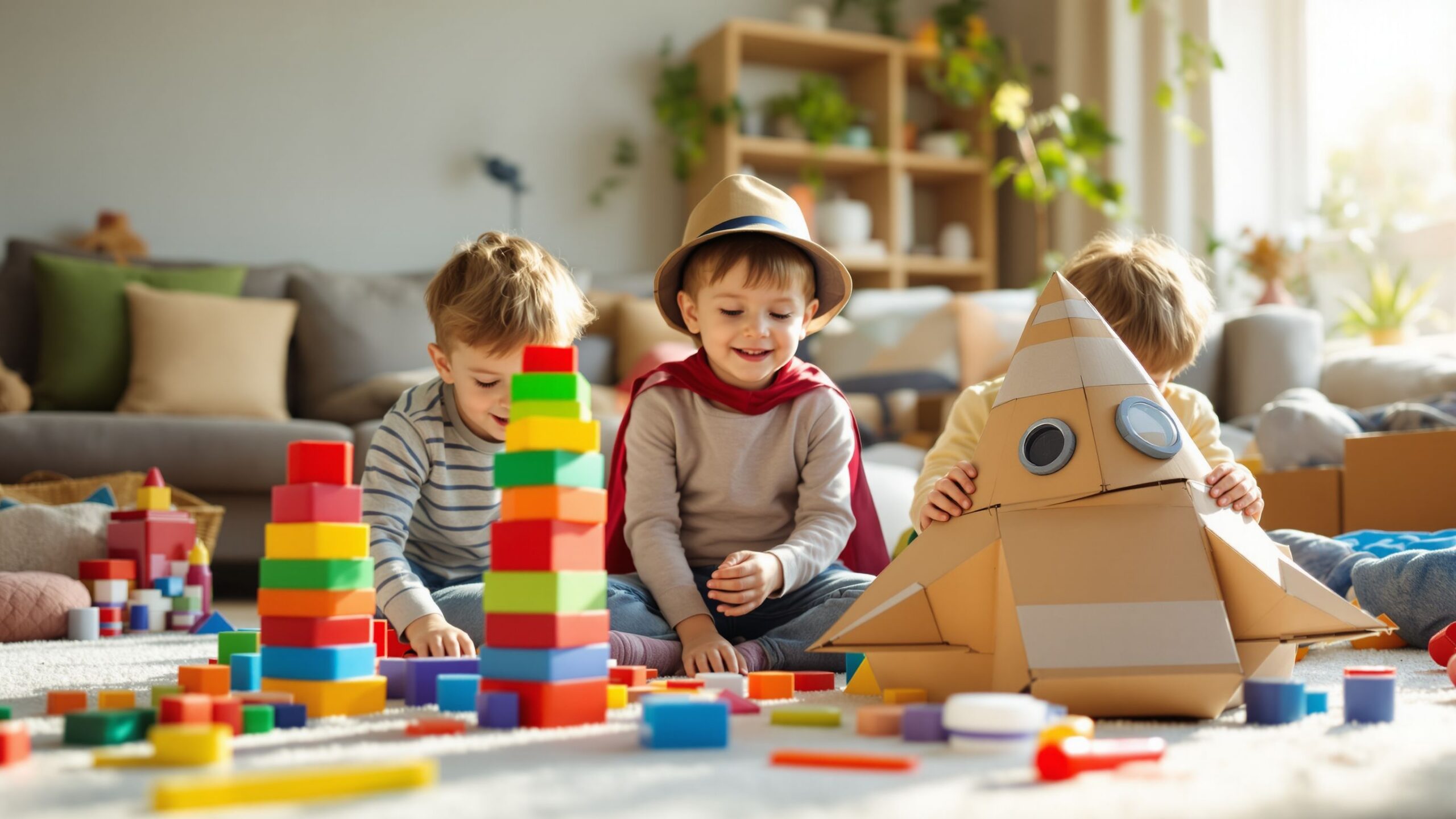
Children are naturally imaginative from an early age. Toddlers often turn ordinary objects into extraordinary tools for play. A cardboard box becomes a race car. A blanket transforms into a secret hideout. A spoon becomes a microphone.
As children grow older, their imagination becomes more sophisticated. Preschoolers create detailed stories, imaginary friends, and fantasy worlds. They enjoy pretending to be superheroes, doctors, teachers, explorers, and countless other characters.
School-age children begin applying imagination to problem-solving and innovation. They invent games, design projects, and create more complex narratives. Their creativity starts connecting with knowledge gained through education and experience.
By adolescence, imagination often becomes a form of self-expression. Young people use creativity to explore personal interests, develop unique viewpoints, and solve increasingly complex challenges. Supporting creativity throughout these stages helps children build confidence in their ability to generate original ideas.
The Power of Free Play
One of the most effective imagination boosters is free play. Unlike structured activities with specific goals and rules, free play allows children to direct their own experiences and explore ideas independently.
During free play, children become storytellers, inventors, adventurers, and problem-solvers. They create rules, develop scenarios, and adapt their ideas as situations change. This flexibility strengthens creative thinking and encourages innovation.
Free play also teaches decision-making skills. Children learn how to manage challenges, negotiate with peers, and think independently. These experiences build confidence while encouraging imagination.
Many modern schedules leave little room for unstructured time. However, creativity often flourishes when children have opportunities to entertain themselves. Some of the most imaginative ideas emerge when children are given the freedom to explore their own interests without constant direction.
Storytelling as an Imagination Booster
Stories are among the most powerful tools for developing creativity. They introduce children to new worlds, exciting characters, and endless possibilities. Through stories, children learn to visualize, imagine, and think beyond their immediate surroundings.
Reading regularly exposes children to diverse ideas and experiences. Books inspire curiosity and encourage children to imagine settings, events, and emotions. This mental visualization strengthens creative thinking skills.
Encouraging children to tell their own stories is equally valuable. Whether spoken aloud, written down, or illustrated through drawings, storytelling challenges children to create characters, develop plots, and solve problems creatively.
Family storytelling activities can make imagination even more exciting. Taking turns adding details to a shared story encourages spontaneous thinking and collaborative creativity. Every new twist challenges children to think creatively and expand the narrative.
Pretend Play and Role-Playing Adventures
Pretend play allows children to step into different roles and explore new perspectives. Whether they are pretending to be astronauts, chefs, veterinarians, teachers, or explorers, role-playing helps develop imagination and empathy.
Through pretend play, children create scenarios, solve problems, and practice communication skills. They learn to think from different viewpoints while developing social and emotional understanding.
Role-playing also provides opportunities to explore future interests. A child pretending to be a scientist may develop curiosity about experiments and discovery. Another pretending to be an architect may become interested in design and engineering.
The beauty of pretend play lies in its simplicity. Children often need little more than their imagination to create extraordinary adventures. Everyday objects can become powerful tools for storytelling and exploration.
Art and Creative Expression
Art offers children a way to transform ideas into reality. Drawing, painting, sculpting, and crafting encourage experimentation and self-expression. Unlike activities with right or wrong answers, art allows children to explore unlimited possibilities.
Creative projects teach children that imagination can take many forms. One child may create a colorful painting, while another designs an elaborate sculpture. Both experiences encourage originality and confidence.
The process of creating art is often more important than the final result. When adults focus on effort and creativity rather than perfection, children become more willing to take risks and experiment with new ideas.
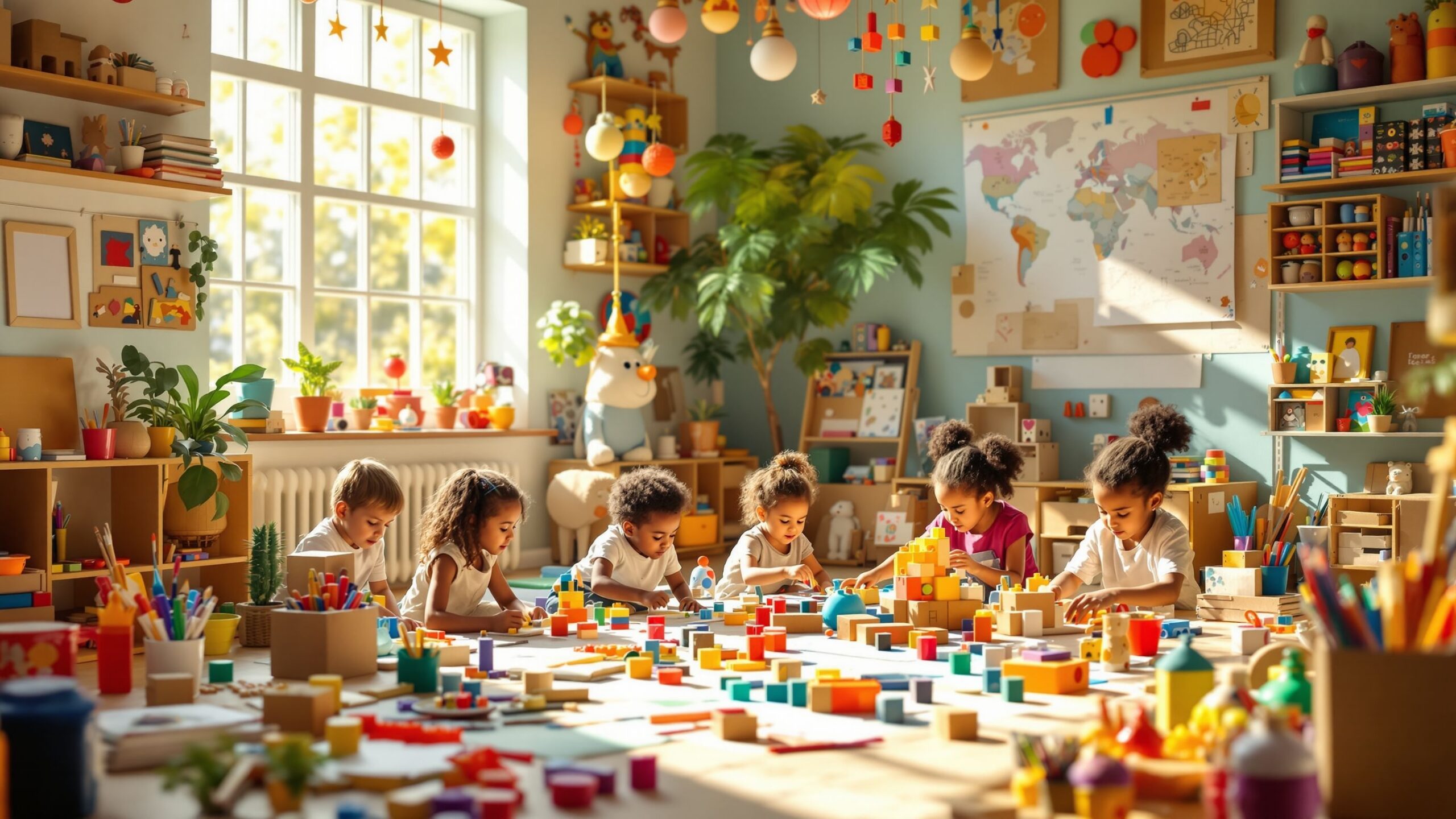
Providing access to various materials can spark additional creativity. Paint, clay, markers, cardboard, fabric, and recycled materials all offer unique opportunities for imaginative exploration.
Nature as a Source of Inspiration
Nature provides an endless supply of inspiration for creative thinking. Unlike many indoor environments, natural settings encourage exploration, curiosity, and discovery.
A walk through a park can become a treasure hunt. A pile of leaves can become a castle. A collection of rocks can inspire stories about hidden kingdoms and ancient civilizations. Nature invites children to create meaning and adventure from their surroundings.
Outdoor experiences stimulate all the senses. Children notice colors, sounds, textures, and patterns that inspire questions and creative ideas. These observations often become the foundation for imaginative play and storytelling.
Nature also encourages open-ended exploration. There are no instructions for clouds, trees, streams, or flowers. Children must use their imagination to interpret and interact with the world around them.
Encouraging Curiosity Every Day
Curiosity is one of the strongest drivers of creativity. Children who ask questions are actively exploring possibilities and seeking understanding. Supporting curiosity helps imagination flourish.
Instead of always providing immediate answers, adults can encourage deeper thinking by asking questions in return. Questions such as “What do you think?” or “How could we find out?” inspire independent exploration.
Everyday activities provide opportunities for curiosity. Cooking, gardening, shopping, and traveling all expose children to new experiences and ideas. Even simple routines can become opportunities for creative discovery.
Children who feel comfortable asking questions are more likely to experiment, innovate, and think creatively. Encouraging curiosity helps build lifelong learners who remain excited about exploring the world.
Building Creative Problem-Solving Skills
Problem-solving and imagination are closely connected. Creative thinkers often discover unique solutions because they are willing to consider multiple possibilities.
Simple challenges can help children develop this skill. Building structures, solving puzzles, designing inventions, and creating games all encourage innovative thinking. These activities require experimentation and adaptation.
Open-ended challenges are particularly effective because they allow for multiple solutions. Children learn that creativity is not about finding the single correct answer. Instead, it involves exploring different possibilities and evaluating what works best.
When children understand that mistakes are part of learning, they become more willing to take creative risks. This confidence encourages continued growth and innovation.
Technology and Imagination
Technology can support creativity when used thoughtfully. While excessive passive screen time may limit imaginative exploration, creative digital tools can inspire innovation and self-expression.
Animation programs, digital drawing apps, music creation software, and storytelling platforms allow children to transform ideas into projects. These tools combine creativity with valuable technical skills.
The key is maintaining balance. Hands-on experiences remain essential for healthy creative development. Technology should enhance creativity rather than replace imaginative play, artistic expression, and real-world exploration.
When children use technology to create rather than simply consume, they strengthen both imagination and digital literacy.
Creating a Creativity-Friendly Home
The environment children grow up in plays a major role in shaping their creativity. A creativity-friendly home encourages exploration, experimentation, and independent thinking.
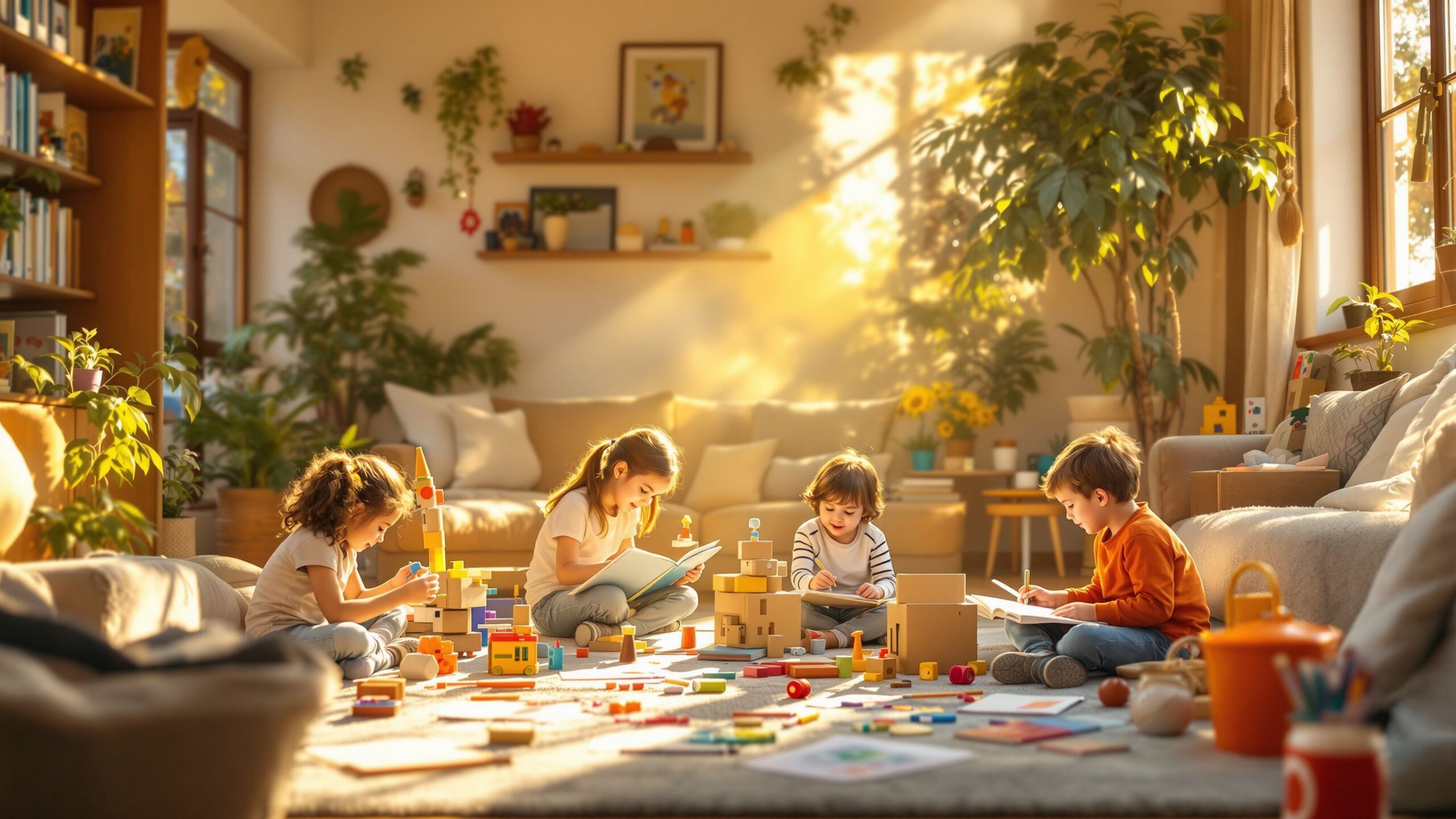
Open-ended materials such as building blocks, art supplies, books, and recycled materials provide endless opportunities for imaginative play. These resources allow children to create rather than simply follow instructions.
Displaying children’s artwork and creative projects sends a powerful message that their ideas matter. This encouragement builds confidence and motivates further exploration.
A creativity-friendly home also embraces mistakes. Children who understand that experimentation is valued are more likely to take risks and develop original ideas.
Most importantly, creative homes provide time. Unstructured moments often become the foundation for imaginative discoveries.
Raising Lifelong Creative Thinkers
Creativity is not a talent limited to artists, writers, or inventors. It is a skill that benefits everyone. Children who develop strong imaginative abilities become more adaptable, innovative, and confident throughout life.
The goal of imagination boosters is not simply to keep children entertained. It is to help them develop a mindset that embraces curiosity, innovation, and possibility. Creative thinkers approach challenges with optimism and view obstacles as opportunities to learn and grow.
Every story a child tells, every game they invent, and every question they ask contributes to this development. These moments may seem small, but they help shape future innovators, leaders, problem-solvers, and dreamers.
Conclusion
Imagination is one of the most powerful tools a child possesses. It fuels creativity, strengthens problem-solving abilities, encourages curiosity, and supports emotional growth. Through storytelling, free play, artistic expression, nature exploration, and open-ended discovery, children learn to think beyond limitations and explore new possibilities.
The most effective imagination boosters are often simple opportunities to create, wonder, and dream. By encouraging creative thinking and providing supportive environments, parents and educators can help children unlock their full potential.
In a world that constantly changes, imagination remains a timeless skill. It empowers children to see opportunities where others see obstacles and inspires them to create futures that have not yet been imagined. By nurturing creativity today, we help prepare children for a lifetime of innovation, exploration, and success.