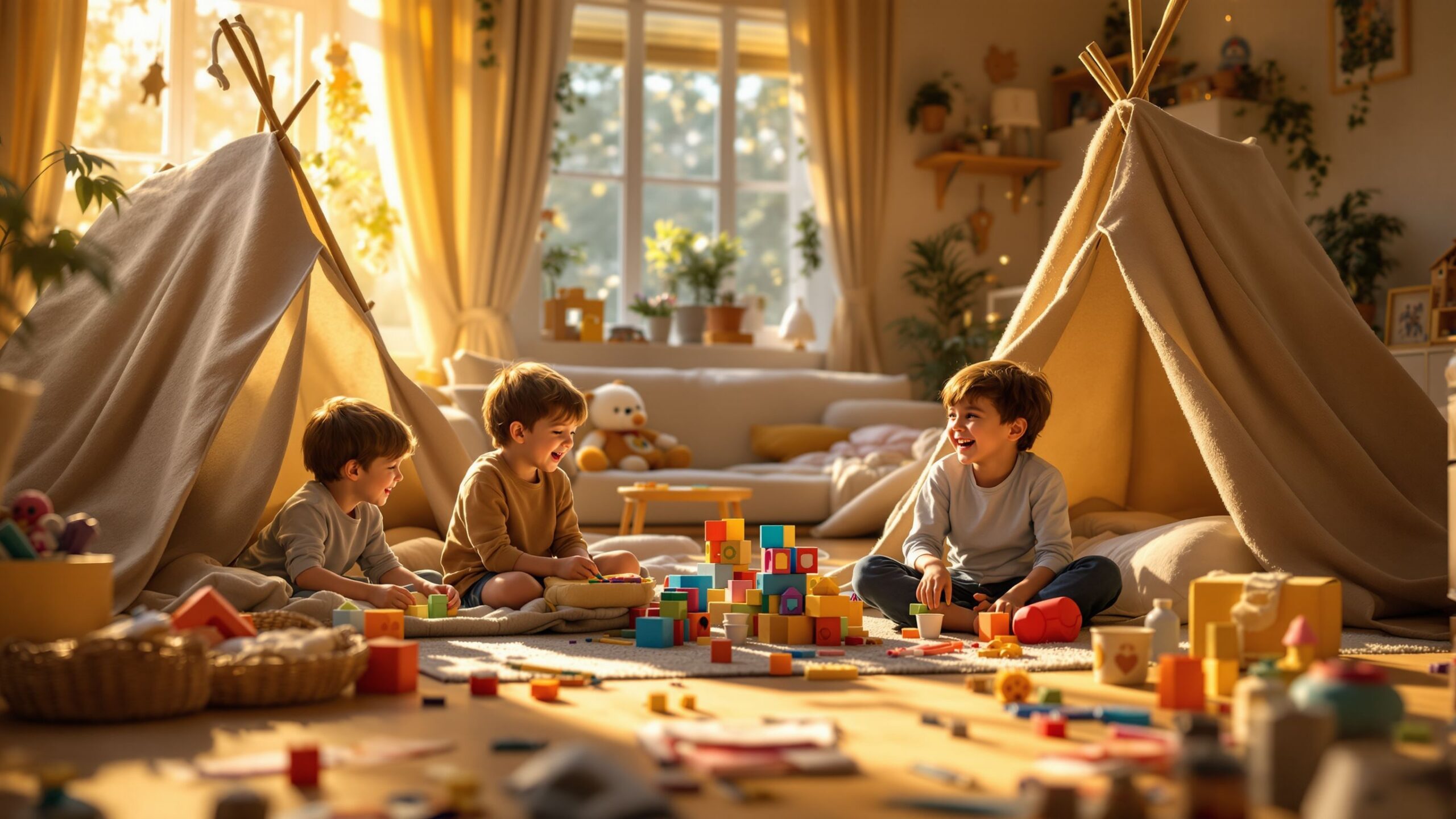
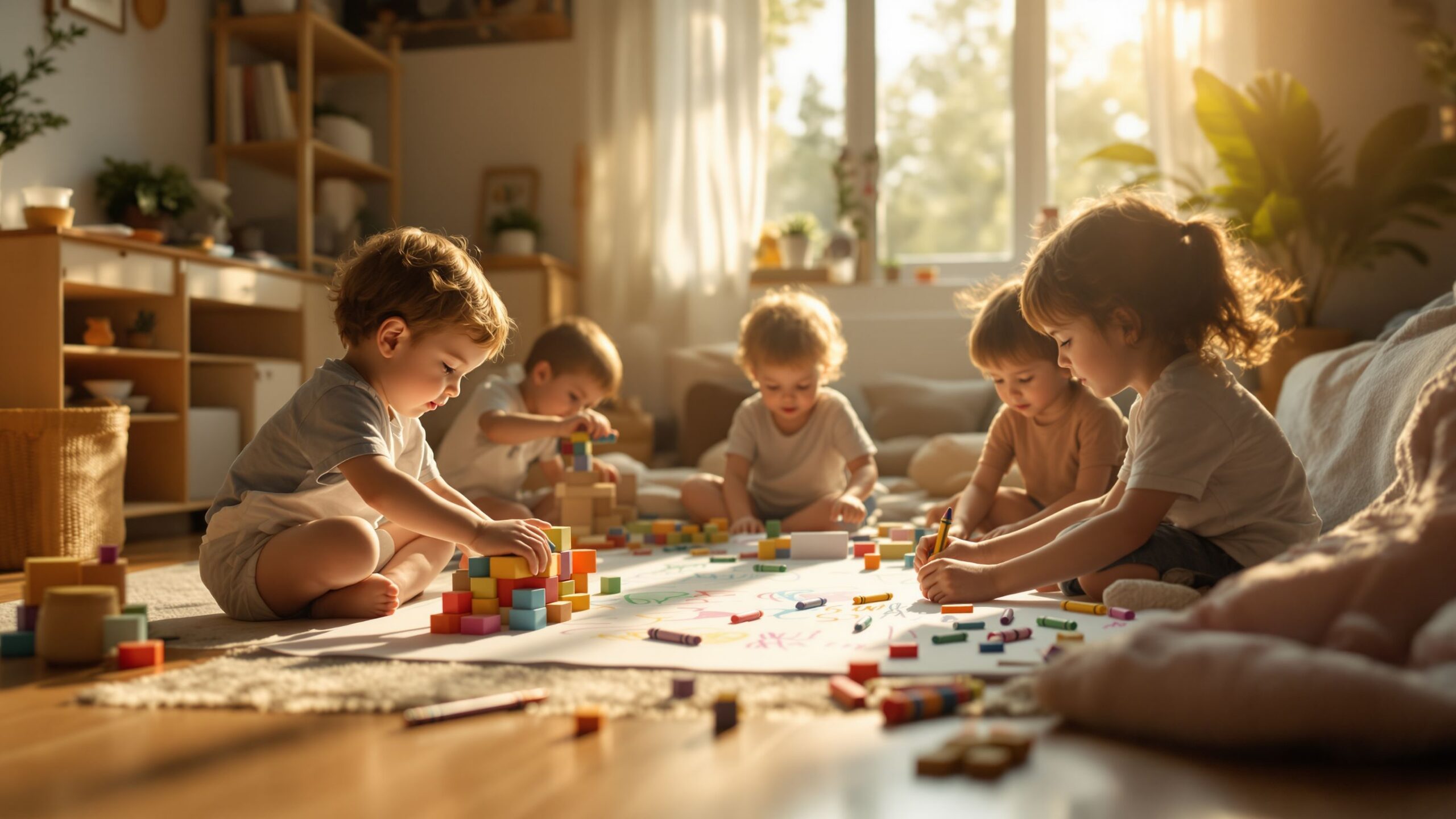
Indoor play looks different at every stage of childhood, and understanding how to match activities to a child’s age can make all the difference. From curious toddlers just beginning to explore their world to older kids who crave creativity and independence, the right indoor play ideas can support development, boost imagination, and keep kids engaged in meaningful ways. This guide breaks down indoor play ideas by age group, helping parents and caregivers create fun, enriching experiences that grow with their child.
A: Simple stacking, sensory play, movement paths, and safe exploration activities.
A: Pretend play, building, crafts, and storytelling games.
A: Challenges, creative builds, structured games, and detailed imaginative worlds.
A: Yes, adjust the rules and roles to match each child’s level.
A: Add challenges, leadership roles, time limits, or creative goals.
A: Provide simple roles, soft materials, and supervision.
A: Change the story, add a mission, or introduce a new rule or role.
A: Not always, many materials can be used in different ways depending on age.
A: It varies by age, from short bursts for toddlers to longer sessions for older kids.
A: To match activities with development while keeping play fun, creative, and engaging.
Why Age-Appropriate Play Matters
Children develop rapidly, and their interests, abilities, and attention spans change as they grow. What excites a toddler may not hold the attention of a school-age child, and activities that are too advanced can lead to frustration. Age-appropriate play ensures that kids are challenged just enough to learn and grow without feeling overwhelmed.
When children engage in activities suited to their developmental stage, they build confidence and independence. They learn new skills at a comfortable pace while still having fun. Indoor play becomes more than entertainment—it becomes a tool for growth, creativity, and exploration.
Indoor Play Ideas for Toddlers (Ages 1–3)
Toddlers are naturally curious and learn best through hands-on exploration. At this stage, play should focus on sensory experiences, movement, and simple discovery. Soft blocks, stacking toys, and shape sorters help develop coordination and problem-solving skills.
Simple pretend play begins to emerge during these early years. A toddler might enjoy pretending to cook with toy utensils or caring for a stuffed animal. These activities help them understand everyday routines and build early social skills.
Movement is also essential. Creating a safe indoor space where toddlers can crawl, climb, and explore helps support physical development. Even simple activities like dancing to music or chasing bubbles can bring joy while building coordination and confidence.
Indoor Play Ideas for Preschoolers (Ages 3–5)
Preschoolers are full of imagination and love to explore creative play. This is the perfect age to introduce storytelling, role-playing, and basic art projects. Children might pretend to run a store, act out a story, or create their own imaginary worlds.
Art becomes more expressive at this stage. Drawing, painting, and crafting allow preschoolers to experiment with colors and shapes while developing fine motor skills. Open-ended activities work best, giving children the freedom to create without strict instructions.
Building and construction play also become more engaging. Kids can use blocks or simple materials to create structures, encouraging problem-solving and spatial awareness. These activities often blend naturally with imaginative play, turning a tower into a castle or a house into a secret hideout.
Indoor Play Ideas for Early Elementary Kids (Ages 6–8)
As children enter early elementary years, their play becomes more structured and goal-oriented. They enjoy challenges that require thinking, planning, and creativity. Indoor activities at this stage can include building projects, puzzles, and simple science experiments.
Storytelling becomes more detailed, with children creating complex characters and plots. They may enjoy writing short stories, acting out scenes, or even creating their own games. These activities strengthen communication skills and encourage creative thinking.
Active play is still important. Indoor obstacle courses, dance routines, or movement-based games help kids stay physically engaged while having fun. Combining movement with imagination, such as pretending to navigate a jungle or space mission, keeps activities exciting and dynamic.
Indoor Play Ideas for Older Kids (Ages 9–12)
Older kids often seek more independence and creative control in their play. They enjoy activities that allow them to express themselves and explore their interests. Art projects, building challenges, and creative writing can become more advanced and detailed.
At this age, kids may enjoy designing their own worlds, creating stories with ongoing plots, or building complex structures. They might experiment with crafting, drawing, or even simple digital creation tools to bring their ideas to life.
Games with rules and strategy also become more appealing. Board games, problem-solving challenges, and creative competitions can keep older kids engaged while encouraging critical thinking and teamwork.
Encouraging Mixed-Age Play
In families with multiple children, indoor play often includes kids of different ages. Encouraging mixed-age play can be incredibly beneficial, as older children learn leadership and empathy while younger children gain inspiration and guidance.
Activities that allow for flexibility work best in these situations. Building projects, storytelling, and pretend play can be adapted so each child contributes at their own level. This creates a shared experience that strengthens relationships and encourages cooperation.
Parents can support mixed-age play by offering open-ended materials and allowing children to take the lead. This helps ensure that everyone feels included and engaged.
Creating a Flexible Indoor Play Environment
A successful indoor play setup doesn’t need to be complicated or expensive. The key is to create a space that invites creativity and exploration. Having a variety of materials available, such as art supplies, building toys, and simple props, gives children the freedom to choose how they want to play.
Rotating activities can help keep things fresh and exciting. Introducing new ideas or revisiting old favorites in a different way prevents boredom and encourages continued engagement. Even small changes, like rearranging furniture or adding a new theme, can make a big difference.
Balancing Active and Quiet Play
Children benefit from a balance of active and quiet activities throughout the day. Active play helps release energy and supports physical development, while quiet play encourages focus and relaxation.
For toddlers and preschoolers, this might mean alternating between movement games and simple puzzles or drawing. For older kids, it could involve switching between active challenges and creative projects. Finding this balance helps maintain engagement and prevents overstimulation.
Supporting Independence Through Play
As children grow, they naturally seek more independence. Indoor play provides an opportunity for them to explore their interests and make their own decisions. Allowing kids to choose activities and lead their play builds confidence and self-reliance.
Parents can support this by offering guidance when needed but stepping back to let children take control. Encouraging problem-solving and creativity helps kids develop a sense of ownership over their play experiences.
The Lasting Impact of Age-Appropriate Play
Indoor play tailored to a child’s age supports development in meaningful ways. It helps build skills that extend beyond childhood, including creativity, critical thinking, and emotional intelligence. By providing opportunities for exploration and growth, parents and caregivers can help children develop a strong foundation for learning and self-expression.
Each stage of childhood brings new opportunities for creativity and discovery. By adapting indoor play ideas to match a child’s age, we can ensure that play remains engaging, enriching, and full of joy.
Making Every Stage Magical
Indoor play is not just about keeping kids busy—it’s about creating moments of wonder and connection. From the simple joy of a toddler stacking blocks to the complex creativity of an older child designing their own world, every stage of play is valuable.
By embracing age-appropriate indoor activities, parents and caregivers can turn everyday moments into opportunities for growth and imagination. No matter the age, indoor play has the power to inspire creativity, build confidence, and create lasting memories.