Imagination is one of the most powerful tools a child possesses, and imaginary creatures are at the heart of that magic. When children invent creatures of their own, they are not just playing—they are building worlds, exploring emotions, and developing storytelling skills that shape how they see and interact with the world. From gentle giants and glowing sprites to silly, shape-shifting beings, imaginary creatures allow kids to create without limits. This ultimate guide explores how children can design their own magical creatures, why it matters for their development, and how parents can encourage imaginative play in meaningful ways.
A: It is a made-up creature that can look, act, and live however a child imagines.
A: Not always, but a few fun rules can make the story more exciting.
A: Yes, mixing animals is one of the easiest ways to create a new creature.
A: They can use silly sounds, magical words, rhymes, colors, foods, or personality traits.
A: They can be spooky, but for playtime it helps to keep them fun, safe, and age-friendly.
A: Start with one animal, add one magical power, and choose one unusual home.
A: No, kids can act, build, sculpt, describe, or pretend their creature without drawing it.
A: Ask questions, become a character, help build a habitat, or create a mission.
A: Yes, it supports storytelling, language, confidence, problem-solving, and creative thinking.
A: As many as they want—from one special friend to an entire magical creature world.
Why Imaginary Creatures Inspire Creativity
Imaginary creatures open the door to boundless creativity because they remove the rules of reality. A creature doesn’t have to follow biology, logic, or even gravity. It can fly without wings, glow without light, or communicate without words. This freedom encourages children to think beyond what they see and instead focus on what they can imagine.
When kids create creatures, they naturally begin to think about personality, abilities, and environments. They ask questions like where the creature lives, what it eats, and how it interacts with others. These simple questions spark complex thinking and help develop problem-solving skills. Imagination becomes a playground for ideas, where children can experiment with concepts in a safe and joyful way.
Types of Imaginary Creatures Kids Love to Create
Children often draw inspiration from the world around them, blending familiar elements with magical twists. One of the most common types of imaginary creatures is the animal hybrid. These creatures combine traits from different animals to form something entirely new, such as a lion with butterfly wings or a dolphin that glows in the dark. These hybrids allow kids to explore both creativity and logic as they decide how their creature moves and behaves.
Another popular category is magical beings inspired by fantasy worlds. These might include tiny forest spirits that protect plants, dragons that breathe colorful mist instead of fire, or water creatures that create waves with their songs. These beings often live in environments filled with wonder, encouraging children to imagine entire ecosystems.
Space creatures are also a favorite among kids who love science fiction. These beings might float through the stars, communicate through light patterns, or change shape depending on their surroundings. By imagining creatures from other worlds, children expand their thinking beyond Earth and explore the possibilities of the universe.
Creating Unique Creature Personalities
An imaginary creature becomes truly memorable when it has a personality. Encouraging children to think about how their creature feels, reacts, and behaves adds depth to their creations. A creature might be shy and hide behind glowing leaves, or it could be bold and adventurous, always seeking new experiences.
Some creatures might be helpers, guiding lost travelers or solving problems, while others might be mischievous, creating playful chaos. By giving creatures emotions and motivations, children learn to understand different perspectives and develop empathy. These imaginative exercises help them connect with others in real life by practicing emotional awareness through play.
Designing Magical Abilities and Powers
Powers and abilities are often the most exciting part of creating imaginary creatures. Children can think about what makes their creature special and how it interacts with the world. A creature might control the weather, turn invisible, or create music that changes moods.
Encouraging kids to think about the purpose of these abilities adds another layer of creativity. Does the creature use its powers to help others, protect its home, or explore new places? Thinking about how powers are used helps children understand cause and effect, as well as responsibility and choice.
Some of the most imaginative abilities come from combining unexpected ideas. A creature might paint the sky with colors using its tail, or it might grow flowers wherever it walks. These unique concepts make each creation feel special and encourage children to keep exploring new possibilities.
Building Magical Worlds for Creatures
Imaginary creatures rarely exist alone. They live in worlds that are just as creative and detailed as the creatures themselves. Encouraging children to think about where their creatures live helps expand their imagination even further.
A creature might live in a floating island above the clouds, a glowing underwater city, or a hidden forest filled with talking plants. These environments can include other creatures, magical objects, and challenges that shape the creature’s life. Building these worlds helps children develop storytelling skills and understand how different elements connect.
Creating a world also gives children a sense of ownership over their ideas. It becomes their space to explore, change, and grow, making imaginative play even more meaningful and engaging.
Turning Imaginary Creatures Into Stories
Once a child has created a creature, the next step is bringing it to life through storytelling. Stories give creatures purpose and allow children to explore adventures, challenges, and friendships. A creature might go on a journey to find a hidden treasure, help a friend in need, or discover something new about itself.
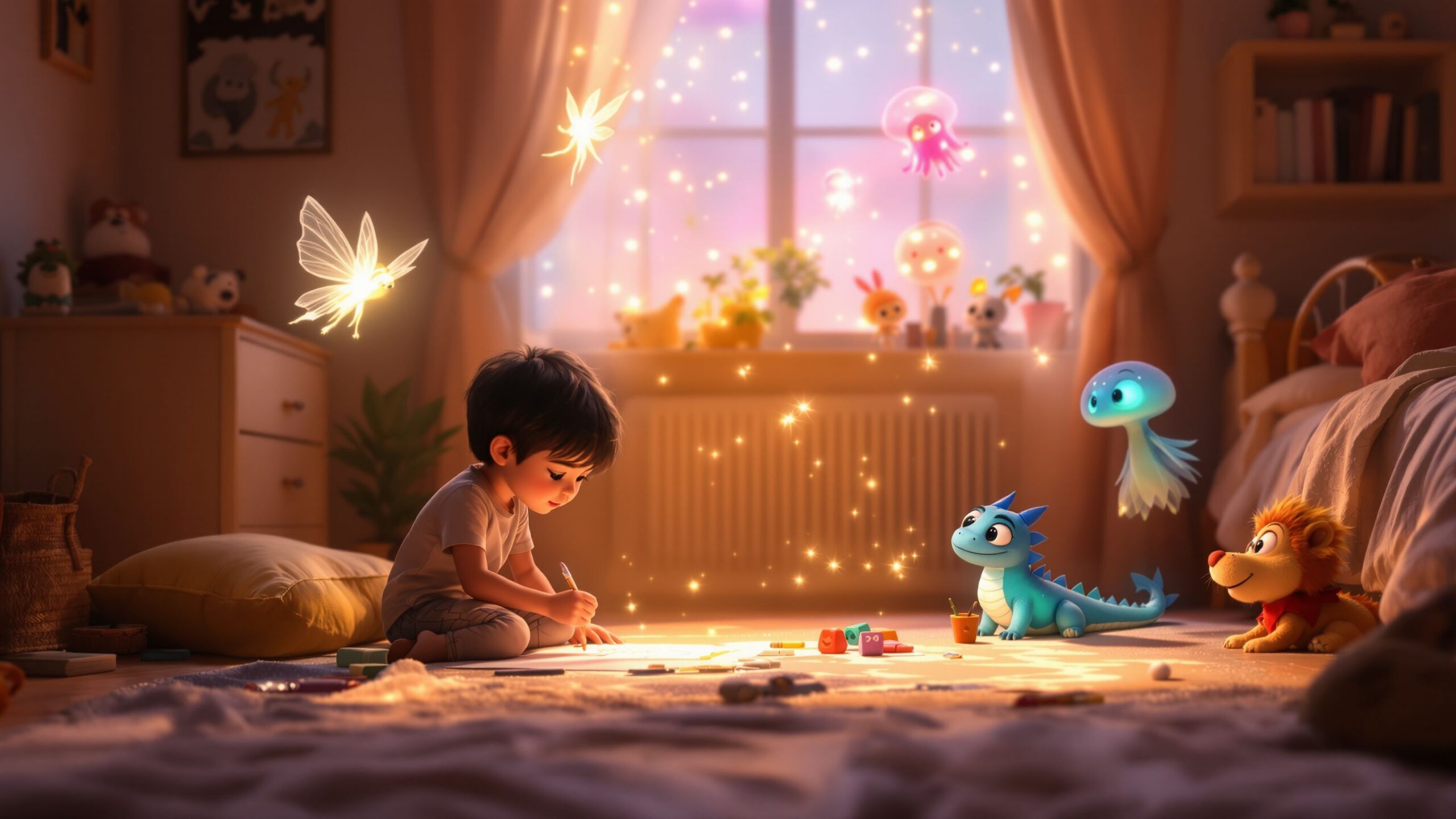
Storytelling can take many forms. Children might act out their stories during playtime, draw scenes from their adventures, or describe their ideas out loud. Each method helps develop communication skills and builds confidence as they share their creations with others.
Stories also allow children to explore problem-solving in a creative way. When a creature faces a challenge, kids think about how it might overcome obstacles, teaching resilience and critical thinking in a fun and engaging manner.
Encouraging Imaginative Play at Home
Parents and caregivers play a key role in supporting imaginative play. Creating an environment where creativity is encouraged helps children feel confident in expressing their ideas. Simple tools like paper, crayons, building toys, or costumes can inspire endless possibilities.
Asking open-ended questions is one of the best ways to spark imagination. Questions like “What does your creature eat?” or “What adventure is your creature going on today?” encourage children to think more deeply about their creations. These conversations also strengthen the bond between parent and child, turning playtime into a shared experience.
It’s important to allow children to take the lead in their imaginative play. Even if their ideas seem unusual or unpredictable, they are exploring creativity in their own way. Supporting their vision without trying to control it helps build confidence and independence.
The Developmental Benefits of Imaginary Creatures
Imaginary creatures do more than entertain—they support important areas of development. Creativity is the most obvious benefit, but there are many others. When children invent creatures, they practice language skills by describing their ideas and telling stories. They also develop social skills by imagining interactions between characters.
Emotional development is another key benefit. Creating creatures with feelings and motivations helps children understand emotions in a safe and imaginative way. They can explore scenarios that might be difficult in real life, such as fear, friendship, or conflict, through the lens of their characters.
Imaginative play also encourages problem-solving and critical thinking. As children create challenges and solutions for their creatures, they learn to think creatively and adapt to new ideas. These skills are valuable not only in childhood but throughout life.
Keeping the Magic Alive as Kids Grow
As children grow older, their imaginative play may change, but it doesn’t have to disappear. Encouraging creativity through writing, drawing, or even digital storytelling can help keep their imagination active. Older kids might create detailed backstories for their creatures, design entire worlds, or develop ongoing stories.
Providing opportunities for creative expression helps children see imagination as a lifelong skill rather than something they outgrow. Whether they become writers, artists, or simply creative thinkers, the ability to imagine and create will continue to benefit them in many ways.
Inspiring Endless Possibilities Through Imagination
Imaginary creatures are more than just playful ideas—they are gateways to creativity, learning, and self-expression. They allow children to explore new worlds, understand emotions, and develop skills that shape their growth. Every creature a child creates is a reflection of their unique perspective and imagination.
By encouraging kids to invent their own creatures and stories, we give them the freedom to dream without limits. These moments of creativity build confidence, inspire curiosity, and create memories that last a lifetime. In a world that often values structure and rules, imaginary creatures remind us of the joy and power of imagination, making playtime a magical and meaningful experience.